Vinegar is said to have been invented by He Ta, the son of Du Kang, an ancient master of brewing. After He Ta learned the art of brewing, he felt it was a pity to discard the wine dregs, and thus inadvertently created "vinegar." There are various types of vinegar, including rice vinegar, aged vinegar, wine vinegar, white vinegar, various fruit vinegars, garlic vinegar, and ginger vinegar. Due to different raw materials and production methods, the finished products have vastly different flavors.
Are there benefits to eating vinegar? What are the nutritional value and health benefits of vinegar?
According to Traditional Chinese Medicine, vinegar is sour and sweet in taste, and neutral in nature. Consuming it can have multiple effects such as eliminating fatigue, strengthening the stomach and aiding digestion, regulating the acid-base balance of the blood, preventing aging, sterilizing, and nourishing the liver and kidneys.
Vinegar can be broadly divided into 3 types: brewed vinegar, synthetic vinegar, and white vinegar. Brewed vinegar is the most common type in China. Scientific analysis shows that besides containing 5%-20% acetic acid, brewed vinegar also contains various organic acids such as amino acids, lactic acid, succinic acid, oxalic acid, and niacin; various minerals such as protein, fat, calcium, phosphorus, and iron; vitamins B1 and B2; sugar; and aromatic substances like ethyl acetate. Vinegar made from rice has the highest content of organic acids and amino acids.
Vinegar-Soaked Peanuts
The Amazing Effects of Pairing Vinegar with Other Things: 6 Health-Related Folk Remedies Using Vinegar
In daily life, using a little vinegar in many dishes can reduce salt intake. Simple pairings often have effects for weight loss and treating illnesses. Let's look at these 6 folk remedies together.
1. Vinegar-Soaked Peanuts
The effectiveness of vinegar-soaked peanuts for lowering blood pressure is also well-known. Traditional Chinese Medicine records it as a dietary therapy. The specific method is: soak raw peanuts in vinegar for more than 7 days, then eat 10-15 peanuts daily for at least a week. Consistent consumption can lower blood pressure, stop bleeding, and reduce cholesterol. It should be noted that you must use raw peanuts and try to keep the red skins on.
2. Vinegar-Soaked Eggs
The preparation method is to place some rice vinegar in a jar and then put an egg in it. After about two weeks, when the eggshell has completely dissolved in the vinegar, you can take the egg out. The egg can be used for cooking, and the vinegar in the jar can be drunk. Because the eggshell has dissolved, it is rich in calcium. Drinking 20 to 50ml daily can have a good effect on lowering blood pressure and supplementing calcium.
3. Vinegar-Soaked Bananas
The vinegar-soaked banana weight loss method originated in Japan. Drinking three tablespoons of banana vinegar with each meal can achieve a weight loss effect. With this method, one can lose about 8 jin (4 kg) in a month. Banana vinegar can be drunk directly or diluted with cold water. It can be taken before or after a meal; if after, it's best to wait 10 minutes. Drinking vinegar while eating bananas can help accelerate fat consumption and increase satiety, thereby achieving the effect of weight loss. However, excessive consumption should be avoided, as too much vinegar can burn the esophagus and corrode the gastric mucosa.
Vinegar-Soaked Black Beans
4. Vinegar-Soaked Black Beans
In addition to being effective for blurred vision and whitening hair, vinegar-soaked black beans can also easily lower blood pressure. The preparation method is: wash the black beans, put them in a jar, and pour in rice vinegar until they are submerged. If the black beans absorb all the vinegar, you can add more. Over time, a film may form on top of the vinegar; skim it off and discard it. If the vinegar becomes cloudy, change it. Store them in a cool place or in the refrigerator for 10 days before they are ready to eat.
5. Vinegar-Soaked Ginger
The method of using ginger to treat diseases and promote health has a long history. There are many varieties of ginger, and small yellow ginger has better medicinal value. It has a purely yellow cross-section, a strong spicy and fragrant taste, and fine flesh and fibers. Vinegar-soaked ginger is a common health-preserving food therapy. Vinegar directly affects the liver meridian; when the liver encounters sourness, it astringes. At this time, the ascending and dispersing function of ginger also enters the liver, creating a balance of astringing and dispersing, which can enhance liver yang energy. Vinegar-soaked ginger also has the effects of nourishing the stomach, aiding in weight loss, preventing hair loss, and preventing chronic diseases. Adding original fragrance vinegar when eating ginger is a great health method.
Preparation method: It's best to use fresh ginger. Slice the ginger thinly, but the slices must be of even thickness. Use original fragrance vinegar. Put the sliced ginger into a bottle, then pour the vinegar into the cleaned bottle; the vinegar must completely cover the ginger slices, ensuring they are not exposed. Then store the bottle of vinegar-soaked ginger slices in the refrigerator's vegetable crisper. After a week, you can eat 2 to 4 slices of fresh ginger daily, which has a very good effect on lowering blood lipids and assisting in the treatment of arthritis.
6. Sweet and Sour Garlic
Sweet and sour garlic is also very effective for controlling high blood pressure, and the preparation method is simple: soak several garlic cloves in a liquid made from a mixture of sugar and vinegar for more than 1 month. Then, eat 6 garlic cloves daily and drink 20ml of the sweet and sour juice for a course of treatment lasting one month.
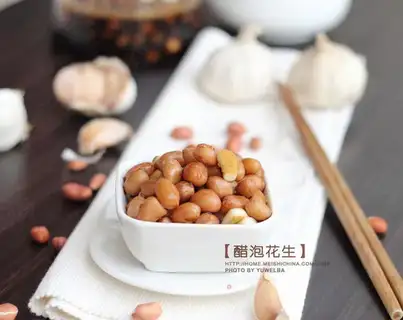 Jealous peanuts
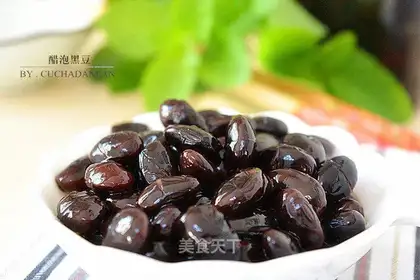 Jealous and black beans