It's now early spring, the transitional period from winter to spring, when the weather is still cool. The body's physiological functions are in a state of flux, shifting from winter's contraction mode to spring's more active mode, requiring repeated adjustments. There are many traditional methods for dietary conditioning in spring, often referred to in Traditional Chinese Medicine as "eating spring." So, what should one eat in spring?
Steamed Cornbread
Five Principles for a Healthy Spring Diet
1. Diverse Foods, Add Some "Coarse"
Different foods provide different nutrients; no single natural food can supply all the nutrients the body needs. It's best to eat a wide variety of foods daily so their nutritional components can complement each other, meeting the nutritional demands for daily life and work. Regularly eat coarse grains like cornmeal and millet. Today's grains are often overly processed, and a diet consisting solely of such refined grains can easily lead to a deficiency in B vitamins. Eating coarse grains can help supplement this. Additionally, frequently consume tubers like sweet potatoes and potatoes, which are rich in dietary fiber and can prevent constipation and reduce the risk of cancer.
2. Light Diet, Less Oil and Salt
When cooking, use less oil and salt. A light diet is beneficial for health. Consuming less oil reduces fat intake and helps control weight. Consuming less salt helps prevent and control high blood pressure.
3. Colorful Fruits and Vegetables, Add Some "Wild"
Every day, eat green, red, or yellow vegetables or fruits, as darker-colored produce contains more vitamins and antioxidants than lighter-colored varieties. In spring, a wide array of naturally grown fruits and vegetables become available, such as plums, apricots, toon shoots, and chives. Dishes like stir-fried toon shoots with eggs, chives with eggs, and scallions with tofu are not only a feast for the eyes but also refreshing to eat. If you can go for an outing and gather wild vegetables like shepherd's purse, making shepherd's purse wontons or dumplings is an even greater delight.
4. Plan Your Three Meals Wisely
A year's plan starts in spring, and a day's plan starts with breakfast! A nutritious breakfast not only provides a timely "boost" to your health but also improves the efficiency of your morning studies or work. Breakfast should not be neglected or rushed; it should be eaten daily, and you should make sure to eat enough and well. Lunch shouldn't be an afterthought; a "retro" homemade "bento" box has many benefits: it saves time, money, and ensures nutrition and hygiene. If several colleagues bring their own, you can organize a small lunch "party." Dinner doesn't need to be a heavy feast of meat and fish to reward yourself; moderation is key to a healthy diet.
5. Animal Foods, Consume in Moderation
Animal foods provide high-quality protein, fat, vitamins, and minerals, so you should eat a moderate amount daily. However, consuming too much animal food also increases fat intake, which is not good for health, so moderation is key. Animal organs, such as pork, chicken, or duck liver, are rich in nutrients like zinc, iron, and vitamin A and can be eaten regularly.
What Foods Are Good for "Eating Spring"?
Sesame Salt with Pea Shoots
1. Spleen-nourishing sweet foods like red dates: The ancient Chinese physician Sun Simiao said, "In spring, one should reduce sour foods and increase sweet ones to nourish the spleen." This means that in spring, it's advisable to eat less sour food and more sweet food. Traditional Chinese Medicine (TCM) believes that spring is a time when liver energy is predominant. Eating too many sour foods can cause an excess of liver energy, which can damage the spleen and stomach. Therefore, sour foods should be consumed in moderation. As people engage in more outdoor activities in spring than in winter, their physical exertion and caloric needs increase. However, the spleen and stomach are relatively weak at this time, and digestive capacity is poor, making it unsuitable to eat a lot of greasy meat. Therefore, calories can be appropriately supplied by sweet foods. Red dates are an excellent spring food for nourishing the spleen.
2. Honey: TCM believes that honey is sweet in flavor and enters the spleen and stomach meridians, tonifying the middle jiao (the middle part of the body's torso) and Qi, and moistening the intestines to promote bowel movements. The spring climate is variable, with alternating cold and warm weather, making people more prone to colds. Honey contains various minerals and vitamins and has the function of clearing the lungs and detoxifying, which can enhance the body's immunity, making it the most ideal tonic in spring. Therefore, drinking 1-2 tablespoons of honey daily, dissolved in a cup of warm water or with milk, can have a nourishing effect on the body.
3. Spring buds: The ancient saying "Don't eat what is not in season" applies. TCM classics also emphasize eating foods of the season. In spring, all plants sprout fresh, green, tender shoots. There are many edible spring shoots, such as toon shoots, bean sprouts, garlic shoots, pea shoots, and lettuce.
4. Chives: The spring climate is inconsistent, requiring the preservation of Yang energy. Chives are most beneficial to the body's Yang energy and are known as a natural "Viagra." Chives contain volatile oils, protein, fat, and various vitamins, with effects such as strengthening the stomach, refreshing the mind, and tonifying the kidneys. Spring chives are the finest among chives, with an especially delicious flavor. Their roots are white as jade, their leaves are green as jade, and they have a rich, fragrant aroma. Spring chives can be prepared in many ways: they can be served with meat, eggs, shrimp, or cuttlefish, or used as a filling for steamed buns and dumplings. Adding them to stir-fried bean sprouts or dried tofu makes the dish exceptionally fragrant and tasty.
5. Spring bamboo shoots: As the "number one vegetarian delicacy," spring bamboo shoots have been beloved by people since ancient times and have been praised by writers and gourmets, with the saying "Those who taste the fresh delicacy all praise the spring bamboo shoot." Spring bamboo shoots are thick, delicious, nutritious, and can be cooked in both vegetarian and meat-based dishes. Different cooking methods—stir-frying, stewing, boiling, or braising—produce different flavors. Local famous dishes often feature spring bamboo shoots, such as "Goji Spring Bamboo Shoots" from Shanghai, "Spring Bamboo Shoots with White Chicken" from Nanjing, and "South Meat Spring Bamboo Shoots" from Zhejiang.
Spinach Tower
6. Cherries: Known as the "first branch of spring fruit," cherries are now cultivated all over China. The fruit is fleshy, delicious, juicy, and brightly colored, with rich nutritional value. Its iron content is particularly outstanding, exceeding that of oranges, pears, and apples by more than 20 times, making it the highest among fruits. Cherries are warm in nature and sweet with a slightly sour taste, with effects such as tonifying the middle jiao and Qi, regulating the middle and improving complexion, and strengthening the spleen to whet the appetite. Eating cherries in spring can induce sweating, tonify Qi, expel wind, and promote the eruption of rashes. It should be noted that cherries are "heaty" in nature and should not be eaten in excess. Those with a deficiency of Yin and excess of fire in their body should avoid or eat them sparingly. If you can't eat cherries, strawberries are an excellent alternative.
7. Spinach: Spinach is available year-round, but it is best in spring, contrary to the joke by Zhao Benshan and Song Dandan about "autumn spinach." Spring spinach has red roots and green leaves, is exceptionally tender and fresh, and most delicious. The spinach available in spring is particularly beneficial for detoxification and preventing spring dryness. TCM also believes that spinach is sweet and cool in nature, capable of nourishing the blood, stopping bleeding, astringing Yin, and moistening dryness. Because spinach contains a lot of oxalic acid, which can hinder the absorption of calcium and iron, it is best to blanch it in boiling water before cooking.
8. Scallions, ginger, and garlic: These are not only excellent seasonings but also have significant medicinal value, enhancing appetite, helping the spring Yang energy, and possessing antibacterial and disease-preventing properties. Spring is when scallions and garlic are most nutritious, tenderest, most fragrant, and best to eat. Consuming them at this time can prevent the most common spring respiratory infections. Scallion pancakes or scallions with sauce, which are popular in the north in spring, are very nutritious and in harmony with the season.
Note: For the frail, the elderly, and young children, the transition from winter to spring is a time to reduce going out, especially to public places and shopping. Indoor life should also maintain a relatively stable room temperature to reduce the impact of the external climate on the body and the invasion of pathogens.
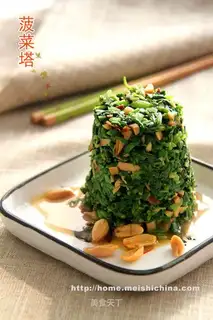 Spinach Tower
 Corn pasta
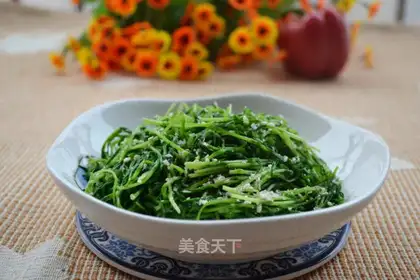 Sesame salt and soybeans