To make soup that is healthy for the body, one must pay attention to the science of its preparation and follow the "seven principles."
Technique Must Be Precise
When making soup, salt should not be added too early. Salt has an osmotic effect that can draw moisture out of the ingredients, causing the proteins to coagulate and resulting in a lack of umami. When simmering soup, the temperature should be maintained between 85-100°C. If vegetables are added, they should be added towards the end of cooking to prevent the destruction of vitamin C. Seasonings like MSG, sesame oil, pepper, ginger, scallions, and garlic can be added in moderation, but be careful not to use too much, so as not to overpower the soup's natural flavor.
Clay Pot Soup
Ingredients Must Be Fresh
This means choosing ingredients that are rich in umami and have no gamey or fishy odor. "Fresh" does not refer to the traditional concept of "eating meat from freshly killed animals and fish that are still jumping." In modern terms, "fresh" refers to fish or poultry that has been dead for 3-5 hours. At this point, various enzymes in the fish or poultry break down proteins and fats into amino acids and fatty acids that are easily absorbed by the human body. This is when the nutritional content is highest and the flavor is best.
Cookware Must Be Chosen Well
An aged clay pot is best for making a savory broth. Clay pots are fired at high temperatures, giving them characteristics such as good breathability, strong absorbency, even heat distribution, and slow heat dissipation. When simmering soup, the clay pot transfers heat from the outside to the ingredients inside evenly and continuously. This relatively stable temperature environment is conducive to the mutual penetration of water molecules and food. The longer this penetration lasts, the more the umami components are released, making the broth more savory and mellow, and the ingredients more tender and succulent.
Water Ratio Must Be Reasonable
Water is both a solvent for savory ingredients and a medium for heat transfer. Changes in water temperature and the amount used directly affect the soup's nutrition and flavor. Generally, the amount of water should be three times the weight of the main ingredients, and the ingredients should be heated together with cold water. It is not advisable to use hot water for simmering soup. If hot or boiling water is poured into the pot at the beginning, the surface of the meat will be suddenly exposed to high temperatures, causing the outer layer of protein to coagulate immediately, preventing the inner proteins from fully dissolving into the soup. Furthermore, if cold water is added midway through the simmering process, the proteins cannot fully dissolve, which will affect the soup's flavor, making it less savory, and the broth will also not be as clear.
Heat Control Must Be Appropriate
The secret to simmering soup is to bring it to a boil over high heat, then simmer gently over low heat. This allows the umami substances, such as protein extracts from the ingredients, to dissolve as much as possible, resulting in a broth that is more savory and delicious. Only a low flame can ensure more nutrients are extracted and produce a clear broth with a rich, mellow flavor.
Ingredient Selection Must Be Meticulous
Selecting ingredients is key to making a good broth. To make a good soup, one must choose fresh animal ingredients that are rich in umami, have little off-flavor, and are free of blood stains, such as chicken, duck, lean pork, pork elbow, pork bones, ham, salted duck, and fish. These foods are rich in proteins, succinic acid, amino acids, peptides, nucleotides, etc., which are the main sources of the soup's umami.
Pairings Must Be Suitable
Some foods have established pairing combinations where their nutrients complement each other, known as the "golden pairings" on the dining table. The most notable example is kelp stewed with pork soup. The acidic pork and the alkaline kelp have complementary nutritional values, making it a "longevity food" in Okinawa, a longevity region in Japan. To keep the soup's flavor pure, it is generally not recommended to use too many types of animal ingredients in the same pot.
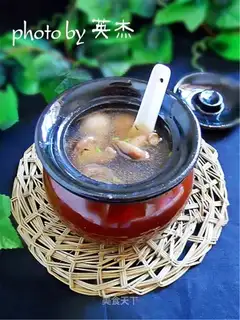 Watt soup