The food in supermarkets can be dazzling to the eye, with many product packages featuring eye-catching words like "all-natural," "pure," "additive-free," and "healthy food." In reality, are these foods truly pure and additive-free? Can they be safely given to babies?
Snacks like fruit vinegar drinks, instant oatmeal, and milk beverages in supermarkets are not only rich and delicious but also save a lot of trouble for many working mothers. However, are these foods really nutritious? Can they be used with peace of mind? Do mothers know the truth behind them?
Apple Vinegar
Lie 1: "Healthy" Fruit Vinegar Drinks
Revelation: Truly healthy fruit vinegar is a nutritious and digestive beverage made by fermenting ingredients like apples and hawthorn, with an acetic acid content of over 5%. However, many fruit vinegar drinks on the market are not fermented; they are simply blended and made with added colorings and artificial flavors, and their acetic acid content is generally far less than 5%. In addition, fruit vinegar or other vinegar drinks sold on the market often contain a lot of sugar. Frequent consumption can increase calorie intake and cause babies to gradually become obese.
Tips:
When buying fruit vinegar drinks for babies, mothers should choose those that are fermented and have a high fruit juice concentration. In addition to checking the label, pay attention to the color and state of the vinegar: synthetic vinegar is a clear, colorless liquid, and the foam disappears instantly after shaking. Naturally brewed vinegar is light yellow, forms foam after shaking that does not disappear easily, and has a certain viscosity.
Take apple vinegar, for example. Since apple vinegar is brewed by fermenting apple wine with microorganisms, high-quality apple vinegar has a longer brewing time (up to 6 to 10 months). This type of apple vinegar is often light brown with filamentous precipitates, which may not look good. In fact, the precipitate is the yeast used for fermentation and pectin that has not been completely broken down, which does not affect drinking at all.
Why not try making your own apple vinegar?
Fruit vinegar drinks made by mothers themselves are the healthiest option and are very beneficial for a baby's body!
1. Apple Vinegar: Wash 500g of apples, cut them into pieces with the skin on, and place them in a wide-mouthed jar. Add 150g of rock sugar and 500ml of vinegar, seal it, and store it in a cool place. After 3 months, open the jar, strain the vinegar liquid, and bottle it separately.
2. Kumquat Vinegar: Wash 600g of kumquats, drain the water, and let them air-dry completely. Place them in a wide-mouthed jar. Add 300g of rock sugar and 600ml of aged vinegar, seal it, and store it in a cool place. It can be opened after about 3 months, and the vinegar liquid can be strained and bottled.
3. Red Grape Vinegar: Select 300g of good grapes, wash them, drain the water, and dry them with a fan. Place them in a wide-mouthed jar. Add 150g of rock sugar and 500ml of vinegar, seal it, and store it in a cool place. After about 3 months, open the jar, strain the vinegar liquid, and bottle it separately.
TIPS: When giving fruit vinegar to a baby, mothers should dilute the vinegar liquid 8-10 times with warm water and give it after a meal. However, although fruit vinegar is delicious, babies should not drink too much of it. When giving fruit vinegar to a baby, mothers should pay attention to three key points.
1. Babies should not drink fruit vinegar drinks for a long time: Vinegar drinks are acidic and are not suitable for babies to drink for long periods. Excessive consumption can affect the body's acid-base balance.
2. Babies should not drink fruit vinegar drinks on an empty stomach: It is best not to let babies drink vinegar drinks on an empty stomach, as it will stimulate the stomach to secrete too much gastric acid, which can damage the baby's stomach wall. It is best to give the baby a small snack before drinking vinegar drinks, or drink it 1 hour after a meal. This way, it will not harm the baby's digestive system and can also help with digestion.
3. Control the daily intake to within 240ml: Even if the baby has eaten something, you cannot let them drink vinegar drinks without control. The daily standard is no more than 2 cups, with each cup being 120ml or less.
Sweet Potato Oatmeal Porridge
Lie 2: "Pure" Oatmeal
Revelation: Oatmeal is a nutritious grain rich in protein, dietary fiber, and vitamins. Real oatmeal is directly pressed from oats, but now many oatmeals on the market are instant, made from a mixture of various grains such as wheat and rice, where oats only account for a small part. They also add a large amount of starch, white sugar, etc. Their taste is sweeter than oatmeal, but their health value is lower.
Tips:
There are four common types of oatmeal on the market: oat groats, quick-cooking oatmeal, instant oatmeal, and "nutritious oatmeal," and their nutritional value decreases in that order. Generally, oatmeal that needs to be cooked is more nutritious than the kind that is directly prepared with hot water. The shorter the ingredient list, the better.
1. Plain oat groats are the healthiest;
2. For quick-cooking oatmeal, the cooking time is relatively short. This type of oatmeal generally has no additives, but due to processing, some nutrition is inevitably lost;
3. Instant oatmeal, after multiple layers of processing, loses a lot of soluble dietary fiber, and its nutritional value is greatly reduced;
4. As for the "nutritious oatmeal" on the market, although it has the "title" of "nutritious," it is actually the least nutritious. This "oatmeal" contains very little oatmeal but a lot of additives like non-dairy creamer and sugar, which is not healthy and is actually very harmful to health.
Lie 3: "Nutritious" Milk Beverages
Revelation: Milk beverages are one of the most popular dairy products due to their sweet taste and milky flavor. However, compared to milk and yogurt, these drinks are mostly blended beverages of water and additives. The protein content in milk is usually ≥2.9%, while in milk beverages, it is only about 1%. Therefore, nutritionally, it is not as good as milk. Most milk beverages sold on the market list food additives such as citric acid, acesulfame, sunset yellow, and saccharin in their ingredient lists, which are very harmful to a baby's health.
Tips:
Milk beverages are different from various kinds of milk. Fundamentally, they are beverages, not milk. Although they contain essential milk ingredients, they contain more water. In addition, the nutritional content of protein in milk beverages is only about 1/3 of that of fresh milk. Therefore, milk beverages cannot replace fresh milk or yogurt.
In China's "Hygiene Standards for the Use of Food Additives," there are clear regulations for infant formula foods. This means that although food additives such as acesulfame, sunset yellow, and saccharin can be used in general foods, they are an exception for infant foods and cannot be used. However, milk beverages often contain these additives. Babies have weak immune systems and absolutely cannot consume these additives for a long time. Mothers must be very careful.
However, if mothers have no choice but to buy milk beverages for their babies, they must carefully check if the product labels on the packaging are complete. Prioritize products with high protein content and low sugar content.
When mothers buy oatmeal on the market for their babies, it is best to choose plain oat groats. Buy rough raw oats, soak them in cold water for a while, and then cook them with rice into oatmeal rice or oatmeal porridge, which is very beneficial for the baby's growth.
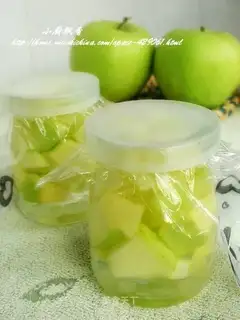 apple cider vinegar
 Potato oatmeal