1. Don't eat kelp as a staple food
You should not eat kelp as a staple food for a long time, as this will lead to excessive iodine intake, which can affect your health. Moreover, kelp contains a certain amount of arsenic, and excessive intake can cause poisoning. Therefore, before eating kelp, it should be rinsed with water to dissolve the arsenic.
2. Do not soak kelp for a long time
Do not soak kelp for too long before eating, because if soaked for too long, the nutrients in the kelp, such as water-soluble vitamins and inorganic salts, will also dissolve in the water, reducing its nutritional value. If the kelp becomes mushy and loses its texture after soaking, it has spoiled and should not be eaten. Traditional Chinese medicine believes that kelp is cold in nature, so people with a weak spleen and stomach should avoid it.
Sautéed Shredded Kelp
3. Don't drink tea or eat fruit right after eating kelp
After eating kelp, do not drink tea immediately, nor eat sour and astringent fruits, because kelp is rich in iron, and both of the above foods can hinder the absorption of iron in the body.
4. Special populations should be cautious when eating kelp
Patients with hyperthyroidism should not eat kelp because it is rich in iodine, which can aggravate the condition. Pregnant and lactating women should not eat too much kelp. This is because the iodine in kelp can enter the fetus and infant's body through the bloodstream, causing thyroid dysfunction.
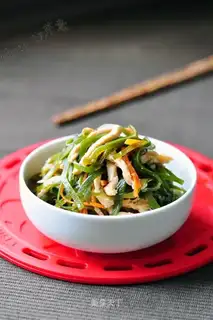 The seaweed