How to make a packed lunch nutritious? The main food should preferably be rice. The dishes should be cooked to about 70-80% done. Vegetables should mainly be stem-based. Choose low-fat meat dishes. Do not bring leafy green vegetables. Seafood and cold dishes are not suitable.
Nutrition experts remind the office workers who pack their lunch that this midday meal should be both substantial and nutritious. You need to eat enough and eat well. Therefore, attention should be paid to both nutritional balance and food selection, as well as food safety and hygiene.
The main food should preferably be rice
For packed lunches, rice is the best main course. In terms of microwave reheating, heated rice can basically maintain its original state, whereas steamed buns and large flatbreads are very prone to drying out and are not suitable for microwave reheating.
The dishes should be cooked to about 70-80% done
Nowadays, offices are equipped with air conditioners, refrigerators, and microwaves. Therefore, when packing a lunch, it must be reheated in the microwave. To prevent this step from affecting the overall nutrition, the food should be cooked to only 70-80% done. This not only saves time during preparation but also preserves more nutrients for lunch, killing two birds with one stone.
Small bento box
Vegetables should mainly be stem-based
The nutritional content of leftover leafy green vegetables is easily lost, and their nitrite content also increases. Therefore, the vegetarian dishes you pack should mainly be root and tuber vegetables, such as tomatoes and white radishes. If your packed lunch has few varieties, you should appropriately increase the variety of foods at dinner. In addition, after cooking the dishes, seal them in a timely manner and store them in a 4°C refrigerator. Thoroughly heat them before eating the next day and pay attention to food hygiene.
Choose low-fat meat dishes
Fatty meats rich in oil are prone to getting oily when heated in a microwave, and the separated oil will cause uneven heating, affecting the heating of other dishes. Therefore, it is best to choose lean meats such as beef, chicken, and lean pork for meat dishes. When cooking, you should also try to avoid frying.
Do not bring leafy green vegetables
Leafy green vegetables contain varying amounts of nitrates. When heated in a microwave or stored for too long, the vegetables will turn yellow and change flavor, and the nitrates can be reduced by bacteria into toxic nitrites, which have carcinogenic effects.
Seafood and cold dishes are not suitable
It is not advisable to bring fish and seafood. On one hand, after being left overnight, fish and seafood can easily produce protein degradation products that can damage liver and kidney function. On the other hand, fish and seafood reheated in the microwave are difficult to maintain their original color, aroma, and flavor, and their appearance can also affect appetite.
Cold dishes are not suitable because they are not good for eating overnight. Dishes like twice-cooked pork, sweet and sour spare ribs, meat patties, and fried rice are also best not to be brought, as they contain too much oil. Compared to low-fat foods, these things spoil more easily and are not as fresh.
Note 1: Healthy pairing requires careful preparation
Two dishes and one soup, one meat and one vegetable, plus one fruit—such a lunch is almost a luxury for office workers, but it requires you to prepare patiently in advance.
Nutrition experts say that the midday meal should be both substantial and nutritious. You need to eat enough and eat well. But for office workers, eating until you are 90% full is sufficient. This is good for your health and will not affect your afternoon work.
Basically, after a busy day, it's impossible to spend a lot of effort on a lunch that you won't eat until the next day. But to achieve the effect of killing two birds with one stone, you might as well work on the dinner menu from the night before. For example, make some dishes with a proper combination of meat and vegetables, and prepare an extra one-third of the portion for the next day. Even if there's only one dish, as long as the pairing is reasonable, you don't need to prepare anything else.
Pork chop loving heart rice
Note 2: For a hassle-free pairing, do your homework the night before
When your parents are around, they will prepare the food for the next day before dinner is even served without you having to ask. However, most poor office workers nowadays have to be self-reliant, so they can only take a few minutes while feeding themselves the night before to prepare for the next day's lunch.
Some people are simply too lazy to queue with colleagues for lunch at noon, so you can just buy a refreshing cold dish from a small restaurant near your home the night before, and then pack the leftover dishes and staple food from home together. It's very convenient.
Of course, you can also imitate the Japanese bento by bringing sushi or hand rolls for lunch. However, nutrition experts remind that such food must be heated in the microwave. Even if the storage conditions are perfect, you must prevent the food from spoiling during the idle time and affecting your health.
Little tip: Consider some simple and classic dishes like scrambled eggs with tomatoes. Don't make the staple food too monotonous; vary it to meet the requirements of a balanced diet.
Note 3: Chinese main dishes can be prepared in larger quantities
Remember that many Chinese dishes can be made in large batches. Generally, under allowable storage conditions, you can make enough for three or four days. Then, by pairing them with different vegetables, you can achieve a time-saving and labor-saving effect.
The most classic main dishes, like braised hairtail, stewed chicken wings, stewed beef, and spare ribs, can not only be eaten as main dishes on their own, but chicken wings, beef, and spare ribs can also be paired with cabbage, potatoes, and Chinese yam, respectively. One dish can evolve into different kinds of dishes. You won't get tired of it even after a long time, and it can also meet the standards of a healthy diet.
Little tip: Prepare more stewed meat dishes. However, if you add vegetables, you should cook them just before eating. This not only ensures the texture of the dish but also prevents the vegetables from losing nutrients over time.
Garlic golden粒
Warm little tip: Relieve fatigue and prevent sleepiness after a full meal
You must have a good lunch. This not only replenishes nutrients but also relieves fatigue from morning work. To achieve this, you need to eat more protein that can relieve fatigue, such as rice, meat, and soy products. These are the best choices.
Nutrition experts also point out that most office workers feel sleepy after lunch mainly because they consume too many high-fat, high-calorie, and high-sugar staple foods in their midday meal. These can reduce the oxygen-carrying capacity of the blood, making people easily tired. Therefore, to prevent drowsiness, you should eat more vegetables. The correct order for lunch is to eat meat first, then vegetables, and finally the staple food.
 small bento
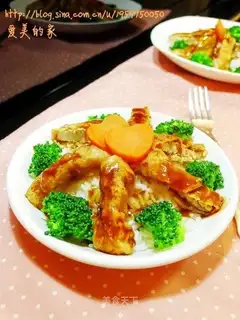 Pork Chop Love Rice
 Garlic gold and yellow