Beijing has already entered summer. Although it's not yet the muggy season, once the weather gets hot, many people are accustomed to sitting in air-conditioned rooms and eating cold foods to cool down. In fact, eating foods that are too cold in the summer only provides temporary relief and doesn't truly help the body beat the heat. As we enter the height of summer, when yang energy is most potent, the body's metabolism is vigorous, leading to significant loss of bodily fluids, which can easily deplete the body's vital energy. Summer diets should be light and easily digestible, and one should avoid excessive amounts of cold and greasy foods. If you can drink some congee during this time, it can replenish the body's needed fluids. By pairing it with a variety of ingredients, it can also nourish the body and help prevent disease.
Smart Congee Drinking: Cooling, Weight Loss, and Stomach Care
Drinking congee is one of China's traditional health-preserving methods. In modern life, it is an even simpler and more effective healthy eating method—because as long as you master the tricks of drinking congee, it can not only help overweight people lose weight and help patients with high blood pressure, high blood sugar, and high cholesterol control their condition, but also help people with diarrhea and indigestion recover their health.
Herbal-scented Duck and Winter Melon Congee
Congee can help control dietary calories and is beneficial for weight management. A bowl of rice can usually be cooked into four or more bowls of congee. Compared to dry rice, congee is larger in volume but lower in energy density. 100 grams of cooked rice contains over 100 kilocalories, whereas 100 grams of thick congee has only about 30 kilocalories. From another perspective, the same amount of grain, when cooked into congee, takes up much more volume than when cooked as rice, making it easier to feel "full from water." The satiety of congee is stronger than that of rice; while it makes you feel "full," it can also prevent excess energy intake. If you eat multigrain and bean congee, the satiety is even stronger. For those who want to lose weight, drinking more multigrain and bean congee can effectively reduce the energy in staple foods without feeling hungry or reducing nutritional intake, making weight loss easy.
Congee is also friendly to the digestive system. Especially when gastrointestinal function is low or when there is an intestinal infection or diarrhea, doctors often recommend congee because it is easier to digest compared to other staple foods. Our digestive system is like a hardworking machine. For the weak, if it is overused without proper maintenance, it will inevitably accelerate wear and tear on the stomach, leading to malfunctions. Even without gastrointestinal diseases, if you eat too many greasy and high-protein foods, you may feel physically tired and lose your appetite. At this time, having congee for two meals can let the stomach rest temporarily.
In the often sweaty summer, congee can help replenish fluids and is also very suitable for the dry climate of northern regions.
Mistakes in Drinking Congee: It Can Harm Your Health
Of course, no matter how good congee is, you can't drink it every day. Although congee is good, it's not a panacea. To drink congee smartly, it's best to avoid a few pitfalls.
Mushroom and Scallop Congee
First, you shouldn't drink congee for every meal. While drinking congee in moderation is beneficial, you shouldn't have it for every meal. Congee is a liquid food, and nutritionally, it is inferior to rice of the same volume. Also, congee "doesn't fill you up" as much; you feel full when you eat it, but you get hungry again soon. Over the long term, this can lead to malnutrition due to insufficient energy and nutrient intake. Therefore, when drinking congee, you also need to pay attention to a balanced diet. Making the congee a bit thicker, pairing it with a meat dish, or having some snacks between meals can all supplement energy.
Second, drinking iced congee is not advisable. Iced congee is a hot-selling item in the summer, but it is not suitable for elderly people with a cold and weak constitution or for children. Drinking too much iced congee can not only block the body's pores, making it difficult to expel metabolic waste, but it may also affect gastrointestinal function.
In addition, diabetics should drink congee in moderation. Diabetics are generally more prone to hunger, and because congee is digested quickly, it can easily make people want to eat again soon after. Congee itself is also easily absorbed by the body in the short term, leading to a rapid rise or fluctuation in blood sugar. Diabetics should drink congee in moderation, with only a small bowl at a time.
Finally, people with poor stomachs should not drink congee with every meal. Although congee can nourish the stomach, congee with a high water content dilutes stomach acid after entering the stomach, accelerates stomach expansion, and slows down stomach movement, which is also not conducive to digestion. Therefore, patients with stomach problems should not eat congee for every meal. Instead, they should often pair it with other easily digestible foods, chew slowly, and promote digestion.
Congee Suitable for Summer
1. Watermelon Peel and Mung Bean Congee
Watermelon peel has a diuretic effect and can also clear heat and relieve summer heat. Mung beans can also clear heat and reduce fire, prevent heatstroke and detoxify, and are a great remedy for nourishing the spleen and stomach. They have the effects of clearing heat and relieving summer heat, and promoting urination to reduce swelling.
Method: First, cook rice and mung beans in a pot for 10 minutes. Peel the hard outer skin of the watermelon peel, cut it into small cubes, and add it to the pot. Bring to a boil over high heat, then turn to low heat and cook into congee. You can add some sugar or shredded dried tangerine peel when eating.
Coconut-scented Black Rice and Fruit Congee
2. Winter Melon and Lean Pork Congee
Winter melon is a cool-natured vegetable suitable for eating in the summer, with the effects of promoting fluid production to quench thirst and clearing heat to relieve summer heat. When cooked with rice and lean pork, it can clear heat and detoxify, strengthen the spleen and promote urination, and also has a weight-loss effect, making it suitable for consumption during the hot and sultry summer days.
Method: After cooking rice in a pot for 25 minutes, cut the winter melon into small cubes. Mix the lean pork mince with salt and wet starch, then add it to the pot and continue cooking for 10 minutes.
You may also like:
Master the Congee Cooking Method to Make Delicious and Nutritious Congee
Nourish Your Stomach in Spring: Cook Some Nutritious Congee for Your Baby
You Should Drink Congee in Summer Too: 4 Must-Try Medicinal Congees for the Season
4 Summer Health-Preserving Congees to Nourish the Stomach and Strengthen the Spleen
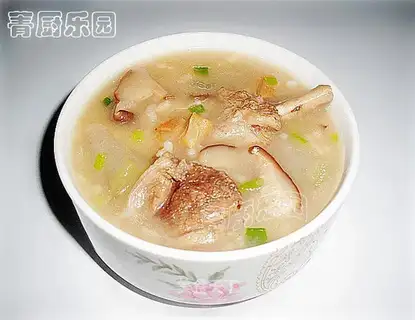 Stewed duck porridge with lotus and wax gourd
 yogurt salad
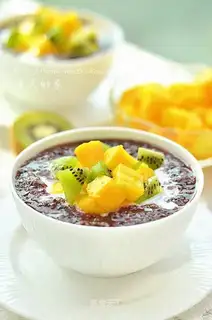 Coconut and black rice