A common summer soup for relieving heat is mung bean soup. Since it has health benefits and heat-relieving effects, can mung bean soup treat urticaria? How do you cook mung bean soup without it changing color? Let's find out with the editor how to cook mung bean soup and what its benefits are!
Can Mung Bean Soup Treat Urticaria?
When a person has urticaria, they lose a large amount of protein in their body. At this time, we should eat some high-protein foods, such as mung beans. This can effectively prevent the recurrence of urticaria and also clear heat and detoxify. However, mung bean soup can only play a role in preventing urticaria and supplementing protein, and it does not have significant medicinal value.
Tips for Cooking Mung Bean Soup
1. Don't cook for too long, and keep the soup and beans separate
The specific method is to first boil the water, then add the mung beans. It is recommended that the ratio of mung beans to water is 1:10. Cover and continue to simmer on low heat for 8-10 minutes. Pour out the clear soup. The mung bean soup (clear soup) cooked this way can maintain its bright green color in the air for a longer time, and has a good heat-relieving effect. The remaining beans can be cooked into mung bean paste, or cooked with rice to make mung bean porridge.
2. Cooking with other ingredients is even better
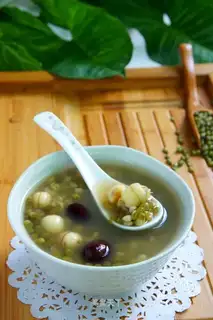
Mung Bean and Lotus Seed Soup
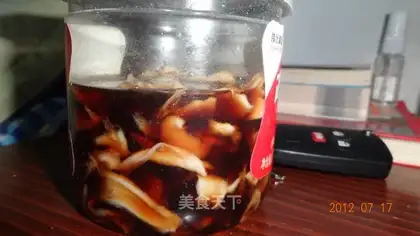
Cooking mung beans with other foods is more effective. For example, to prevent heatstroke, you can drink mung bean and honeysuckle soup. Take 100 grams of mung beans and 30 grams of honeysuckle, add an appropriate amount of water and cook for about 10 minutes, and drinking the clear soup will relieve the summer heat. An appropriate amount of mung beans, daylilies, and red dates, decocted in water, can treat vomiting and diarrhea.
Related Reading: Complete Collection of Mung Bean Soup Recipes
3. A few drops of lemon juice help keep the mung bean soup green
Studies have found that pH can also greatly affect the discoloration of the soup. The tap water in the north is alkaline, and the mung bean soup turns color very quickly after being cooked. After pouring out the soup, obvious color changes can be seen within two minutes. However, after adding vinegar or lemon juice to the tap water, the color of the cooked mung bean soup changes very little. Therefore, if you use tap water to cook mung bean soup, you can add half a spoon of white vinegar or a few drops of lemon juice to the water, but be careful not to add too much, otherwise the soup will become sour and affect the taste.
Pigeon and Mung Bean Soup
4. Don't use an iron pot to cook mung bean soup
Flavonoids in the mung bean skin may form darker-colored complexes after reacting with metal ions. For example, when mung bean soup is added with honey, it will produce a black color, which is exactly this principle. Although this reaction does not produce toxic substances, it may interfere with the antioxidant effect of mung beans and hinder the absorption of metal ions. Therefore, when cooking mung bean soup, do not use an iron pot; a clay pot is best.
5. Use purified water to cook, it is not easy to change color
The Food and Nutrition Research Room of China Agricultural University once used tap water, mineral water, purified water, and distilled water to cook mung bean soup. The results showed that the mung bean soup cooked with different water had different colors. The distilled water was the greenest and remained so for a long time. Next were purified water and mineral water. The mung bean soup cooked with tap water changed color the fastest, becoming significantly darker almost every minute after contact with the air, and quickly turning red. Therefore, it is best to use purified water when cooking mung bean soup.
6. It is best to cover the pot when cooking the soup
The mung bean skin contains a large amount of polyphenols. As long as they come into contact with oxygen, they are very easily oxidized into quinones, and then continue to polymerize into darker-colored substances. Therefore, when cooking mung bean soup, you should cover the pot to minimize the contact area between the mung beans and oxygen and prevent oxidation.
Related Reading: Complete Collection of Mung Bean Soup Recipes
7. Don't add alkali when cooking mung bean soup
Mung beans are rich in B vitamins, which are an important component of the heat-relieving characteristics of mung beans and can make up for the nutritional loss from sweating. Alkali can severely destroy various B vitamins. At the same time, the flavonoid antioxidant components in mung beans will also be lost due to the addition of alkali, causing structural changes and the color to turn yellow. Therefore, it is best not to add alkali when cooking mung bean soup. If you want the soup to be thicker, you can consider adding a small amount of oats or glutinous rice to "thicken" it.
You may also like:
Can pregnant women drink mung bean soup in summer?
Drink mung bean soup in summer to relieve heat and detoxify
Attention! Three types of people are not suitable for drinking mung bean soup
Be careful of heatstroke during the Sanfu days, mung bean soup clears heat and detoxifies
 Gin and gum
 Green Bean Lotus soup