Eating more vegetables in autumn and winter has excellent health benefits. The nutritional value of vegetables is generally very high. If you want to nourish your health through diet, you must not miss this method. So, what vegetables should you eat in autumn and winter? Which vegetables have health benefits?
Which vegetables have health benefits?
1. Prevents acne: Lettuce and Bitter Melon
Lettuce is rich in vitamins and trace elements, and its water content is among the highest in vegetables. Eating more helps to hydrate the skin and has a certain auxiliary therapeutic effect on acne caused by poor gastrointestinal function.
Bitter melon is rich in crude fiber, vitamin C, calcium, iron, and other nutrients. It contains active proteins with disease-fighting properties, which can not only increase the activity of immune cells but also remove toxins from the body.
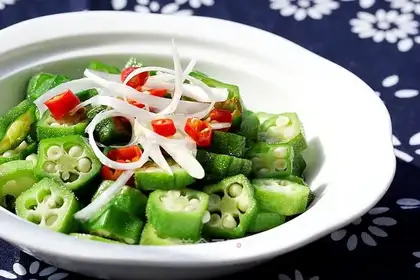
2. Kidney-strengthening plant: Okra
When it comes to the health benefits of vegetables, okra is currently the most famous. It has yellow flowers, and its fruit is a bit like a chili pepper. It is delicious when stir-fried, especially with eggs. The kidney-strengthening and body-toning effects of okra are extraordinary among vegetables.
Blanched Okra
Extended Reading: A Complete Guide to Eating Okra
3. Prevents colds: Lettuce and Cauliflower
Lettuce has a high iodine content, which is very beneficial for the body's basic metabolism and physical development. The nutritional value of lettuce leaves is far higher than that of lettuce stems. People who are prone to coughing in autumn can eat more lettuce leaves to soothe the cough.
The vitamin C content in cauliflower is 3 to 4 times higher than that of Chinese cabbage and soybean sprouts, and 2 times higher than that of oranges. Traditional Chinese Medicine has always held the belief that "white foods enter the lungs." The pure white cauliflower is a timely health vegetable that can not only prevent colds and other respiratory diseases but is also an excellent vascular cleanser.
4. Prevents internal heat: Spinach and Tomato
The rich riboflavin in spinach is an important nutrient for effectively preventing angular cheilitis, cheilitis, glossitis, and dermatitis.
Tomato has the effects of clearing heat and detoxifying, promoting the production of body fluids and quenching thirst. It is used to treat symptoms such as dry mouth, loss of appetite, stomach heat, bitter taste, bleeding gums, mouth sores, and a bitter taste in the mouth.
Spinach with Nuts
Extended Reading: A Complete Guide to Eating Spinach
5. Avoids indigestion: Chives and Cilantro
Chives are rich in carotene, protein, sulfides, and dietary fiber. Eating chives can help promote digestion, remove stagnation, strengthen the spleen, and stimulate appetite.
Cilantro has a unique aroma and can stimulate appetite and improve digestion. Traditional Chinese Medicine believes that cilantro has the effect of warming the middle and strengthening the stomach. Eating an appropriate amount of cilantro can relieve symptoms such as stomach pain and indigestion.
6. Pickled mustard greens, aid digestion
Mustard greens are recommended. For example, turnip, pickled mustard tuber, and San Ye Qing.
Pickled Mustard Greens with Pumpkin
Extended Reading: A Complete Guide to Eating Pickled Mustard Greens
7. Deep green and brown-red vegetables, eat one jin (500g) every day
The weather is dry, so it is important to eat more green leafy vegetables because of their high vitamin content, which is very beneficial. An adult should eat at least one jin (500g) of vegetables every day. Dark green vegetables like spinach, green vegetables, celery, crown daisy, amaranth, and carrots, as well as brown-red vegetables, not only have high vitamin content but also higher carotene content. Carotene is a treasure to the human body. Traditional Chinese Medicine believes it can tonify the middle qi, strengthen the stomach and aid digestion, strengthen the vital yang, calm the five organs, and has a good therapeutic effect on indigestion, chronic dysentery, and cough, hence it is known as "Oriental ginseng." When eaten after being stir-fried, it can be converted into vitamin A in the body, which can improve the body's immunity and indirectly eliminate diseased cells. A special reminder is to eat less spicy food like chili peppers.
Korean Radish Kimchi
Extended Reading: A Complete Guide to Eating Carrots
You might also like:
Wild vegetables that look ordinary but can nourish your health
Autumn tonic: moderation is key for better health
5 foods suitable for winter health preservation
Deep autumn health preservation: preventing cold is the top priority
 ♪ Black and yellow ♪
 Garlic Dutch beans
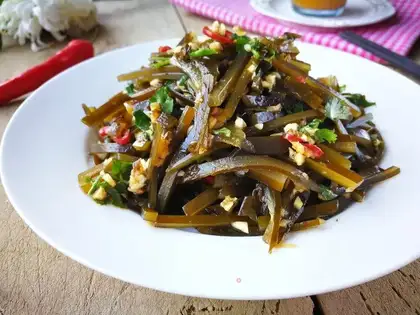 The cold seaweed roots
 Brownie