Today is the Winter Solstice, and the most important thing about the Winter Solstice is eating dumplings. On this day, we focus on health preservation. Besides dumplings, what other healthy foods should we not miss? Let's learn about the foods suitable for health preservation during the Winter Solstice!
Tangyuan (Sweet Rice Balls)
Tangyuan symbolizes "reunion," and eating them on the Winter Solstice is now very popular throughout the country. Common ingredients for making tangyuan, such as glutinous rice, sesame, and red beans, are also considered warm-natured and have a good effect on strengthening the spleen.
Sesame Fruit Tangyuan
Ginger
Another traditional food for the Winter Solstice is cured meat with ginger rice, and ginger is naturally an indispensable ingredient in this dish. This plant uses its thick, pungent underground rhizome as the cooking material. There are more than ten types, such as white ginger, yellow ginger, black-flesh ginger, and sand ginger, with yellow ginger, which is moderately spicy, being the most common.
Lamb
In many northern regions, there is a custom of eating dog meat and lamb on the Winter Solstice. Traditional Chinese medicine believes that both lamb and dog meat have the effect of strengthening the body and warming yang. Lamb is sweet in taste and warm in nature, and it has the function of tonifying the kidneys and strengthening yang. It has always been regarded as an excellent product for tonifying yang and is one of the important foods for nourishment during the Winter Solstice.
Related Reading: A Complete Guide to Eating Dumplings for the Winter Solstice
Wontons
For health preservation, eating wontons on the Winter Solstice is a good choice. Wontons were originally a food popular in the north, but now people in the south also enjoy eating them on the Winter Solstice. Old Beijing has a saying, "Wontons for the Winter Solstice, noodles for the Summer Solstice." "The Records of the Beijing Seasons" says: "The shape of wontons is like an egg, somewhat resembling the state of chaos in the universe, so they are eaten on the Winter Solstice." Besides the similar shape, the word "wonton" (hundun) is a homophone for "chaos" (hundun). Eating wontons in winter helps store heat energy for the cold season.
Tremella (Silver Ear Mushroom)
Tremella is nourishing but not greasy, making it a good medicinal tonic. It is rich in dietary fiber, which can enhance gastrointestinal motility and reduce fat absorption.
Tremella, Lily, and Lotus Seed Soup
Oats
Oats have the effect of lowering cholesterol and blood lipids. This is because oats are rich in dietary fiber, and this soluble oat fiber cannot be found in other grains.
Corn
It is rich in calcium, phosphorus, magnesium, iron, selenium, and vitamins A, B1, B2, B6, E, and carotene. It is also rich in dietary fiber. Regular consumption of corn oil can lower cholesterol and soften blood vessels. Boiled corn is the simplest way to prepare it.
Related Reading: A Complete Guide to Eating Dumplings for the Winter Solstice
How to Maintain Health During the Winter Solstice
Exercise and Nourishment
Exercise is a great way to stay fit. However, in winter, it's best to wait until the sun comes out before morning exercise, otherwise, you might damage the body's yang energy. If you need to go out in winter, make sure to dress warmly to avoid catching a cold. It's a good idea to take a short nap in the afternoon, but be careful not to catch a cold. When exercising in winter, it's not suitable to be too strenuous. It's best to do exercises that combine movement and stillness, such as Tai Chi or yoga.
Daily Life and Nourishment
Traditional Chinese culture places great emphasis on health preservation in winter. In traditional culture, spring and summer are considered yang, while autumn and winter are yin. It is important to arrange your daily life well in winter; otherwise, when spring comes, the body will experience a series of discomfort symptoms. In the cold winter weather, you must do a good job of keeping warm. It's best to soak your feet every night. Soaking your feet can ensure smooth blood circulation and relieve fatigue, promote sleep. However, it should be noted that the water temperature for foot soaking in winter should not be too high; warm but not scalding is best.
Diet and Nourishment
As the saying goes, "Food supplementation is better than medicine supplementation." When the Winter Solstice arrives, eating more delicious foods can not only provide the body with adequate nutrition but also please the senses, which is a win-win situation. In winter, it is more suitable to eat more nourishing foods. These foods can bring more yang energy to the body, making people healthier. Foods suitable for winter consumption include lamb, white radish, sweet potatoes, chestnuts, goji berries, etc.
You might also like:
How to use diet for health preservation during the Winter Solstice?
Winter Solstice Health Preservation: Remember Five Secrets
Winter Solstice Diet and Health Preservation: Pay Attention to Warm, Cooked, and Soft Foods
Winter Solstice has arrived, time to eat dog meat? Don't blindly supplement during the Winter Solstice.
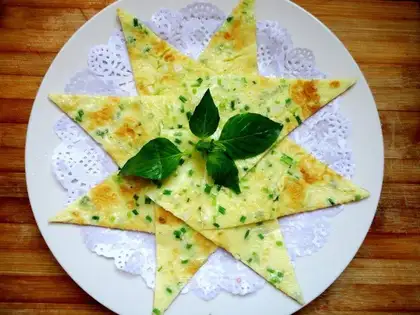 Onion egg pancakes
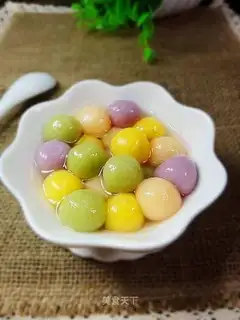 Bean-fruit soup