Introduction: Chives are a unique vegetable in China, mentioned in both the "Book of Songs" and the "Book of Rites," with ancient texts also recording "a thousand plots of chive fields." Looking at lines of poetry like "Night rain cuts spring chives" (Du Fu) and "Green wormwood and yellow chives try the spring platter" (Su Dongpo), it's clear that chives have been widely eaten and popular dish since ancient times.
Chives are also medicinal. Ancient medical books describe them as having functions such as warming the middle jiao, promoting qi, dispelling blood stasis, and detoxifying. Modern medicine also believes they have effects like invigorating blood circulation, removing stasis, and inhibiting or killing bacteria. As such, they are naturally also effective for women's ailments. In fact, chives can treat many women's diseases and are not only beneficial for men.
Scallion Pancakes
So why the specific saying "a man should never be without chives"? This is probably mainly related to the concept in medicine that "the physician's intention is key." The "Agricultural Book" of the Yuan Dynasty states: "Chives, when cut, grow again; they are never exhausted, thus they are called 'longevity.'" And because of their "never exhausting" quality, they are more suitable for men to eat, and therefore, they have the alternative names "Yang-Rising Herb" ("Materia Medica Spectrum") and "Yang-Strengthening Herb" ("Bencao Shu").
It should be noted that although there are records of chives treating "weakness of the yang channel," physicians throughout history have generally used chive seeds to treat impotence and nocturnal emissions.
Scrambled Eggs with Chives
Lotus root is the enlarged rhizome of the lotus flower, a common food that can be served as a vegetable or a staple. In the Jiangnan region, there are local delicacies like sweet congee with lotus root and fragrant lotus root with glutinous rice. Many families also enjoy dishes like lotus root balls, stir-fried lotus root balls, stir-fried lotus root slices, and spare rib and lotus root soup as side dishes.
Lotus root has the function of "stopping bleeding, dispersing stasis, and treating various blood-related syndromes." "Daily Use Materia Medica" states: "It should be eaten for all blood-related syndromes," where "blood-related syndromes" includes conditions like hematemesis and hemoptysis.
Sweet and Sour Lotus Root Slices
Books such as the "Compendium of Materia Medica" record that lotus root can "break postpartum blood stagnation." However, lotus root is considered cooling in nature, while postpartum women generally need to "keep warm." To this, the ancient physician Meng Shen explained: "Postpartum women should avoid cold foods, but lotus root is different from raw or cold foods because it can break blood stasis."
>Women are prone to "blood-related syndromes," such as menstrual disorders, metrorrhagia, and lochioschesis (postpartum lochial discharge). Because lotus root has the effect of "cooling the blood, nourishing the blood, promoting urination, and regulating menstruation," it is more advisable for women to eat it in appropriate amounts.Of course, the lotus root referred to here is the whole root. By convention, physicians believe that the node of the lotus root (lotus root node) has a better astringent and hemostatic function.
Crispy Fried Lotus Root
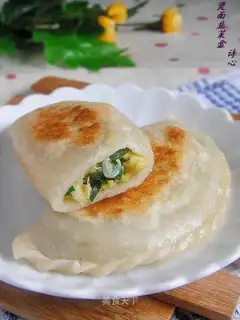 Hot leek box
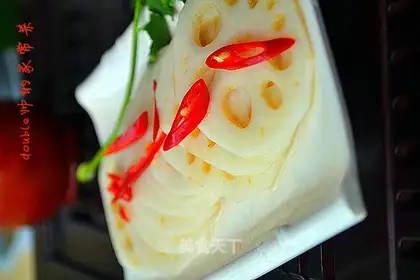 Sugar and vinegar
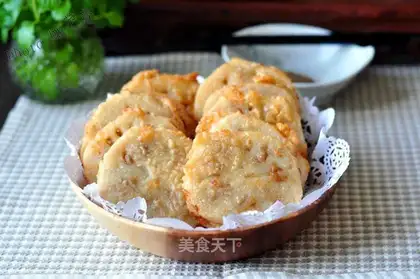 It's a bomb
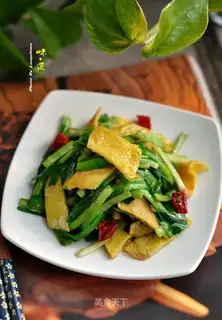 Fried eggs for cranberry