Introduction: Known as the "King of Beans," black beans are increasingly gaining popularity. A recent article highlights many lesser-known benefits of black beans.
Lowering Cholesterol. Black beans are rich in linoleic acid, lecithin, and dietary fiber, which can effectively inhibit cholesterol in the blood, thereby preventing obesity and some chronic diseases.
Vinegar-Soaked Black Beans
Supplementing Estrogen. For women, black beans are an indispensable food. Because the isoflavones abundant in black beans have the same effect as female estrogen, they can overcome various symptoms caused by estrogen deficiency. Once estrogen secretion is insufficient, it can lead to emotional instability, extreme sensitivity to cold, dizziness, and an increased risk of osteoporosis. People with these symptoms might consider eating more black beans.
Nutritious Black Bean Soy Milk
Improving Kidney Function. Traditional Chinese Medicine (TCM) believes that the five organs have a close relationship with the colors of food: green enters the liver, red enters the heart, yellow enters the spleen, white enters the lung, and black enters the kidney. In fact, black beans not only promote kidney function but also improve water metabolism and blood circulation.
Maintaining Stable Blood Pressure. The saponins and unique melanin in black beans can prevent the occurrence of oxidized fats. These effects strengthen blood vessels and enhance their elasticity.
Lotus Root, Red Date, and Black Pork Rib Soup
Relieving Knee Pain. Black beans are rich in minerals such as calcium, magnesium, and phosphorus, which have the effect of strengthening bones; the linoleic acid in black beans has an anti-inflammatory effect that can relieve pain caused by osteoporosis. Furthermore, TCM believes that knee pain in the elderly is closely related to the weakening of the liver, kidney, and spleen functions, and black beans can strengthen these organs, thereby alleviating knee pain.
Enhancing Skin Beauty. Black beans are rich in oligosaccharides, crude fiber, and pectin, which are very helpful for beautifying the skin and maintaining its youthfulness. At the same time, black beans can enhance kidney function, promoting the excretion of excess water and old waste from the body.
Korean Honey Black Beans
There are many ways to eat black beans; making congee with black beans and grains, or simmering soup with meat are both good choices.
Precautions for Eating Black Beans
1. Although black beans have a kidney-tonifying effect, they are not suitable for people with severe kidney disease. Because black beans are difficult to digest, consuming them can actually increase the burden on the kidneys. Therefore, people with severe kidney disease should not eat black beans.
Roasted Black Beans
2. Children should not eat too many. Patients with kidney yang deficiency and those allergic to black beans should avoid them.
3. After black soybeans are roasted, they become highly "heaty" (in terms of Traditional Chinese Medicine). Eating too many can easily lead to "internal heat," so they should not be consumed in excess.
4. Black beans should not be consumed with milk, spinach, soy milk, tetracycline, castor beans, houpu, gentian, or the five ginsengs (renshen, danshen, xueshen, huangshen, and shenshen). Gentian, the five ginsengs, and houpu are all Chinese herbal medicines. Therefore, when taking Chinese medicine, one should be careful not to eat black beans or black bean soy milk at the same time to avoid poisoning and other adverse reactions.
Black Beans and Pig's Trotter Stew
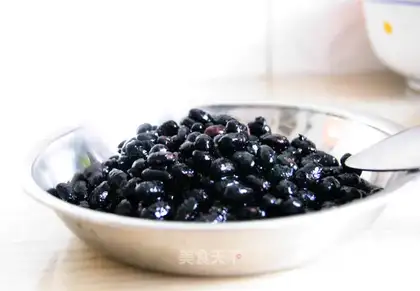 Black beans soaked in vinegar
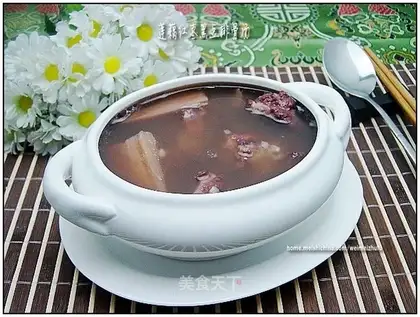 Lotus root, red dates, black bean ribs soup
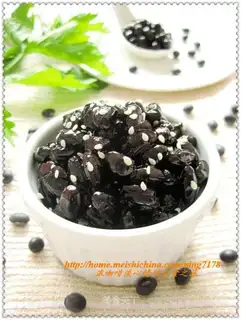 Korean honey black bean
 Nutritional black bean milk
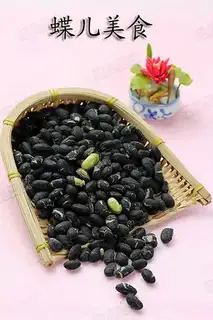 February 2nd, black beans
 Black Bean Pork Hand