Introduction: Peanuts are nutritious, affordable, and a favorite nut among Chinese people. Recently, the American magazine "Cooking Light" summarized the latest research to introduce five benefits of peanuts.
Appetite Control Peanuts are a "high satiety" food. Dr. Mattes, a professor in the Department of Nutritional Sciences at Purdue University, said: "The high satiety of peanuts is not just due to the content of fat, dietary fiber, and protein, but the result of the synergistic effect of all these factors." Kathy McManus, director of the Nutrition Department at Brigham and Women's Hospital, said that eating peanuts or peanut butter at breakfast can reduce food intake for the whole day.
Old-Fashioned Peanuts
Helps Reduce Salt Intake The salt content of salted peanuts is less than that of sliced bread or frozen waffles of the same weight. Therefore, eating salted peanuts for breakfast can satisfy your craving for salty food without easily leading to excessive sodium intake.
Stabilizes Blood Sugar Studies have found that replacing one serving of red meat in the diet with peanuts can reduce the risk of diabetes by 21%. Peanuts slow down the absorption of carbohydrates. If you eat some peanuts in the morning, your blood sugar will not be too high throughout the day.
Fried Peanuts
Keeps the Heart Healthy Researchers believe that the fatty acid composition of peanuts, combined with the effects of other components, can lower the level of low-density lipoprotein (bad cholesterol), making the heart healthier.
Reduces the Risk of Colorectal Cancer Studies have found that women who eat peanuts at least twice a week can reduce their risk of colorectal cancer by 58%; while men who eat peanuts at least twice a week can reduce their risk by 27%. Scientists speculate that this may be due to the effects of folic acid and other anti-cancer nutrients in peanuts.
Spicy Booze Peanuts
 Old vinegar peanuts
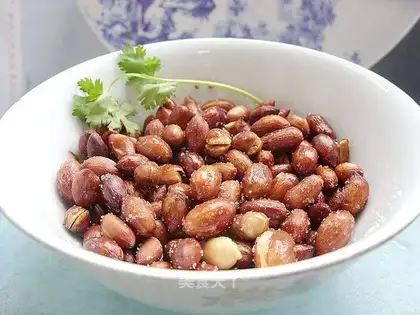 fried peanuts
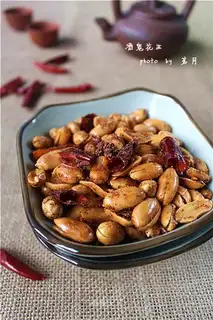 Drunk peanuts