Introduction: Many people know which fruits and vegetables are in season, but few are clear about the best supply times for various types of seafood. In fact, eating seafood also follows seasonal rules. For example, hairtail fish is at its best in spring, and prawns taste better in autumn. The Life Times has specially invited Chen Shunsheng, Director of the Department of Aquatic Product Processing and Storage Engineering at the College of Food Science, Shanghai Ocean University, to teach you how to eat fresh, nutritious, and delicious seafood all year round.
Spring: March-May
Hairtail is abundant in spring
Hairtail along China's coast can be divided into northern and southern types. Both have fishing surges in spring, making it an excellent opportunity for fishing and a season with high annual output. In autumn, northern hairtail will have a second fishing surge, while the southern type has to wait until winter.
[Nutrition] Hairtail is highly nutritious, containing 17.7 grams of protein, 4.9 grams of fat, and 29 micrograms of vitamin A per 100 grams. Hairtail is "affordable" and offers great value for money as a sea fish.
[Cooking] Hairtail is generally steamed, braised in soy sauce, or pan-fried. Steaming is light and low in oil, making it a healthier option. The method is: wash and cut the hairtail, place it on a plate, add a little salt, and steam it in a pot. After it's cooked, add shredded ginger and scallions.
Pomfret is most seasonal in late spring and early summer
In the East China Sea, pomfret can be caught year-round. However, the best time for fishing is during the spring and summer when the fish schools migrate to spawn.
[Nutrition] Pomfret has little bone and much meat. Per 100 grams, it contains 18.5 grams of protein and 7.3 grams of fat, most of which is unsaturated fat. It is also rich in potassium, with 328 milligrams per 100 grams, which helps lower blood pressure.
[Cooking] Common ways to cook pomfret include steaming, pan-frying, and braising, but it can also be used in congee to benefit the spleen and stomach. The method is: cook the pomfret in a clay pot, remove it, debone, and shred it. Then, cook it together with japonica rice, ginger, scallions, and salt. First, bring to a boil over high heat, then simmer over low heat to make a congee.
Braised Hairtail with Pickled Peppers
Summer: June-August
Sea urchin roe is best to eat in June and July
June and July are the peak reproductive season for sea urchins. When you crack open the shell at this time, you will see a small yellow mass, which is the sea urchin roe. It is the gonad of the sea urchin and its most precious part.
[Nutrition] Sea urchin roe is rich in protein, lecithin, riboflavin, etc. Lecithin is an important component of high-density lipoprotein ("good" cholesterol) in the blood, which helps regulate blood lipids and prevent cardiovascular and cerebrovascular diseases.
[Cooking] In coastal areas, steamed egg custard with sea urchin roe is widely loved. The method is: beat eggs and add appropriate warm water. Steam in a steamer until about 60-70% done. Cover the surface with sea urchin roe and steam for another 5 minutes over high heat until the roe changes color and firms up.
Abalone is plump and delicious in July and August
Abalone is a very slow-growing, single-shelled mollusk. Every July and August, as the water temperature rises, abalone moves to shallow waters to reproduce. At this time, the meat is plump and delicious, making it the best season for harvesting.
[Nutrition] Abalone is rich in minerals. Per 100 grams, it contains 266 milligrams of calcium and 22.6 milligrams of iron, making it a good food for dietary supplementation of calcium and iron. In addition, abalone's sodium content is very high, with 2011.7 milligrams per 100 grams, making it unsuitable for patients with hypertension.
[Cooking] Wash and slice the abalone, put it in a pot, add appropriate chicken broth and water and bring to a boil. Then add scallions, ginger, cooking wine, and bamboo shoots. Simmer over low heat until thoroughly cooked. Finally, add a little salt to eat, which can strengthen the spleen and nourish the stomach.
Steamed Egg Custard with Sea Urchin Roe
Autumn: September-November
Chinese prawns taste best in September and October
Chinese prawns have two major fishing seasons each year. One is the spring surge from April to May in the Yellow Sea and the East China Sea. The other is the autumn surge from September to October in the Yellow Sea and the Bohai Sea. However, in terms of yield and taste, autumn prawns have a higher yield and better taste.
[Nutrition] Chinese prawns are not only delicious but also a typical nutritional food that is high in protein and low in fat. Per 100 grams, they are rich in 18.3 grams of protein and only 0.5 grams of fat. In addition, Chinese prawns are also impressive in their content of carotene, vitamin E, and magnesium.
[Cooking] To better protect the high-quality protein and other nutrients of prawns, it is best to use simple, low-temperature cooking methods such as steaming, boiling, or quick-boiling. The simplest way is blanched prawns. First, wash the prawns. When the water in the pot boils, put the prawns in and add a little cooking wine. Boil for a short while. After cooking, you can eat them dipped in a garlic and ginger sauce.
Eating crab with rich meat and roe during the Mid-Autumn Festival
Every year during the Mid-Autumn Festival on the lunar calendar, swimming crabs begin to accumulate fat (roe) to prepare for winter. They are caught at this time when the meat is plump and the roe is full.
[Nutrition] Swimming crabs are rich in protein, as high as 15.9 grams per 100 grams. In addition, per 100 grams, they also contain 280 milligrams of calcium, 90.96 micrograms of selenium, and 121 micrograms of vitamin A. Among these, selenium is an essential mineral for the human body that can resist free radicals, improve immunity, and prevent tumors. Vitamin A is closely related to vision and can treat night blindness and xerophthalmia.
[Cooking] Steaming crab preserves its delicious flavor to the greatest extent. When eating crab, it is best to pair it with ginger juice, yellow wine, and vinegar to warm the middle burner, dispel cold, and promote digestion. It should also be eaten while it's hot. When cold, it not only tastes fishy but is also cold to the stomach, which may cause indigestion. Therefore, crab should not be eaten in excess. Generally, a person should not eat more than 500 grams of crab at a time and no more than 3 times a week.
Fragrant Lotus Leaf Original Flavor Hairy Crab
Winter: December-February
Oysters are most delicious from the Winter Solstice to the following Qingming Festival
Oysters, commonly known as sea oysters, are most delicious from the Winter Solstice to the following Qingming Festival. From May to August, they are busy reproducing, and the meat is not tasty.
[Nutrition] Oysters are known as "milk of the sea." Per 100 grams, they contain 65 milligrams of magnesium, 86.64 milligrams of selenium, and 9.39 milligrams of zinc. Zinc is crucial for maintaining taste and protecting immunity, and oysters are one of the foods richest in zinc. In addition, oysters are rich in nucleic acids, which can delay skin aging, reduce wrinkles, and resist aging.
[Cooking] Cooking oysters into rice porridge can help relieve physical weakness. The method is: first, decoct 20 grams of Ophiopogon japonicus and half a strip of kelp in water, then remove the dregs. Add 200 grams of oyster meat and bring to a boil. Add appropriate rice and mix well to cook into rice porridge. Season with sesame oil, salt, mushrooms, celery, and scallions to eat. It can nourish the body and relieve physical weakness.
Oyster and Tofu Hot Pot
 Oyster and tofu pot
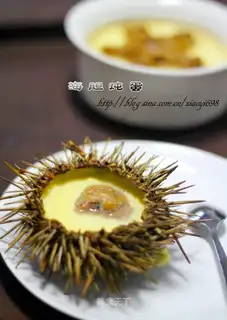 Sea urchin stew
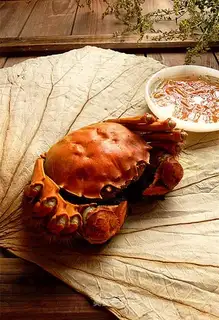 Herbal Krabs
 Fruit Tray