Introduction: Every woman desires a rosy and glowing complexion, but reality often falls short. Insufficient qi and blood in women can lead to a pale face; insufficient yin and blood to a flushed face; and insufficient kidney qi to a dark face. We must learn to "read the signs" and adjust our diet according to different complexions.
A woman with a sallow and thin face pales in comparison to one with a rosy complexion; the latter is undoubtedly the winner. A good complexion is bound to bring good relationships. In the workplace, interpersonal relationships are a big deal, so it's said that women live by their looks and must also eat according to their complexion.
I. Normal Complexion
The normal complexion of a healthy Chinese person is generally rosy and lustrous, with a slight yellowish tinge, indicating abundant qi and blood. However, it can vary due to factors such as age, constitution, genetics, occupation, and degree of sun exposure.
The normal complexion is mainly composed of three basic tones. The intensity of the yellow depends on the thickness of the stratum corneum and the content of certain pigments within it; the presence of red is related to the density of capillary distribution, the degree of capillary filling, and blood flow in the skin. If there is a significant change in skin color compared to the usual, and normal external factors are ruled out, the possibility of disease or sub-health should be considered.
II. Pale Complexion: Insufficient Qi and Blood
This is generally caused by insufficient filling of facial capillaries. In Traditional Chinese Medicine (TCM), this is mostly considered a deficiency-cold syndrome or blood loss. A pale and puffy face is often due to qi deficiency; a pale and withered face is mostly due to blood deficiency. TCM believes that poor respiratory health can cause a pale face; long-term illness, blood loss, chronic nephritis, etc., can also lead to a pale face; people with a tendency to anemia may easily show a pale and sallow complexion due to insufficient hemoglobin.
● Solution:
When there is a deficiency, supplement it. If there are no specific symptoms, dietary therapy is the best approach! The principle is to supplement what is lacking. Add more nuts, fruits, legumes, fish, and chicken to your diet. If necessary, eating some red dates and wolfberries is also a good method.
● Recommended Dietary Therapy: Honey-glazed Red Dates with Peanuts
Effect: Red dates replenish qi, peanut skins nourish blood, peanuts are moisturizing, and honey replenishes qi. The combined effect makes the complexion rosy.
Soybean, Peanut, and Red Date Milk
III. Flushed Complexion: Insufficient Yin and Blood, Seen in Dry-Heat Constitution
In TCM, red is often associated with heat syndromes. Blood becomes active with heat, the vessels fill, and blood flow accelerates, causing the skin to appear red. A flushed face is mostly excess heat, while red cheeks may be deficiency-heat from yin deficiency and fire hyperactivity.
● Solution:
For those with a persistently baby-red face, be aware of possible heart problems and seek timely medical examination and treatment. Ruling out pathological factors, you can apply some ointments to improve the condition of dilated facial capillaries. Say goodbye to irritating foods and avoid temperature extremes on the face. Of course, a red complexion is often related to your physical condition, so consult a doctor for help!
● Recommended Dietary Therapy: Braised Sea Cucumber with Bamboo Shoots
Effect: Sea cucumber nourishes yin and blood, bamboo shoots clear internal heat. The combined effect makes the skin delicate and smooth.
IV. Bluish-Complexion: Yang Deficiency, Insufficient Kidney Yang, Dampness Ascending to the Head and Face
Regarding the causes of a bluish complexion, TCM believes it is mostly due to cold syndromes, pain syndromes, and liver diseases. It is caused by poor qi and blood circulation and blocked vessels. Simply put, if deoxygenated hemoglobin (a type of hemoglobin that does not carry oxygen) increases in the blood, the skin will appear bluish-purple, a condition known medically as cyanosis, which is most noticeable on the tongue, lips, ears, cheeks, and extremities. Heart failure, congenital heart disease, liver disease causing excessive waste in the blood, etc., can also make the complexion turn bluish-purple.
● Solution:
You may be too tired, under too much stress, or your nutrition is inadequate, or you might be ill. It's best to get a medical check-up. If it's cyanosis, it means there is a lack of oxygen in the blood, and you need to improve your cardiopulmonary function. For cold syndromes, TCM theory usually involves "dispelling cold." Eat more beef and mutton, pepper, and ginger to generate heat and speed up metabolism. Once the cold is gone, the body "warms up," and the complexion will no longer appear bluish. Of course, combining this with appropriate exercise is even better!
● Recommended Dietary Therapy: Stir-fried Rape with Dried Shrimp
Effect: Rape promotes urination and expels dampness, dried shrimp tonifies kidney yang, and chicken soup replenishes deficiency and qi. The combined effect reduces facial swelling.
Golden Soup Sea Cucumber
V. Yellowish Complexion: Deficiency in Both the Spleen and Stomach
TCM believes that a yellowish complexion is mostly caused by spleen deficiency leading to poor water metabolism, or the skin lacking nourishment from qi and blood. The common "jaundice" in life is mostly due to liver cell damage or bile duct obstruction, which causes bilirubin concentration in the blood to exceed the normal range and seep into skin and mucous tissues. It mainly appears in patients with acute jaundice hepatitis, gallstones, acute cholecystitis, and cirrhosis. Another possibility is that the facial skin and palms of the hands and feet turn distinctly yellow, often in autumn and winter, likely due to consuming large amounts of pumpkin and carrots, causing a high abnormal level of carotene in the body.
● Solution:
For a yellowish complexion caused by picky eating or unbalanced nutrition, adjusting your diet and supplementing nutrients is the top priority. Correct poor eating habits, eat more high-protein, low-fat meats, and persist in eating pomegranates, papayas, and drinking milk and almond milk to improve. At the same time, don't forget to tonify the spleen and transform dampness. Often eat soups made with Job's tears, lotus seeds, longans, and red beans. If you have a congenital lack of carotene metabolic conversion enzymes, avoid foods containing carotene. Frequent late nights and an irregular lifestyle are also major factors for a "yellow face." Change your bad habits now!
● Recommended Dietary Therapy: Assorted Yam Puree
Effect: Yam tonifies the spleen and kidneys, walnuts nourish the lungs, kidneys, and moisten dryness while invigorating the brain, and red dates replenish qi and nourish blood. The combined effect smoothes skin wrinkles and makes it smooth and lustrous.
VI. Dark Complexion: Insufficient Kidney Qi, Deficiency of Yin Fluid
The kidneys have a filtering function and can regulate the body's water content, while the endocrine system regulates the metabolism of some body pigments. If problems occur, some metabolic waste products can accumulate in the body, causing the skin to appear dull and dark. Initially, it may appear as pigmentation in thinner areas of the skin, gradually spreading from the face to the whole body. TCM believes that a dark face is mostly a cold syndrome; a deficiency syndrome, often seen in kidney deficiency and blood stasis, commonly associated with long-term or severe illness, and also a manifestation of kidney deficiency, so kidney-tonifying herbs are often used for treatment.
● Solution:
Consume more foods that protect the kidneys and promote urination, such as walnuts, black fungus, lean meat, carrots, winter melon, tomatoes, citrus fruits, persimmons, and dried fruits. These foods are rich in protein, vitamins, zinc and other trace elements, which help improve the body's immunity. At the same time, pay attention to adjusting the acidity and alkalinity of food, and consuming more alkaline foods is healthier. Walnuts, black fungus, black beans, black sesame seeds, mussels, and wolfberries are all excellent kidney-toning foods. Use these ingredients to make soups or congee for long-term conditioning. In addition, drinking a large glass of honey water on an empty stomach in the morning can effectively expel toxins from the body!
● Recommended Dietary Therapy: Cabbage Stewed with Chestnuts
Effect: Duck nourishes yin and tonifies deficiency, chestnuts strengthen the spleen and kidneys, and cabbage nourishes yin and moistens dryness. The combined effect makes the complexion fair and bright.
Pumpkin and Yam Puree
 Pumpkin medicine mud
 Chicken mushroom pie
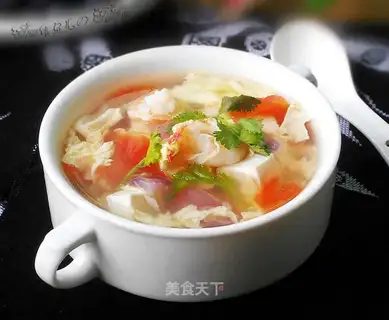 Onion shrimp tofu soup