Introduction: Multiple international studies show that an unhealthy diet can disrupt the body's balance and trigger diseases, while people who follow a low-calorie, balanced diet can potentially live at least 10 years longer. When it comes to eating healthily, nutrition experts have the most to say. Eight authoritative nutritionists are sharing their beloved foods from their tables with readers.
Tea seed oil (Recommended by Associate Professor Fan Zhihong, College of Food Science and Nutritional Engineering, China Agricultural University), also known as camellia oil, contains 80% to 83% monounsaturated fatty acids, which helps lower blood pressure, blood lipids, and control blood sugar. Its content of oleic acid and vitamin E is even higher than that of olive oil.
Tea seed oil has better heat resistance than soybean oil, corn oil, sunflower oil, etc., making it suitable for daily stir-frying and can also be used in cold dishes. Although tea seeds have a special flavor, most commercially available products are refined tea seed oil, which does not affect the flavor of the dish.
Houttuynia cordata (Recommended by Vice Director Ma Guansheng, Institute of Nutrition and Food Safety, Chinese Center for Disease Control and Prevention), also known as zhe'ergen, has a distinctive smell and taste. It contains protein, fat, and rich carbohydrates, and is known for its effects of clearing heat and detoxifying, promoting urination and reducing swelling, and stimulating appetite and regulating qi.
Fresh zhe'ergen, both its leaves and roots, are edible and can be stir-fried, served as a cold dish, or used in soups. For a cold dish, first wash it and remove the old roots, then marinate with salt for 5-10 minutes. Mix in light soy sauce, vinegar, and sesame oil, and finally add stir-fried dried chili segments and coriander segments. Houttuynia cordata is native to Guizhou and can now be bought in farmers' markets in northern China. When buying fresh houttuynia cordata, look for lush, emerald-green leaves with a strong houttuynia scent. If choosing dried, the best option is one that is free of impurities and is dry.
Chopped Chili Stir-fried Houttuynia Cordata
Wheat germ (Recommended by Yu Renwen, Senior Nutritionist and Meal Planner, Beijing Military Region General Hospital) is rich in nutrients, with high-quality protein content reaching up to 31%. It also contains all 8 essential amino acids required by the human body, with lysine content at 18.5%, which is 6-7 times higher than in rice and white flour. It is rich in zinc, which helps prevent inflammation, speed up wound healing, enhance fertility, and promote children's growth. Its high vitamin E content can boost cell vitality and delay aging, and getting vitamin E from food is not dangerous. Additionally, wheat germ is rich in polyunsaturated fatty acids, vitamin B1, and the mineral potassium.
Wheat germ can be bought in supermarkets and can be eaten in various ways. Adding it to cooked porridge gives it a rich wheat flavor and increases its nutritional value. It tastes great when mixed with milk or soy milk. When combined with bean flour, cornmeal, and wheat flour to make bee cakes, its protein is more easily absorbed by the body. It can also be mixed with meat to make delicious wheat germ meatballs, which not only reduces meat consumption but also decreases the intake of saturated fat and cholesterol.
Iron-fortified soy sauce (Recommended by Professor Zhou Jian, Department of Nutrition, Beijing University of Chinese Medicine) Iron is an essential nutrient for the human body. Iron deficiency can lead to iron-deficiency anemia, causing poor memory and a weakened immune system. Soy sauce is a widely used condiment, so supplementing iron with iron-fortified soy sauce is a good choice. Iron-fortified soy sauce is enhanced with "sodium iron ethylenediaminetetraacetate," which plays an important role in preventing iron-deficiency anemia. Some people might worry about excessive iron intake from iron-fortified soy sauce, but there is no need for concern. The Chinese Nutrition Society recommends that the daily dietary iron intake for adults is 15 mg, and for pregnant and lactating women, it is 25 mg. A normal diet and the use of iron-fortified soy sauce will not lead to excessive intake. At the same time, the body has a regulatory mechanism for iron absorption, and excess iron can be excreted through metabolism.
When purchasing iron-fortified soy sauce, it is best to check if the packaging has a clear label indicating it is iron-fortified. Also, buy products from regular manufacturers that have been inspected under systems like "HACCP" (International Food Safety Assurance System), which will have clear markings on the label.
Avocado (Recommended by Professor Lianzhen Huang, Director of the Department of Nutrition and Food Hygiene, Tongji Medical College, Huazhong University of Science and Technology, and Chairwoman of the Hubei Nutrition Society), also known as alligator pear, has a delicate flesh and a unique, delicious taste. It contains more than 80% unsaturated fatty acids, known as "healthy fats," and is also rich in various antioxidants like vitamins A, E, C, and trace element selenium, as well as multiple mineral elements. It can protect the cardiovascular system and lower the level of "bad" cholesterol in the blood.
Avocados can be eaten in various ways; it is generally best to eat them raw and fresh. They can be mixed in salads or used as a spread on bread or steamed buns, and the taste is excellent. Avocados are mainly produced in Australia and can be purchased in large supermarkets in China.
Avocado and Pear Salad
Blueberries (Recommended by Chen Xiafei, Chief Dietitian, Department of Nutrition, Shanghai Huadong Hospital) are highly nutritious. They have a delicate flesh, a moderately sweet and sour taste, and a unique flavor. They are rich in vitamins, protein, minerals, anthocyanins, and compounds like flavonoids and polysaccharides. They are known as the "Queen of Fruits" and the "King of Berries" and are one of the five healthy fruits recommended by the Food and Agriculture Organization of the United Nations. Anthocyanins are currently the most effective antioxidant bioactive agents known to humans, helping to delay aging and improve vision. Studies have found that eating blueberries can boost immunity, enhance brain power, protect the heart, lower blood sugar, strengthen bones, and prevent cancer, cystitis, and constipation. They are especially beneficial for the elderly, and a small handful a day is recommended.
It is best to buy fresh blueberries; the more white powder on the surface, the better the quality. When fresh blueberries are not in season, you can eat dried blueberries, but be sure to buy those with low sugar content. Blueberries spoil easily, and washing them accelerates the spoilage process. Therefore, only wash what you are going to eat, and store the rest in the refrigerator.
Burdock (Recommended by Linyin Xinying, Council Member of the Chinese Nutrition Society and researcher at the Institute of Nutrition and Food Hygiene, Shandong University), also known as niubangzi or "evil reality," contains inulin, fiber, protein, and various vitamins and minerals. Its carotene content is much higher than that of carrots. Fiber can promote intestinal peristalsis, help with bowel movements, and reduce waste in the body. Studies have shown that burdock contains arctigenin, arctiin, flavonoid glycosides, and chlorogenic acid, which can inhibit cancer cells and enhance immunity.
Burdock can be bought in supermarkets or farmers' markets. When selecting, choose roots that are smooth in shape, straight, without forks or rootlets, and free of insect damage. Burdock loses water easily, so it should be eaten soon after purchase. The longer it is stored, the harder it becomes and its aroma will gradually dissipate. Therefore, it is best to buy only what you plan to eat. Fresh burdock can be stir-fried, boiled, or made into soups and fillings with other vegetables or meats.
Konjac (Recommended by Wang Xingguo, Director of the Department of Nutrition, Dalian Central Hospital) has been cultivated in China for over 2,000 years. It was later introduced to China from Japan, where it became deeply loved by the Japanese, who eat it in every meal at every household. Japan is still the country with the highest consumption of konjac. The World Health Organization has designated konjac as one of the top ten health foods. Its main component is konjac glucomannan, a soluble dietary fiber with a content of about 44% to 64%. It has a good texture, easily induces satiety, and helps people control their weight. It also has effects such as promoting bowel movements, detoxifying, and preventing cancer, making it a "gift from heaven." Overall, konjac is low in calories, low in fat, and low in sugar, making it very good for the elderly.
Konjac foods come in many varieties, such as konjac shreds, konjac blocks, konjac slices, konjac balls, and konjac tofu. It is also simple to make at home and can be stir-fried, stewed, braised in soups, or used in hot pot. It can be eaten as a daily vegetable.
Snow Peas Stir-fried with Konjac
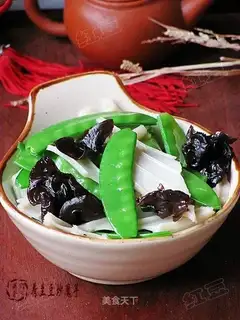 stir-fried konjac with lotus beans
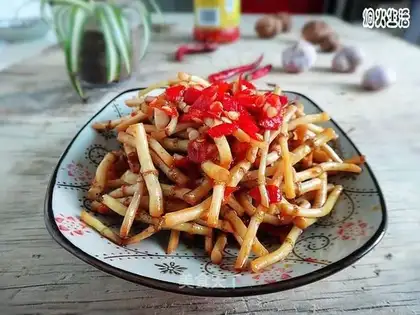 Pepper cutter, fish and grass
 Heavy cheesecake