Introduction: Traditional Chinese Medicine (TCM) holds that dried tangerine peel is pungent, bitter, and warm in nature, and it acts on the spleen and lung meridians. It functions to promote qi circulation and strengthen the spleen, lower adverse qi to stop vomiting, regulate the middle jiao to stimulate appetite, and dry dampness to resolve phlegm. It is indicated for epigastric and abdominal distention and fullness, belching, nausea, and vomiting due to qi stagnation in the spleen and stomach; as well as poor appetite, lassitude, loose stools, and a productive cough with copious phlegm due to dampness obstructing the middle jiao. People often drink dried tangerine peel steeped in water, but experts in TCM dietary therapy and health preservation state that dried tangerine peel can also be made into many unique and flavorful dishes with excellent health benefits.
Five Benefits of Using Dried Tangerine Peel in Cooking
Effects on the Digestive System: The volatile oils in dried tangerine peel have a mild stimulating effect on the gastrointestinal tract, promoting the secretion of digestive fluids and expelling accumulated gas in the intestines, demonstrating the effects of aromatic stomach strengthening and expelling wind and qi.
Effects on the Cardiovascular System: Decoctions and alcohol extracts of dried tangerine peel can excite the myocardium, but excessive doses can have an inhibitory effect. Additionally, it can cause mild vasoconstriction and a rapid increase in blood pressure. The pectin in dried tangerine peel also has a certain preventive effect on arteriosclerosis caused by hyperlipidemia.
Effects on the Respiratory System: The volatile oils in dried tangerine peel have an irritant expectorant effect, making it easier to expel phlegm. The decoction has a weak bronchodilatory effect, and its alcohol extract has a better anti-asthmatic effect.
Effects on the Urinary System: The decoction of dried tangerine peel can cause renal vasoconstriction and reduce urine output. Anti-inflammatory effect: When used together with vitamin C and vitamin K, the decoction of dried tangerine peel can enhance its anti-inflammatory effect.
Red Bean and Dried Tangerine Peel Rice
Recommended TCM Dietary Dish: Dried Tangerine Peel Honey Glazed Ribs
Ingredients: Pork Ribs (2-3 pieces), Nine-times Processed Dried Tangerine Peel (one packet)
Seasonings: Garlic (2 cloves), Ginger (5 slices), Cornstarch (3 tbsp), White Pepper (to taste), Dark Soy Sauce (3 tbsp), Corn Oil (500ml), Egg White (1)
1. Divide the dried tangerine peel into two halves. Finely chop one half into a powder and mince the other half. Why must it be a powder? Because if it's in granules, the peel and meat will separate during frying, and the peel will burn, making the meat bitter. (You can use a food processor to grind the peel). Don't ask me why there's so little powder from half the peel; I won't tell you that I couldn't grind it all and only sifted this tiny bit from the minced half.
2. Crush the garlic cloves and slice the ginger. Do not mince them for better flavor infusion, for the same reason as the peel—they will turn into black charcoal when fried.
3. Mix the tangerine peel powder, garlic, ginger, white pepper, soy sauce, cornstarch, and egg white together.
4. Pour the sauce mixture over the ribs, mix well, and marinate in the refrigerator for 1 hour. If you have time, you can marinate them longer.
5. If you really can't make the powder, it's okay to put in the large pieces to marinate with the ribs. Just separate them from the ribs before frying.
6. After marinating, heat the oil. Remove the garlic and ginger from the ribs. Once the oil is hot, reduce the heat to low. Add the ribs to the fryer one by one. When the smoke rising from the pot is white steam rather than water vapor, it means the ribs are almost cooked. Turn the heat back up to high and fry for a bit longer, mainly to color and crisp the outside. Turn off the heat as soon as they start to change color, as they will continue to darken during the time it takes to plate.
7. Sprinkle with the minced dried tangerine peel as garnish.
Tips:
1. When buying ribs, choose the longest ones. You can ask the butcher to chop them into 7cm pieces. If you're skilled with a knife, you can do it yourself. Cut off the ends of the ribs (I used them for a fish maw and beef tendon soup). After cutting, check each piece to ensure they have a consistent amount of meat; trim off any that are too thick, otherwise some will be cooked while others will be undercooked.
2. The key to this dish is controlling the heat. Just get a general sense of the oil temperature.
3. If you have a food processor, you can grind half of the dried tangerine peel into a powder for marinating the ribs and the other half into minced pieces to sprinkle on top before serving.
Dried Tangerine Peel Honey Glazed Ribs
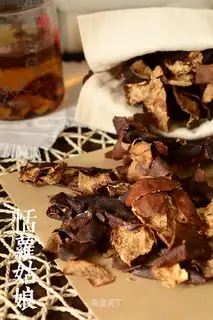
Make Your Own Dried Tangerine Peel
Good quality dried tangerine peel is very expensive, but you can make it at home.
Select mature tangerines and trim the stems flat. Choose tangerines with undamaged peels. Peel the tangerines and place the peels in a sunny location to naturally dehydrate and wilt. Note that the pith should face outward during drying. Store the dried tangerine peels in a sealed container for 2-5 months, using humid air at 80% humidity to soften the peels. Once softened, tie them up and let them air-dry, then place them back in the sun to dry completely. Once fully dry, the dried tangerine peel is ready and can be stored in a sealed container.
Making Dried Tangerine Peel
 Red bean rice
 Painting
 The rice intestines