Don't think that eczema only grows in the hot summer; autumn is also a peak season for eczema, especially after rain, when skin eczema is more severe. How to prevent and treat autumn eczema? Here we recommend 10 different vegetables to clear heat and toxins, prevent and treat eczema, and take the first step in autumn health preservation!
1. Hyacinth Bean
In Traditional Chinese Medicine, hyacinth bean is considered neutral in nature and sweet in flavor. It is both a medicine and a food, capable of strengthening the spleen and stomach, and transforming damp-heat. For those with skin eczema, consuming it has both medicinal and dietary therapeutic effects. The "Huapin Huayi" records: Hyacinth bean, sweet and neutral without being cloying, with a fresh and non-pungent aroma, and a warm nature with a slightly yellow color, best matches the nature of the spleen. For patients with skin eczema, regular consumption of hyacinth bean strengthens the spleen's function, eliminates damp-heat, and is beneficial for curing stubborn eczema. In short, the hyacinth bean is a treasure; its fruit (hyacinth bean), peel (hyacinth bean skin), flowers, and leaves can all be used as medicine. Its nature and flavor are slightly warm and sweet, entering the spleen and stomach meridians. It has the effects of strengthening the spleen and stomach, harmonizing the middle jiao to transform dampness, eliminating summer heat, and detoxifying. It is mainly indicated for spleen and stomach weakness, diarrhea, vomiting, internal accumulation of summer-dampness, epigastric and abdominal distension and pain, red and white leukorrhea, etc. It can also resolve alcohol toxicity.
Braised Hyacinth Bean with Beijing Sauce
2. Mung Bean
Mung bean is rich in nutrition. Every 100 grams of mung bean contains 23.8 grams of protein, 58.8 grams of carbohydrates, 0.5 grams of fat, 80 milligrams of calcium, 360 milligrams of phosphorus, and 6.8 milligrams of iron. It also contains carotene, vitamin B1, vitamin B2, vitamin E, niacin, and various mineral elements. Traditional Chinese Medicine believes that its nature is cool and its flavor is sweet, with the effects of clearing heat, eliminating summer heat, promoting urination, and detoxifying. Ancient physicians believed it could primarily treat erysipelas with vexing heat, urticaria, resolve pox toxicity, and sores and pustules, all relying on its power of clearing heat, promoting urination, and detoxifying. For those with acute skin eczema, consuming it helps to remove dampness and clear heat.
Moreover, the protein in mung beans is mainly globulin, and it contains various amino acids such as methionine, tryptophan, and tyrosine. Among the phospholipids it contains are phosphatidylcholine, phosphatidylethanolamine, phosphatidylinositol, phosphatidylglycerol, phosphatidylserine, and other components.
Mung Bean, Lily, and Lotus Seed Soup
3. Winter Melon
Winter melon is sweet in flavor and cold in nature, with the effects of clearing heat, promoting urination, and reducing swelling. Winter melon has a low sodium content and has a good auxiliary therapeutic effect on arteriosclerosis, cirrhosis with ascites, coronary heart disease, hypertension, nephritis, edema, and other diseases. "Bencong Xin" says it can benefit dampness and expel wind, so it is beneficial for both acute and chronic eczema.
Moreover, winter melon is rich in ascorbic acid, thiamine, riboflavin, and niacin among its vitamins. Vitamin B1, which has a cancer-preventing effect, is quite abundant in winter melon seeds. The mineral elements include potassium, sodium, calcium, iron, zinc, copper, phosphorus, selenium, and 8 other elements. The potassium content is significantly higher than the sodium content, making it a typical high-potassium, low-sodium vegetable. This is very beneficial for patients with kidney disease, hypertension, and edema who need to eat low-sodium foods, among which the element selenium also has various functions such as anti-cancer.
Summer-Reducing Winter Melon and Coix Seed Syrup
4. Lagenaria Siceraria
Lagenaria siceraria is cold in nature and sweet in flavor, capable of clearing heat and promoting urination to drain dampness. Medical books say it treats sores and toxins; skin eczema can also be considered a type of sore toxin disease. Consuming lagenaria siceraria to clear and drain damp-heat can cure eczema. "Diannan Bencao" records: For various sores with purulent discharge and ulceration: wrap lagenaria siceraria with buckwheat flour, burn it until charred, remove the flour, and take the powder. This is similar to stubborn eczema with infection. The simple and effective way to eat it is best to take it as a decoction.
However, it should be noted that bitter lagenaria siceraria is not edible and can cause food poisoning. This is because bitter bottle gourd contains a plant toxin—cucurbitacin glycoside—and the toxin is not easily destroyed by heating. Ingesting it by mistake can cause food poisoning. A few hours after ingesting bitter bottle gourd, mild poisoning symptoms include dry mouth, dizziness, nausea, fatigue, and drowsiness; severe poisoning manifests as nausea, vomiting, abdominal cramps, diarrhea, dehydration, and pus and blood in the stool, which can be life-threatening in severe cases.
Egg, Lagenaria Siceraria, and Pork Belly Mushroom
5. Luffa
Luffa contains protein, fat, carbohydrates, calcium, phosphorus, iron, and vitamins B1 and C, as well as saponins, plant mucus, xyloglucan, luffa bitter substance, and citrulline. Traditional Chinese Medicine believes that luffa is cool in nature and sweet in flavor. Those with skin eczema should eat it often, as it can achieve the effects of clearing heat, cooling the blood, and detoxifying. "Yixue Rumeng" once said: It treats all kinds of malignant sores in men and women, residual poison from smallpox in children, and breast abscesses, carbuncles, and sores. These diseases are mostly caused by damp-heat, similar to skin eczema. Eating luffa can achieve the purpose of removing damp-heat and resolving damp-toxin.
Moreover, luffa contains B vitamins that prevent skin aging and vitamin C that whitens the skin. It can protect the skin, eliminate blemishes, and make the skin fair and delicate, making it a rare beauty product. Therefore, luffa juice is called "beauty water".
Steamed Luffa with Garlic Vermicelli
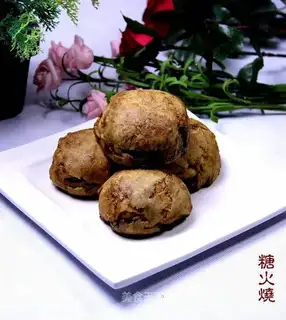 Tanghuoshao
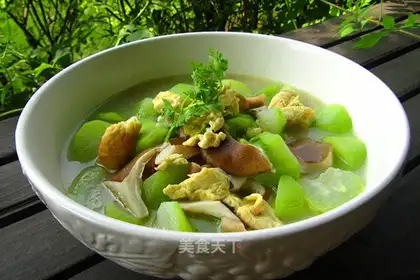 Eggs and hog mushrooms
 Onion roll
 Red sugar
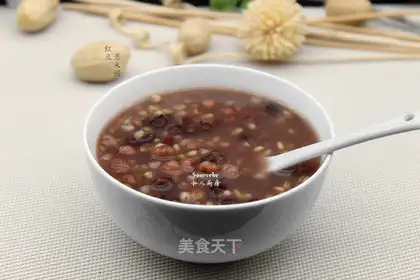 Porridge