Hokkaido toast
By VicentaLakin

The bread formula is a web-based charade. I'm just reducing the amount of sugar. The measured yeast and salt have been replaced with a convenient amount of key. How many roasted fever friends have lost on the way to take it. I've finally made it. Come on, everybody
Recipe Recommendations
- Jinxiang high-gluten flour 300g
- soft white sugar 9g
- fresh milk 96g
- egg white 21g
- butter 6G
- milk powder 18g
- salt
- sweetening
- baking
- several days
- ordinary
Steps for Hokkaido toast
1
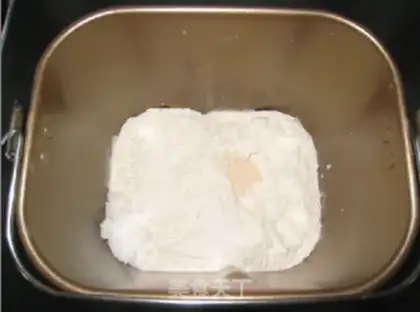
The whole of the Chinese pasta material, except butter, is placed in the inside of the breadbox, following the order of liquids and solids. Dig a hole in the middle flour and put it on the yeast and then put it on the flour cover。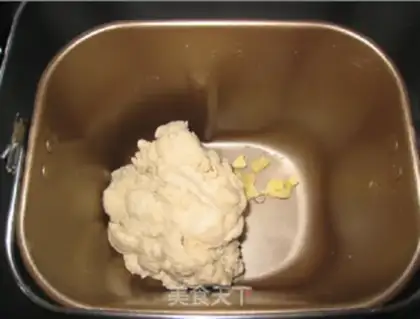
2
Commencing the maker and face, after the noodle grouping, with soft butter, and continuing and facing up to a slightly smooth phase。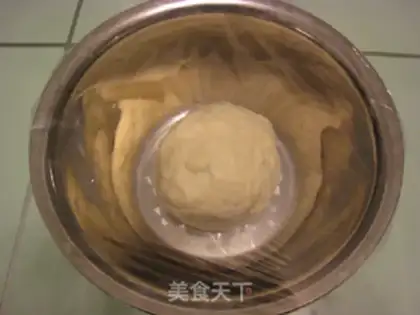
3
Take out the noodle, put it in the container, and cover it with film. It's a nice Chinese noodle。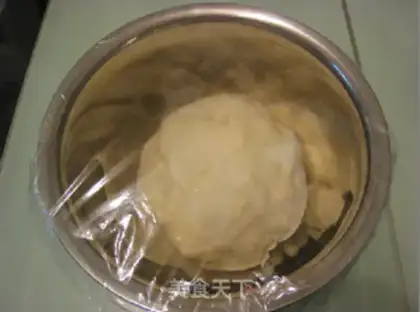
4
When the oven is fermented at a low temperature (28-35 degrees) and the noodle is increased by a factor of one (approximately 60 minutes), the noodle is covered with a protective film and sent to the refrigerator for 18 hours。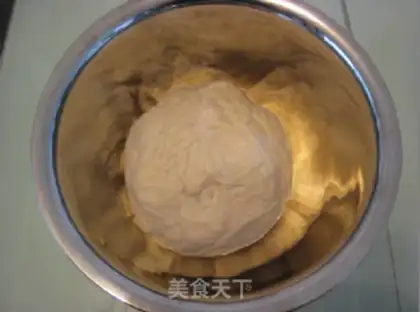
5
After the freezer, the face wrinkles and the size doesn't seem to change。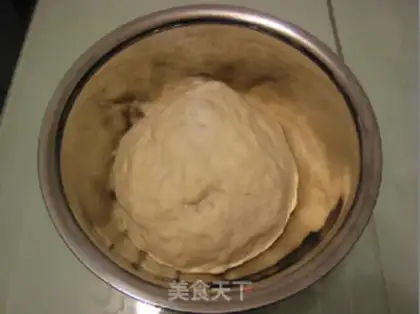
6
After an hour of cooling (28-35 degrees) of the oven, the surface group increased slightly。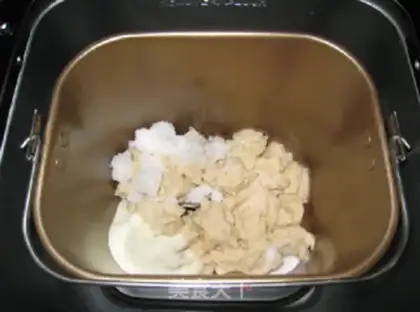
7
Torn the Chinese noodles into small pieces and mixed them with materials other than butter in the main ones。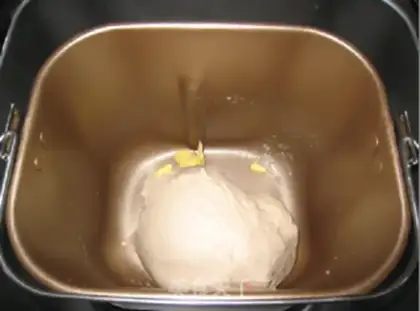
8
Following the opening of the bread machine and face program, after the completion of one procedure (15 minutes), the face was essentially smooth, put into soft butter, and a face program was initiated again。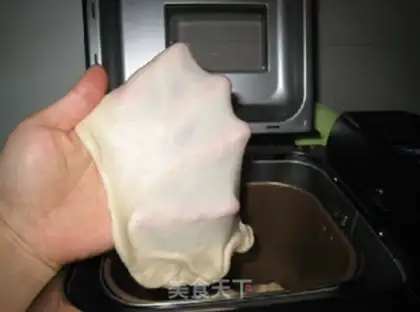
9
After the third and face-to-face procedure was completed, a small section of the face slowly spreads, presenting large, non-breakable murals of gloves, and stopping the face (45 minutes of actual Republic)。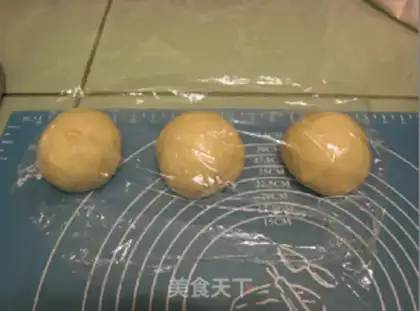
10
Noodles are removed from the bakery, covered with protective film, and after 15 minutes of lax room temperature, the exhaust is weighed, evenly divided into three equal parts, rounded and loose for 15 minutes。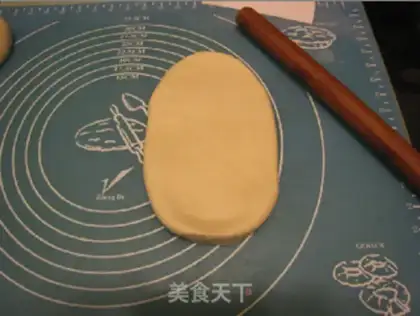
11
Press the face of the face, and the ovals。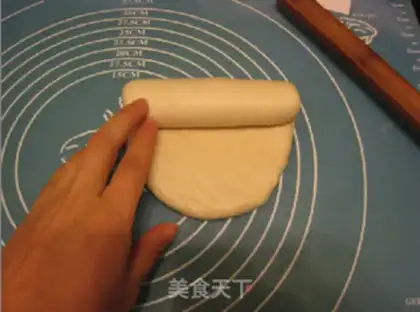
12
Turn over, roll up and down, squeeze the mouth。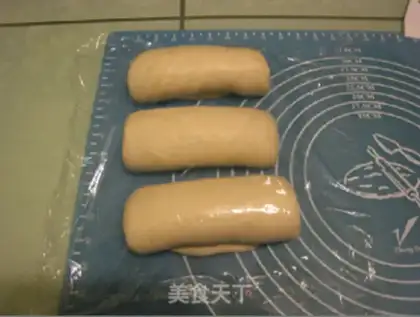
13
Roll all three rolls, cover the membranes and relax for 15 minutes。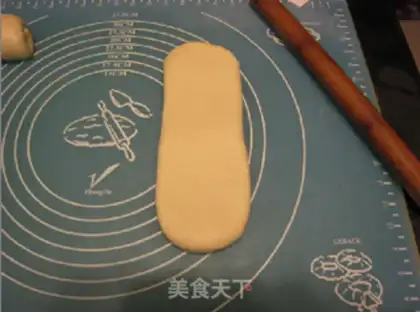
14
Take a roll of face, flatten it, stoop it up。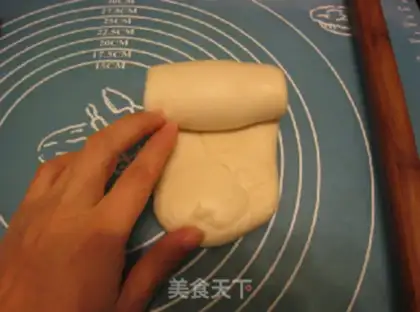
15
Turn over, roll up and down, roll up again and squeeze the mouth。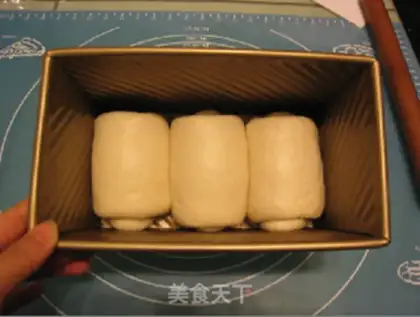
16
Put three rolls in the toaster。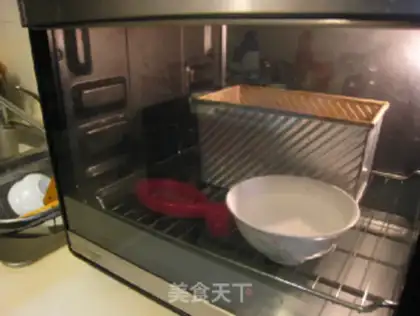
17
Secondary fermentation is performed in the oven while temperature (28-40 degrees) is monitored by thermometers. Put a bowl of hot water to maintain humidity。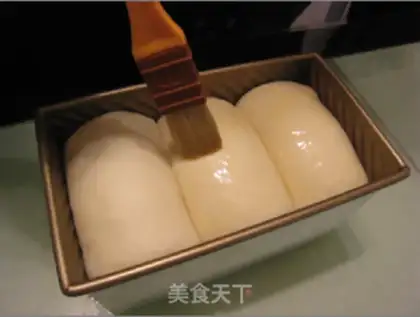
18
After fermentation to the full 9th fraction of the mould (temperature change between 28-40 degrees, fermentation of about 90 minutes) a layer of whole egg fluid is painted on a flat surface。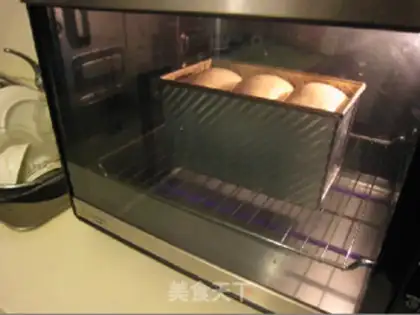
19
After 200 degrees of preheating, the oven is 180 degrees above, 190 degrees below, 30 minutes baked. When the colour on the surface reaches the colour required, tin paper is added in time (this time is forgotten, it is late and the surface is a little dark)。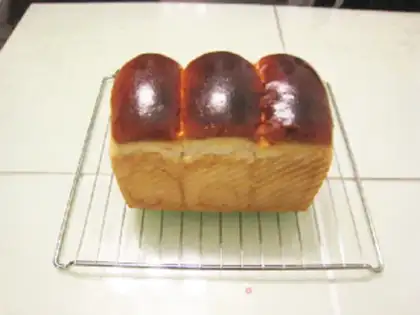
20
Once out of the oven, it will be demoxified and cooled to room temperature and will be sealed in a fresh bag。Hokkaido toast Make Tips
After 18 hours of direct cryogenic freezing and fermentation, Chinese materials and group formations do not grow much larger than before, but only slightly more, and in no case two to 2.5 times as many people say online. I've done this many times. I used to wonder what was missing and even suspected that my fridge had problems. In practice, it was found that the number of Chinese noodles that had been refrigerated until close to 72 hours had not increased twice, or 1.5 times at the most. Of course, this multiplier is artificially estimated, and everyone's estimates are different. One and a half times what I estimated might be twice as much. It is now clear that all the failures of the past were due to the lack of a base of fermentation for direct cryogenic cooling. If you want cryogenic cold fermentation, the Chinese noodles should start basic fermentation at room temperature to double the pasta before being sent to the fridge for 18 hours. Although the pasta in 18 hours is only slightly larger than the original size, the effect of low-temperature fermentation is better than that of room temperature, so the final fermentation effect is likely to be close to the four-fold effect suggested by the Masters of Love and Liberty. As for the second fermentation, which had been a source of distress in the past, it had not been possible, let alone increased, to make two. So, in summary, as far as toast is concerned, it is easy to initiate a second fermentation, as long as the base is fermented on the basis of a lasagna。