Praise
By VicentaLakin

Today's challenge is Danish praise, a difficult bread. The square uses the formula of love and freedom. But it's hard. No wonder a lot of people have been successful. I don't think it's a success today, but it looks good, but it's far from that. There is no hive organization, and there is no hierarchy within the dough. This time it's my first credit, and it's going to improve。
Recipe Recommendations
- Jinxiang high-gluten flour 300g
- Meimei low-gluten flour 100g
- Instant yeast 2 tsp
- soft white sugar 40g
- salt 8g
- milk powder 12g
- water 240g
- butter 40g
- sweetening
- baking
- several hours
- ordinary
Steps for Praise

1
Combining all the powdered materials in the noodles. Attention, salt and yeast are separated
2
Dig a hole in the flour pile and pour water。
3
Flour and water are mixed with razors。
4
Put your hands in front and in groups。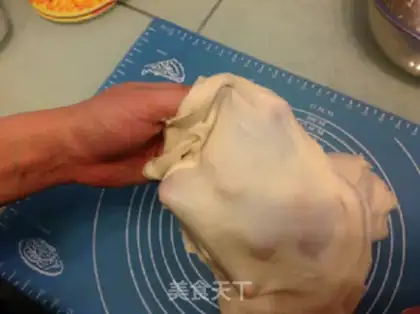
5
Manually rubbing into thicker film (extension phase)。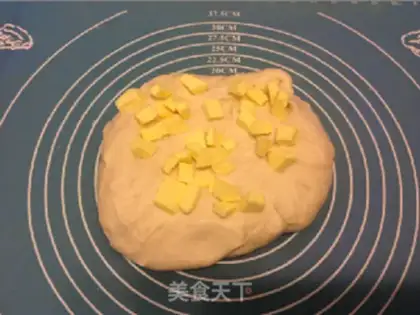
6
Add butter。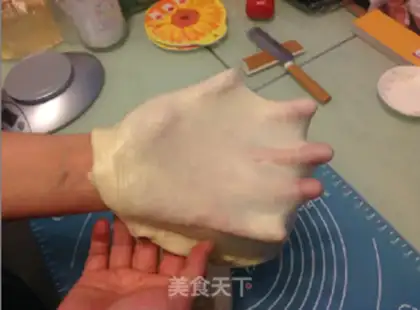
7
Keep rubbing the face until there are large, non-breakable, marrow-shaped film (full phase)。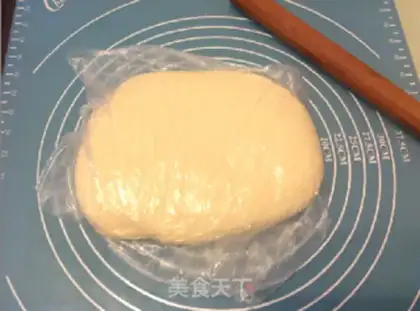
8
The face of the face cane was turned into a flat elliptical form, which was placed in a bag and sent to the refrigerator for 30 minutes。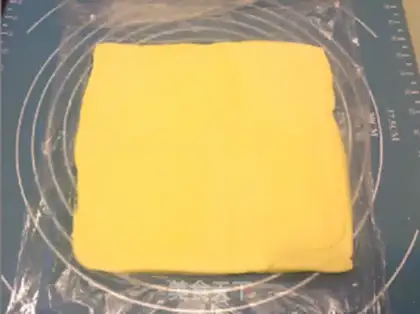
9
Scratch the butter slightly softened, so as to cover both sides of the film, and squished it into a square with a cane。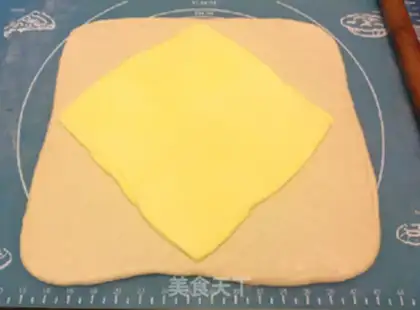
10
The plank was adhesive, and the frozen pasta was removed into a square approximately twice the size of the butter tablet and the butter tablet was placed in the middle。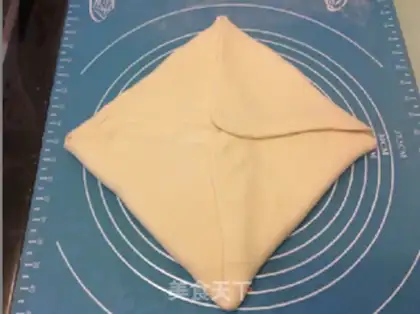
11
The four corners of the dough are folded to the middle and the mouth is squeezed。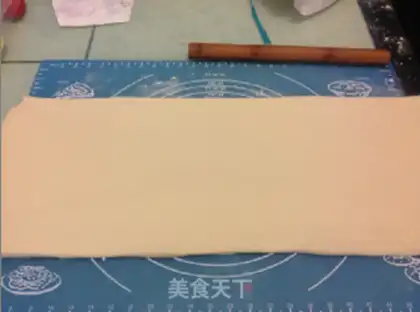
12
The noodles are long。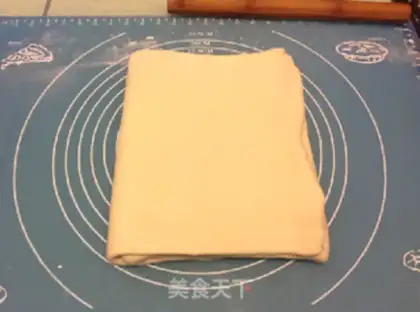
13
One third of each of them will be folded into the middle and three cents will be folded。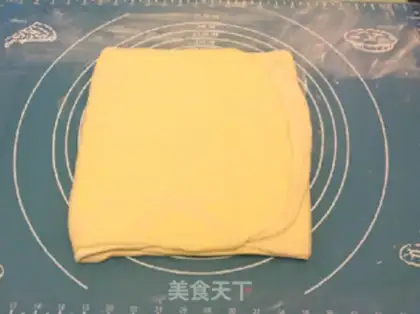
14
Repeat steps 12, 13, and after a further three-cent mark, put the noodles in the bag, and 30 minutes into the refrigerator, repeat steps 12, 13 and complete a third 30-cent mark. The dough is wrapped in a film and is frozen for 30 minutes。
15
it removes frozen pasta, which is 21 cm wide and about 0.4 cm thick. cut to the rough side。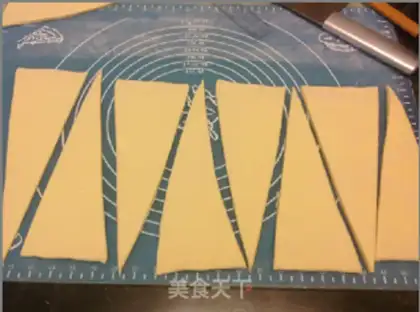
16
cut the fined face to the bottom of a nine-and-a-half-cm wide, 21-cm-high hip triangle。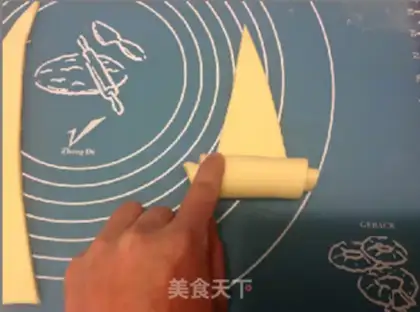
17
The triangle is rolled up from the bottom into a cow horn。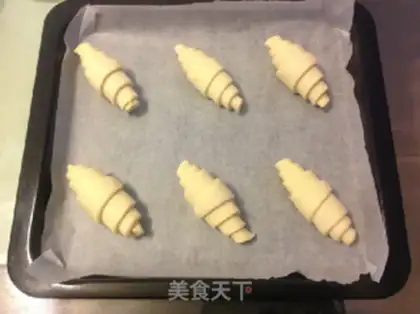
18
The rolled noodles were placed on the grilled oilpaper and the room temperature was finally fermented。
19
After the final fermentation, the surface was full of egg fluid。
20
The oven is 220 degrees preheated, mid-level, up and down, and roasted for 20 minutes。
21
When it's cold, it's sealed in a bag。Praise Make Tips
1. The lamination of these croissants was not very good. After consulting resources, I found that croissants require high heat to bake quickly, allowing them to expand rapidly within a short time to create a honeycomb structure; therefore, high heat is needed for the first 10 minutes. To ensure even coloring, the temperature should be lowered for slow baking during the last 15 minutes. I will apply this lesson next time.
2. Croissant dough cannot undergo final proofing in a bread machine or an oven where the low temperature setting is still relatively high; otherwise, the butter will melt out, ruining all previous efforts.
3. Information gathered online for future reference: Croissants generally need to be brushed with egg wash twice, before the second proofing and before entering the oven. Brushing before the second proofing also serves to retain moisture. Since home proofing boxes usually cannot guarantee humidity, applying egg wash beforehand makes the humidity requirement less critical.
4. Information gathered online for future reference: For every fold, remember "do not fold in excess dough." The side of the dough that becomes the internal seam should have its edges trimmed first to expose the layers. Although croissant texture emphasizes layers, more layers are not necessarily better, so more folds are not necessarily better. Too many folds make the butter between layers too thin, increasing the chance of the butter mixing into the dough. Even if it does not mix, each honeycomb cell will be relatively small.