[Delicious Classic of Birds]--"Stir-fried Pigeon with Radish and Scallion"(Creative name on November 30)
"Stir-fried young pigeons with roots and fruits" and "Stir-fried young pigeons with radish and green onions" are sister dishes to the "Delicious Classic of Birds"."Stir-fried young pigeons with roots and fruits" is a southern flavor, while "Stir-fried young pigeons with radish and green onions" is a strong flavor from the north.
Introduction to cooking methods:
1. Wash the young pigeons and change the knife into inch pieces. Add chopped green onion and ginger, pepper powder, fine salt, soy sauce, cooking wine and appropriate amount of dry starch paste to make for about 20 minutes. Wash the carrots and cut the blade obliquely for later use;
2. Add ginger slices to the pan and stir-fry until fragrant. Add carrots and stir-fry until done, take out for later use;
3. Stir fry the young pigeons in the original pot until they change color. After they are sixty-ripe, add carrots and stir-fry a few times. Pour in a proper amount of soy sauce and water and stir fry over high heat for a while. After the young pigeons are cooked, use high heat to harvest the juice and season. Serve on a plate and serve.
Features:
1. Operation with low carbon, low oil temperature, and no smoke. The ingredients are ordinary, the ingredients are reasonably configured, the nutrition is balanced, the cooking is simple, the color, aroma and shape are complete, and the names of the dishes are appropriate, smooth and peaceful.
2. The dishes are bright in color, with the aroma of green onions, and the aroma is overflowing. The meat is delicate and tender. The carrots are soft and slightly sweet. The taste is rich and subtle, and the nutrition is balanced;
3. Vegetable plant roots rich in minerals, trace element nutrients and cellulose and young pigeons with extremely high nutritional value are especially suitable for children during growth and development, as well as rehabilitation and health treatment.
Nutritional value:
The young pigeons are salty, calm in nature and non-toxic; they have the effect of nourishing liver and kidney, replenishing qi and blood, supporting poison and draining pus; they can be used to treat diseases such as sore, chronic illness, and diabetes. Eating frequently can make the body strong and clear the lungs and smooth the qi.
stir-fried young pigeon with radish and green onions
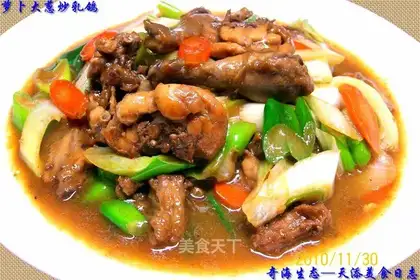
Recipe Recommendations
- carrots 1 piece
- squab in 1
- green onions 150g
- fine salt Follow your taste
- cooking wine 15ml
- soy sauce 20ml
- white granulated sugar Follow your taste
- pepper powder 3g
- starch a little
- MSG Follow your taste
- olive oil 30ml
Steps for stir-fried young pigeon with radish and green onions
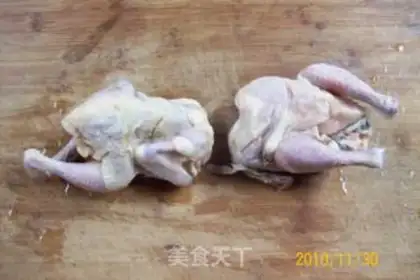
1
The frozen squab is thawed first after being taken out.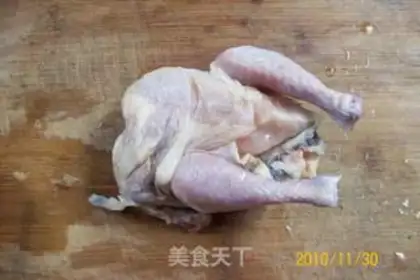
2
After the squab is thawed, remove the internal organs and wash the blood.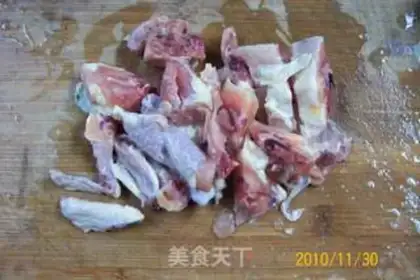
3
Remove half of the squab's legs and wings with a knife, and then change the knife into inches.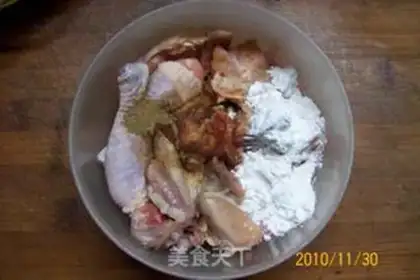
4
Add chopped green onion and ginger, pepper powder, cooking wine, soy sauce, and starch paste and make for about 20 minutes.
5
The squab meat block needs to be turned twice during the slurping process to fully taste it.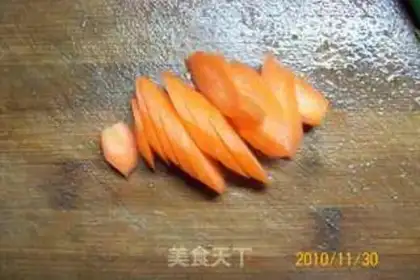
6
Wash and scrape off the surface of the carrot (organic planting does not require scraping), and cut the blade obliquely.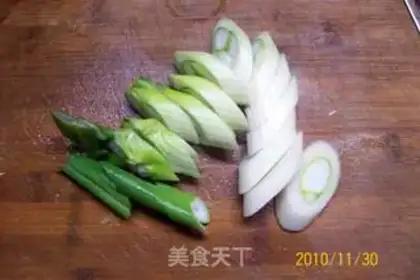
7
Wash the green onions and cut them obliquely.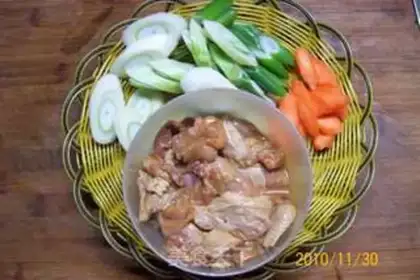
8
Place the processed ingredients on the side dish for later use.
9
Pour oil on the pan, add ginger slices, and stir-fry with low oil temperature until fragrant.
10
Add the carrots and stir-fry until cooked.
11
After stir-frying the carrots, take out and plate;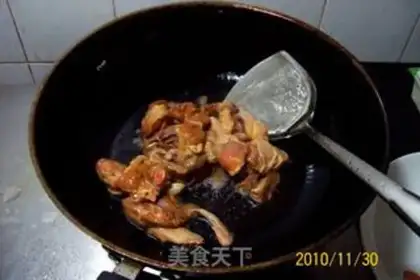
12
Remove the pan from the heat and add the draped squab.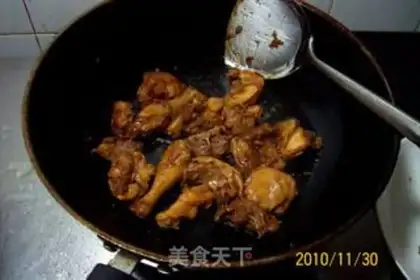
13
Use a spatula to disperse, and stir-fry the squab meat over low heat until medium rare.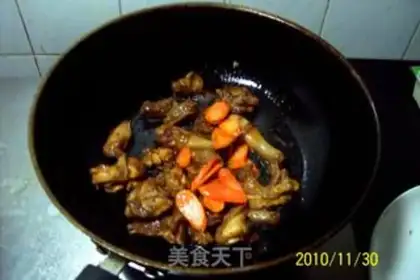
14
After the squab is stir-fried, add carrots and stir fry slightly.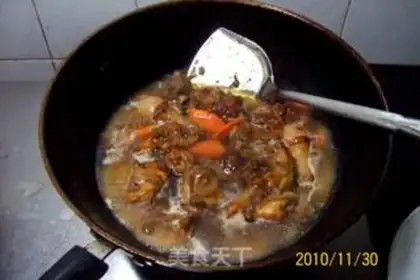
15
Add enough water (if the finished dish is used to serve rice, the soup must be added enough).
16
Pour in soy sauce or soy sauce and fine salt, cook over high heat for a while, and cook the young pigeon meat pieces until done.
17
After the squab meat pieces are cooked, add the green onions.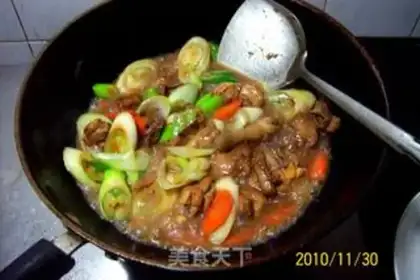
18
Stir fry slightly over high heat, collect the juice, season, and serve on a plate (Note: When the dish used as a rice dish has a lot of soup, it must be thinly and thickly mixed).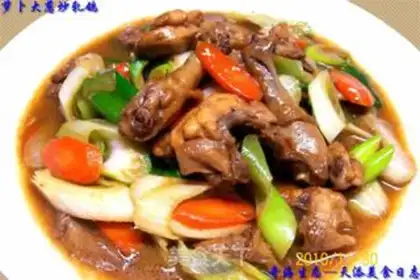
19
[Delicious Classic of Birds]--Picture 1 of the finished product of "Stir-fried Pigeon with Radish and Green Shins".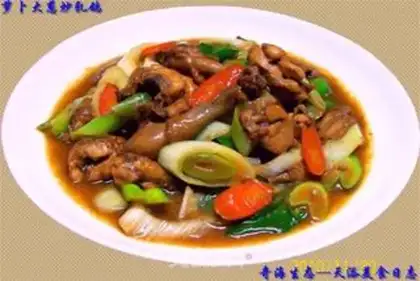
20
[Delicious Classic of Birds]--Picture 2 of the finished product of "Stir-fried Pigeon with Radish and Green Scales".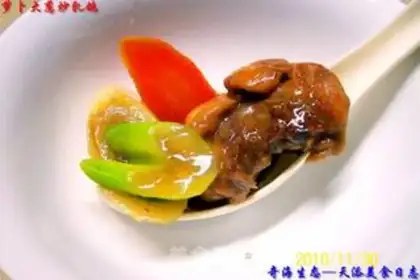
21
[Delicious Classic of Birds]--The finished product consumption picture of "Stir-fried Pigeon with Radish and Scallion".stir-fried young pigeon with radish and green onions Make Tips
Friendly reminder: Squab is especially suitable for those with kidney deficiency and physical weakness, restlessness, growing children, and those suffering from physical exhaustion. Nutritional value of carrots: Also known as red carrots, they are also called golden shoots and clove carrots. Originating in Central Asia, they were introduced to China in the late Yuan Dynasty. Carrots have the effects of benefiting the liver and improving eyesight, relaxing the diaphragm and intestines, strengthening the spleen and eliminating malnutrition, enhancing immune function, and lowering blood sugar and lipids. Nutritional value of green onions: Relieving fever and eliminating phlegm: Effective components such as the volatile oil in onions stimulate the body's sweat glands to achieve the effect of sweating and cooling; onion oil stimulates the upper respiratory tract, making sticky phlegm easier to cough up. Promoting digestion and absorption: Onions also have the effect of stimulating the secretion of digestive juices, which can strengthen the spleen, stimulate the appetite, and improve hunger. Antibacterial and antiviral: The allicin contained in onions has a significant effect in resisting bacteria and viruses, especially with a stronger inhibitory effect on dysentery bacilli and skin fungi. Cancer prevention and anti-cancer: The pectin contained in scallions can significantly reduce the occurrence of colon cancer and has anti-cancer effects; the allicin within onions can also inhibit the growth of cancer cells.