Pineapple buns
By VicentaLakin
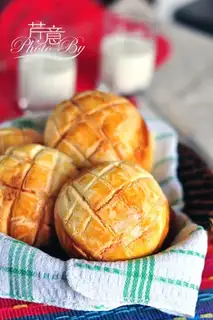
Recently baked bread is particularly popular with soup because it is soft and easy to operate. Nothing is more simple and delicious than a pineapple bag -- a super soft tissue immersed in soup, covered in a layer of pineapple skin, allowing a perfect collision of the souffle and soft
Recipe Recommendations
- high-gluten flour 210g
- qingshui 100g
- low-gluten flour 56g
- fine sugar 42g
- salt 1/2 teaspoon
- Rapid yeast powder 6G
- whole egg 30g
- milk 60g
- unsalted butter 22g
- powdered sugar 55g
- egg yolk liquid appropriate amount
- sweetening
- roast
- several hours
- ordinary
Steps for Pineapple buns
1
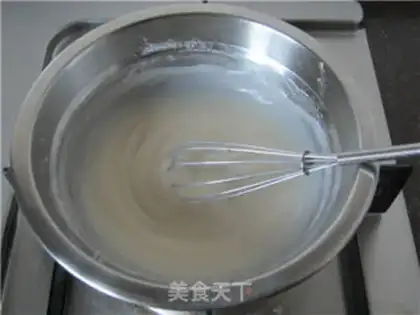
the soup flour, 20g, mixed with 100g of fresh water, is set on fire, the small fire is warmed up to thickness by mixing, the egg is cut off from the fire immediately, it is evenly smoothed and cooled to the room temperature, covering the membrane, freezing in the fridge for more than an hour, and spending the night is best. (some recipes say soup is the best 65 degrees, but not everyone has to measure it with a thermometer, and it's unnecessary, as long as it's thick, it leaves a mark, and be careful not to dry — this is my experience)。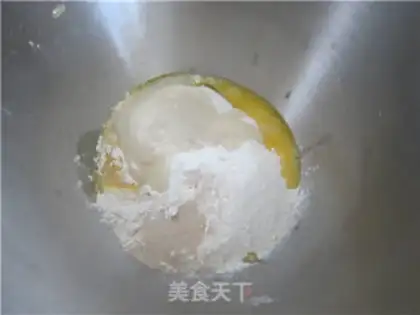
2
(a) all of the pasta material except butter accident: 210g high-weather flour, 56g low-weather flour, 42g fine sugar, 1/2 spoons salt, 6g fermented mackerel, 30g full egg, all soup, 60g milk in the mixer of the cooker ' s machine, no milk in full, and one quarter adjustment of the noodle hardness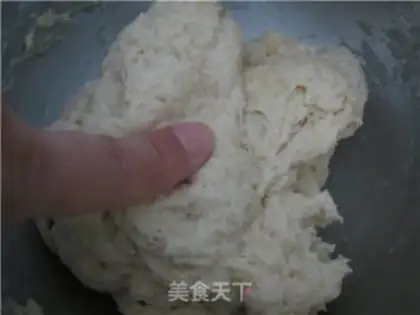
3
When the noodles are formed, they are stopped to check the hardness of the face, which is appropriate for the remaining milk and, if it is still rigid, for some more milk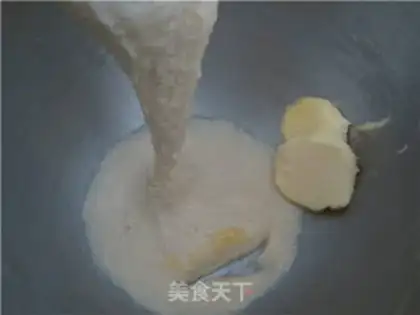
4
Keep the noodles going until the noodles are pulled up, and the stop is added to the softened butter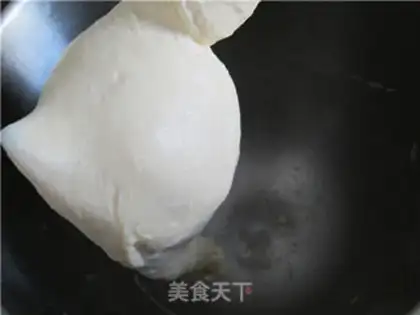
5
(b) Continue to slush to the surface of the face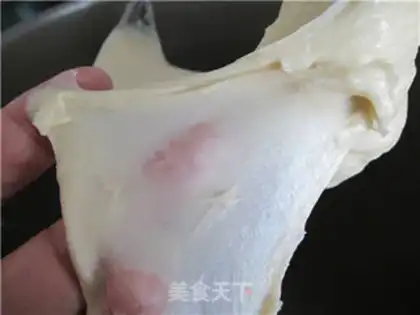
6
Stopped to check the contour, so it can be pulled into a thin film。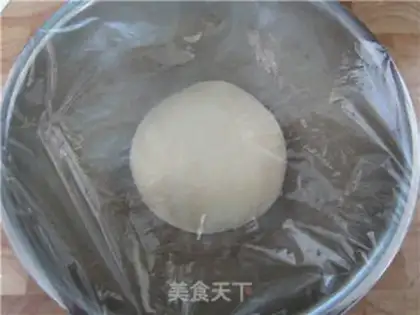
7
(b) Rolling the face, covering the film and fermenting the base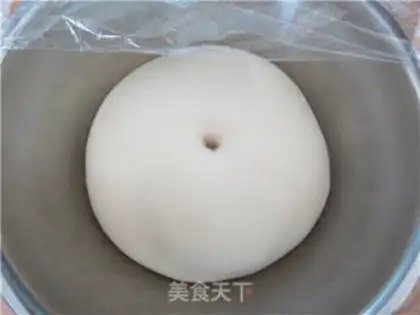
8
(b) Fermentation to twice as large, drying with fingers, poaching a small hole from the top of the face, not falling, not condensing, and fermenting to just the same extent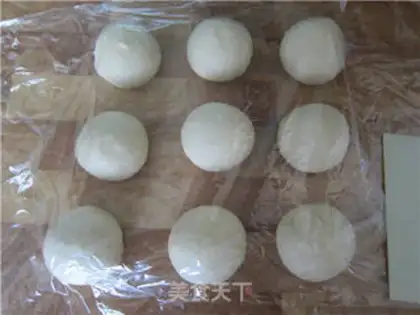
9
(b) Remove the noodles and split them into an average of nine pieces, with a protective membrane on the roll cover for 15 minutes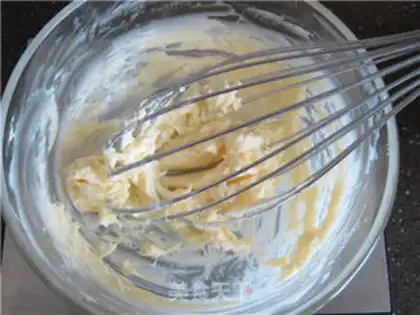
10
preparation of pineapple skin: after softening of 55g butter to room temperature, the egg is soared as to be very soft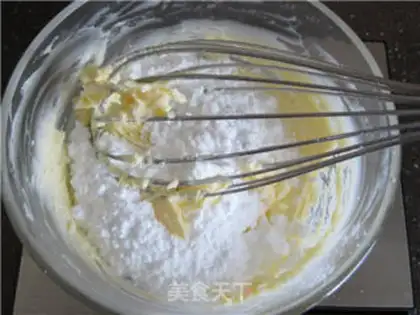
11
add sugar powder 55g and continue to mix to butter colour white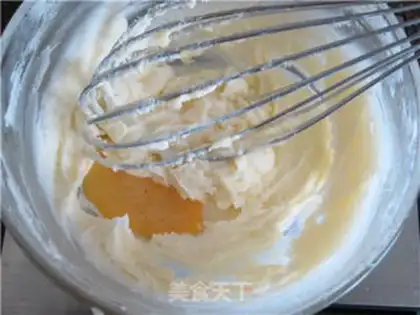
12
(b) add 25 g of egg fluid three times, each to be mixed until the egg fluid is fully absorbed and added to the next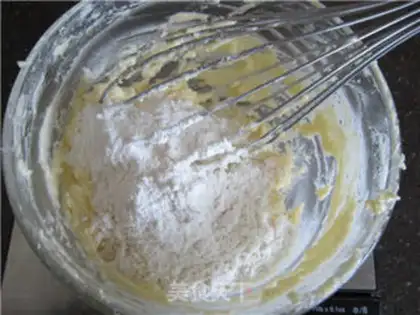
13
finally, half the flour 70g, evenly mixed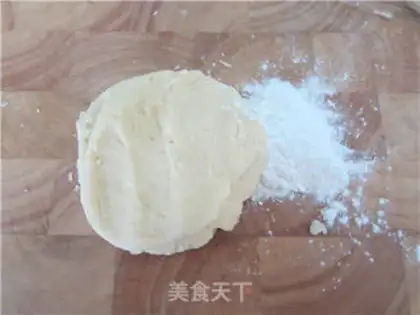
14
(b) aligning the dough on the panel and adjusting the remaining 60g flour to a hardness similar to the earlobe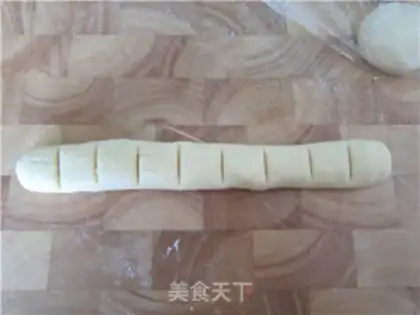
15
An average of nine spares of pineapple pasta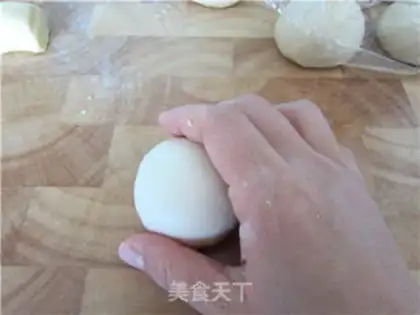
16
Quick bread pasta, rolling to a very round again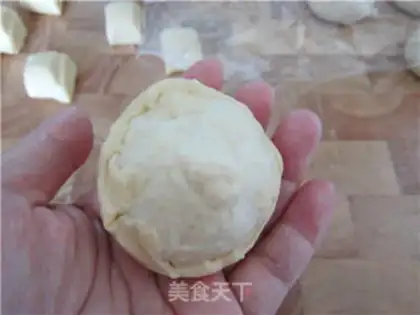
17
(b) Take a pineapple pasta and platter it, press it on the top of the bread noodle, grab it in the right hand at the bottom of the bread noodle, coordinate it with the left hand and push it evenly on the bread noodle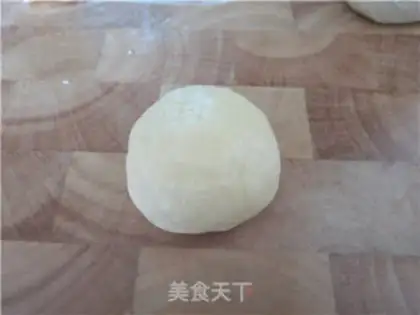
18
I'm trying to get the pineapple skin fully wrapped in bread noodles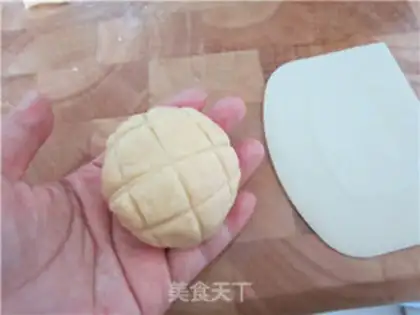
19
Crossing the pineapple skin with scratches, drawing pineapple marks; it's not okay to do it; it's a natural flower line when bread is baked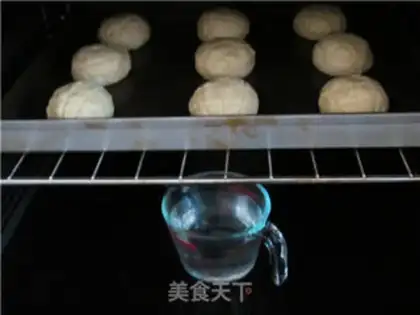
20
When it's all done, it's drained into the oven for final fermentation: it's put in the oven and a bowl of hot water at the bottom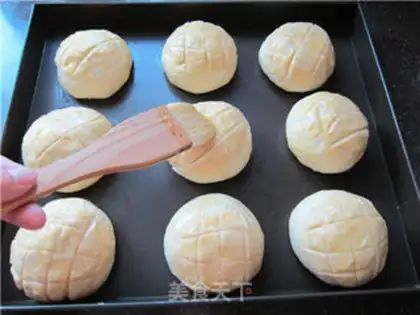
21
(b) Fermentation up to two and a half times the size, push the grill, and the bread shakes slightly with tremors; and softly brushes an egg yolk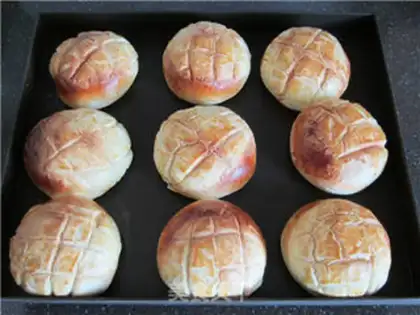
22
The oven is preheated at 180 degrees and baked for 15 to 20 minutes to the surface yellow, fine。Pineapple buns Make Tips
Making bread isn't hard. Follow the recipe step by step, and you will certainly succeed. Here is a little tip: Before wrapping the pineapple crust, knead the pineapple dough and re-round the bread dough, or round and wrap one at a time. Keep the surfaces of both the pineapple crust and the bread dough moist so that the crust does not easily fall off after baking.