Emerald sand
By VicentaLakin
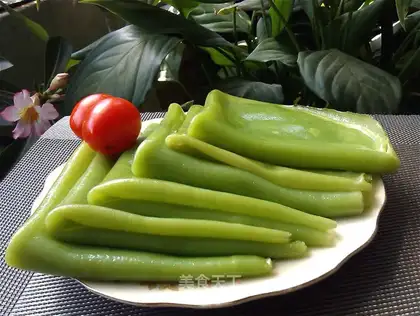
The skin is a local specialty, which is divided into two categories, rice and wheat, and generally referred to as rice. The first problem with rice flour production in households is that food is not readily available, which is why wheat flour is used to make cold skin. I remember eating green skins in Xi'an a few years ago, and now spinach is on the market, so let's make an emerald。
Recipe Recommendations
Steps for Emerald sand
1
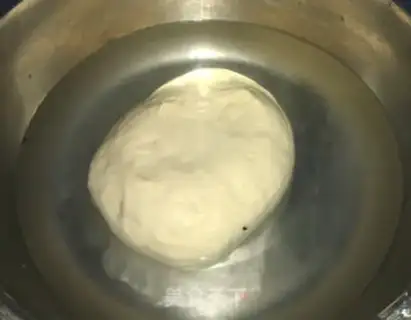
FLOUR WITH 5G FINE SALT, PROPER AMOUNT OF CLEAN WATER, AND SEWN WITH CHOPSTICKS INTO A SOFT, SMOOTH, SMOOTH FACE FOR 15-20 MINUTES. THE GOOD NOODLES ARE IN THE STAINLESS STEEL BASIN, AND THE PROPER AMOUNT OF CLEAN WATER BEGINS TO WASH. NOODLES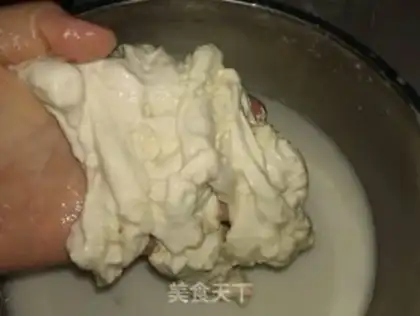
2
First baptism: The starch in the bottom group is washed by scratching hands, and the water in the flour basin is gradually becoming thick slurry. When you pull out the face band, you filter it with a net that filters the soybean sour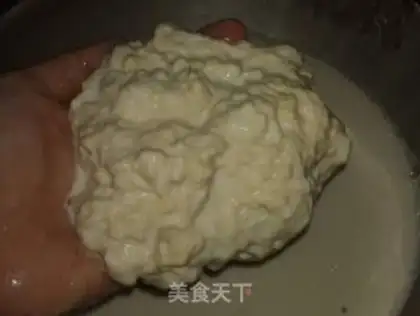
3
With appropriate water, the first wash is kept in the water. Three times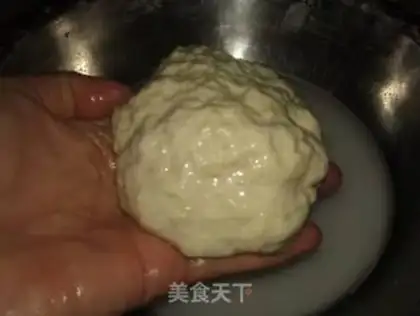
4
The third time after washing the water in the back, it's clear. The wash is over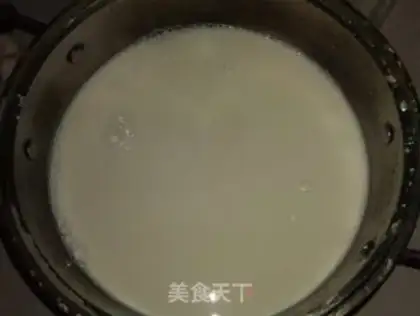
5
Three times wash pasta in the pot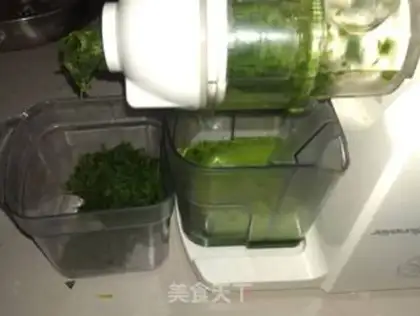
6
The spinach 200 grams wash and control the dry water in small sections and extract the raw spinach juice from the original juice machine。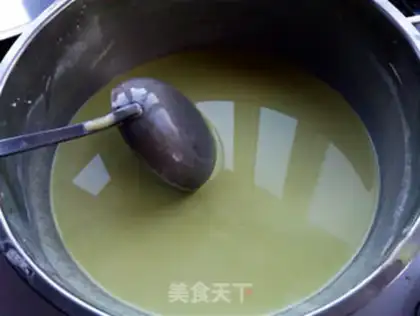
7
The spinach juice is filtered through a thin web to filter out the tiny slags and evenly mix the spinach juice into the sluice. Cover the lid so that the pasta can sink for one night, and the slurry that is settled is top-level water and lower-level wheat starch. The upper layer of water pours out slowly, and the rest of it is we're making cold skin。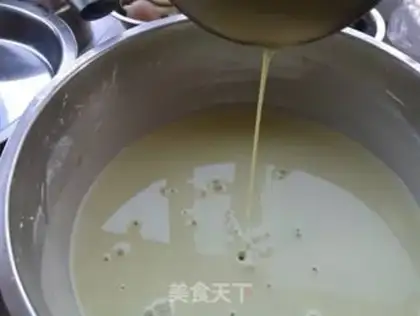
8
Re-mixing the flour evenly, if it is too thick to pick up the proper amount of water, and slowly pour it out with a spoon and then line it when it falls。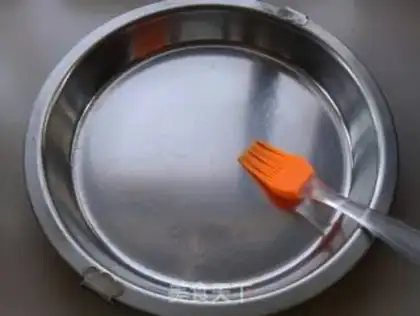
9
Put a proper amount of water in the pot and turn the skin around and brush a thin oil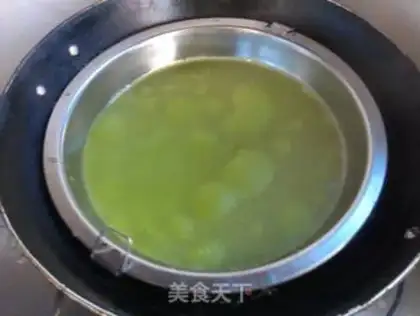
10
When more than half a spoon of pasta pours into the turn, it turns around the boiling water in the pot, evenly rotates to the full plate, evaporates the top of the pot for a minute to the surface, and a cold skin will melt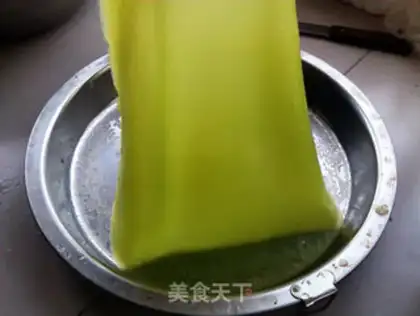
11
Prepare a basin larger than the turn diameter, with more than half a basin of cool water, so that the turn can be removed from the pot and immersed in the cold water immediately after it has been completely cooled and slowly removed from the side by hand. Just steam all the cool skins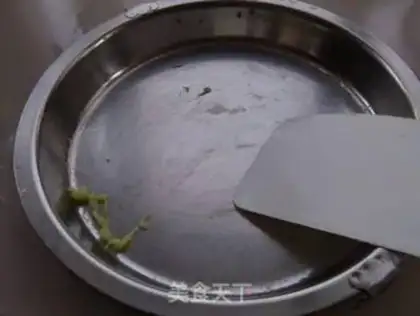
12
When the skin is removed, if there is some residue on the turning surface, it can be scraped and painted with thin oil。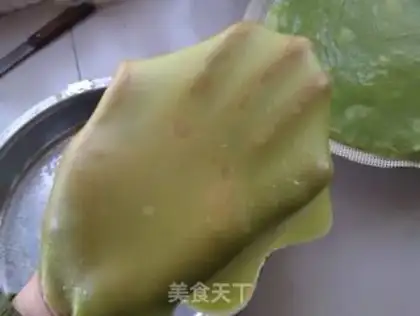
13
It's a green, green, cold-skinned thing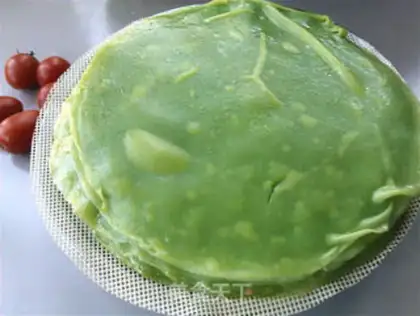
14
And he shall put it on a cupboard or plate, and shall draw a thin oil on his face, and a second and a third. Each one must be painted with thin oil in order to keep it together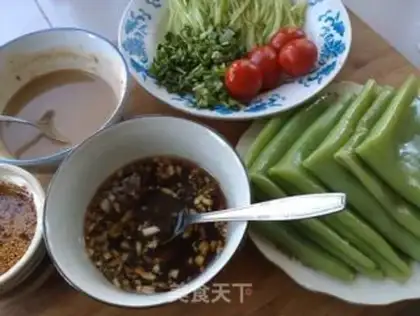
15
They eat with soy sauce, garlic vinegar, cucumber silk, green bean sprouts, cuisine, oily spicy, etc。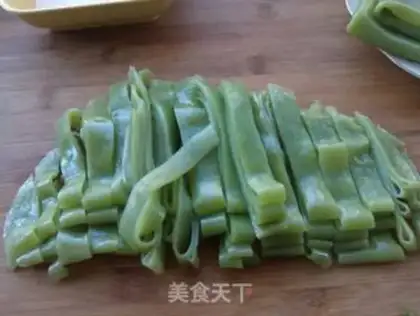
16
It's a cold cut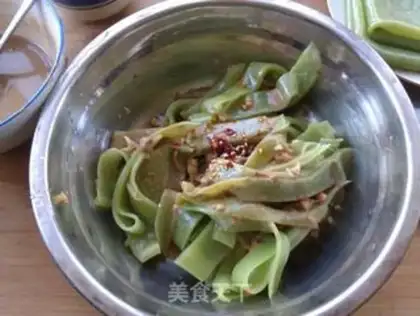
17
Combination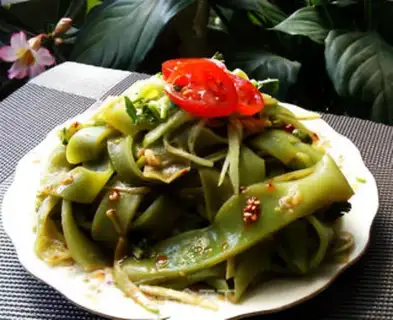
18
♪ And the jade and the sand ♪Emerald sand Make Tips
1. After washing out the gluten, allow the starch slurry to settle fully. Pour off the excess clear water from the top, then adjust to the appropriate consistency. Usually, letting it settle overnight is sufficient.
2. The settled starch slurry must be adjusted to the right consistency to make good Liangpi. If the slurry is too thick, the steamed Liangpi will be too thick and unattractive. Conversely, if the slurry is too thin, the steamed Liangpi will be difficult to peel off, easy to break, and lack elasticity and toughness.
3. Once the slurry poured into the steaming tray steams up and large bubbles form on the surface, it is ready to be removed and cooled.
4. It is usually necessary to have two steaming trays. While one is cooling after steaming, steam the other one. Rotating them like this saves time and improves efficiency.
5. Liangpi should not be kept overnight; it is best to steam and eat it on the same day, as overnight Liangpi will become powdery.