Stollen bread originated from the eastern German town of Dresden. It is a must-have traditional snack for Christmas in Germany and has a history of centuries. This bread symbolizes the scarf wrapped by the infant Jesus and has a special religious connotation. Another way is to name the bread "Storan Bread" in memory of a benevolent "Storan" king. Storan is high in sugar and oil and has a long shelf life. It can be stored for up to a month, and the flavor of the bread gradually changes with the passage of storage time. Therefore, Germans often buy it 2 to 3 weeks before Christmas to slowly taste its flavor. [Baidu]
The original recipe used cinnamon powder, but my family didn't like the taste very much, so I added chocolate powder to enhance the color of the bread. The taste is also first-class. This bread will taste better after eating it for 3 days. I can't wait to try it when it cools down after it is finished. It's so delicious... This is also the longest diary of the making process of my baking career.
Christmas Storan Bread

Recipe Recommendations
- whole wheat flour appropriate amount
- yeast appropriate amount
- milk fragrance
- baking
- half an hour
- ordinary
Steps for Christmas Storan Bread

1
Soak the raisins in rum for 1 night.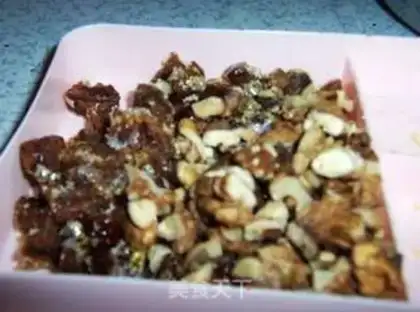
2
Cut walnuts and preserved hawthorn into small dices.
3
Mix ingredients A together and knead into dough.
4
After the butter of Material B is softened, add sugar and salt.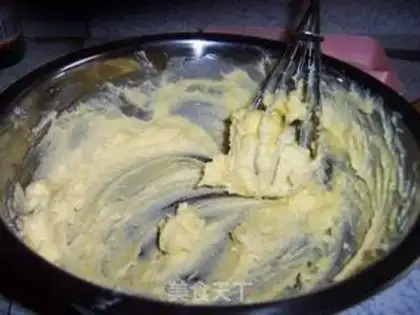
5
Mix well.
6
Add the eggs to the butter mixture and mix well.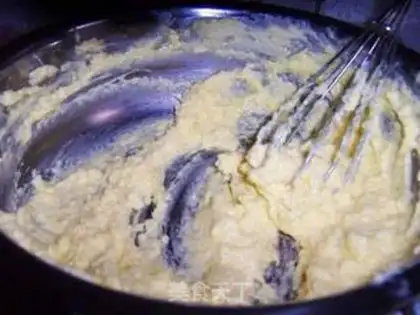
7
Add vanilla essence and stir well.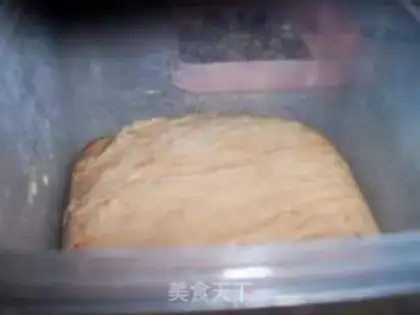
8
The dough of Material A can be fermented to twice the size.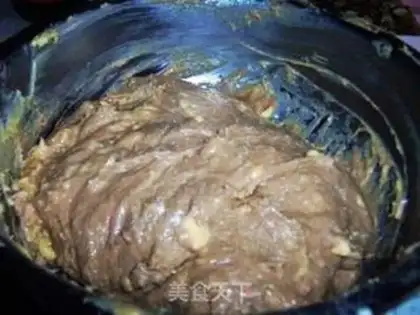
9
Add the fermented dough to the mixed butter paste and stir well to form a paste.
10
Add the whole wheat flour of Material C.
11
Kneak it into dough. It will be sticky at first, and it will gradually be fine.
12
Add walnuts, drained raisins and diced hawthorn fruit to the kneaded dough, and continue to knead until the fruit ingredients are evenly distributed in the dough.
13
The kneaded dough is allowed to ferment at room temperature for 30 minutes.
14
Divide into two parts, knead into a round shape, and relax at room temperature for 15 minutes.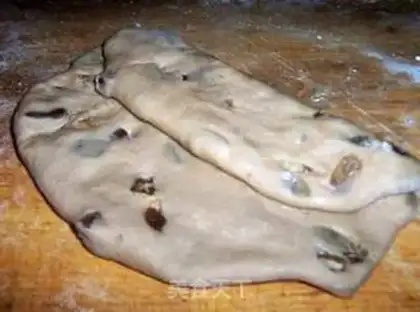
15
Take a dough and roll it into a round shape on a chopping board. Fold it one-third.
16
Cover that third again.
17
Press on the dough with a rolling pin.
18
Place the shaped dough on a baking sheet. Carry out final fermentation.
19
When the fermentation reaches 3/4 of the volume, brush the surface with a layer of melted butter.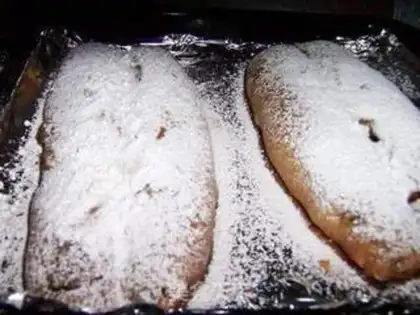
20
Place in a preheated 190-degree oven and bake for about 25 minutes, until the surface is reddish brown. Immediately after removing, brush the surface with a layer of melted butter. After cooling, sprinkle with a thick layer of powdered sugar.