♪ The meat of the tower east slope ♪
By VicentaLakin
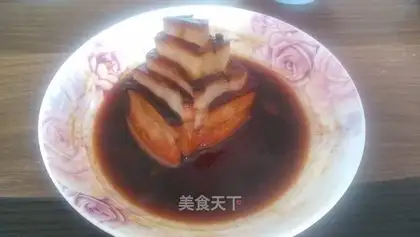
The story of the meat from the east slopes is well known to many, in the name of the great man of Sulu. This large dish, in the name of a human being, is widely distributed in the professional field and in the private sector, and is mostly boiled and easy to learn. And pedal meat is a hard dish known for its shape, and a lot of professional restaurants are reluctant to push it, whether it's a choice of material or a delicate knifeworker, which poses a problem for the chef. With nothing to do today, we'll combine the two famous dishes and make a family-style plaque with the same taste。
Recipe Recommendations
- fortress meat 500G
- Shaoxing wine 160g
- soy sauce 50g
- qingshui appropriate amount
- onion 50g
- Jiang 8 pieces
- sugar 30g
- oil 20g
Steps for ♪ The meat of the tower east slope ♪
1
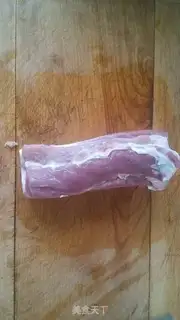
Fresh fort meat or a pound of bouquets, or less fat meat for health. If it were five flowers, the width of the meat could not be too narrow, otherwise the heat would shrink and it would not be able to make a pagoda. Personally, I think it's 10 centimeters。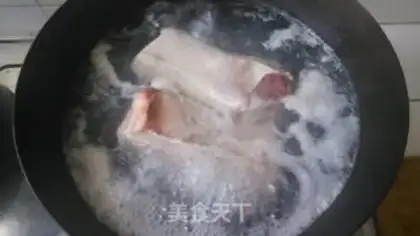
2
The meat strips are cleaned and then boiled with pots of water, the foams and groceries are removed and boiled for about five minutes。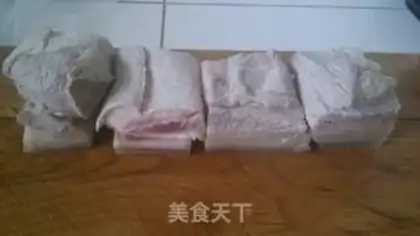
3
The change of the meat strip to a big piece of meat, and the change of the blade first, is intended to make it more square and avoid the deformation of the water. If it's an east slope, it can be smaller, but it has to be bigger if it's to be a pagoda later。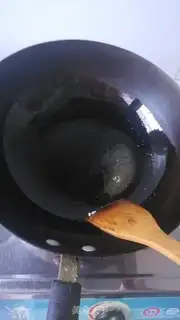
4
Fire in the frying pan, oil and sugar, small fire preparation. It's a sugar-sweet rhythm. You don't like the colored friends, you can skip this step and go straight to the stew. The white sugar has to get to the color change, the fire is followed by a little fire, and the sweetness becomes bitter when it's kept mixing, avoiding a pan or overfire。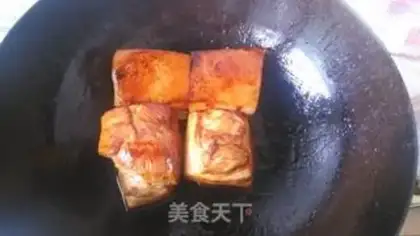
5
This is a very dangerous step to remind you of. When the sugar in the oil pan becomes darker, the meat is coloured in the pan, first with the skin down, at a time when there will be a lot of hot oil spills, which are said to be professionally called blast oil, which are not mentioned in many recipes, and it is important to stress that protection is safe. It's best to have a spatter net or something. Of course, the pan cap is the best shield。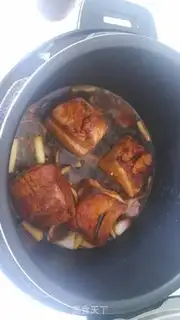
6
The meat is almost colored, and it's about 25 minutes' time to put sauerkraut, raw smoke, ginger onions, etc. in the pot, and then put pressure on the pan, like normal stew. If you don't need a friend of the pressure pot, you can use a casserole or a casserole. It'll be about an hour and a half. Just a little more wine and water。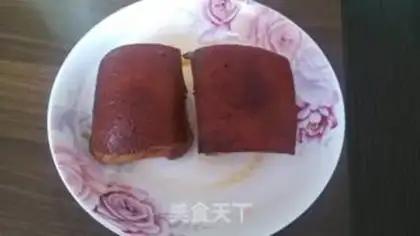
7
It's time for the meat to ripe, and then the hot friends are ready to eat it. But for the sake of beauty and fun, the process of changing the knife has just begun. It's better to get a piece of meat out to dry, to freeze it a little, or to freeze it for one night, so the meat is so tight that it doesn't break。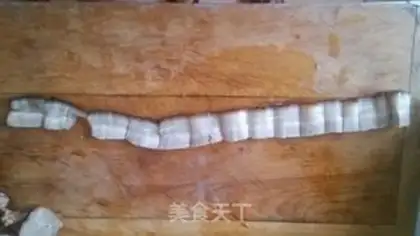
8
The process of changing the knife is more patient, and the body layer is still thin, and my experience is to put two lambs on both sides of the meat mass, so that every time there is no fear of cutting. And when you make cucumbers, you can put chopsticks like this. When you change the knife, the meat will turn into meat bars。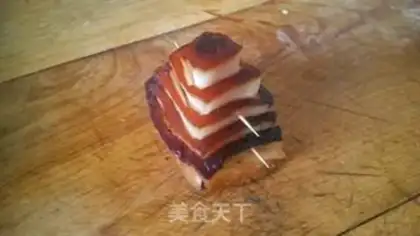
9
When you're done with the meat rolls, put on your toothpicks where it's unstable, the little pagodas start to see shapes。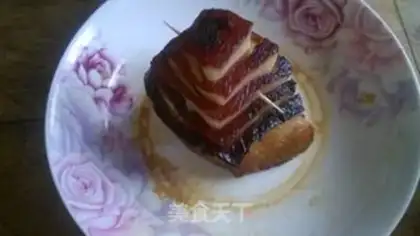
10
The interior of the pagoda can be filled with other foods, as well as balanced nutrition to support the pagoda. All evaporated foods, such as plum, tara, mountain medicine, potatoes, etc., can be put into the plate。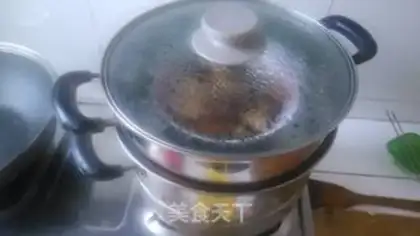
11
A little stew soup, a little salt, 25-30 minutes of steam pot fire。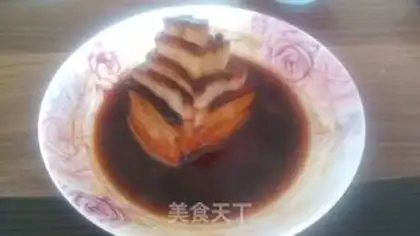
12
When you're out of the pot, you can eat it. It's the pagoda meat。