I've got a bonfire
By VicentaLakin
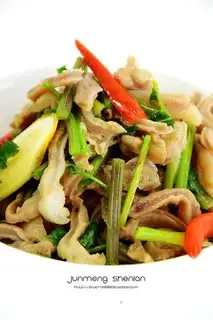
With regard to the arctic fish, there have been several articles on the arctic fish recipe that have been written before, as seaside people, which is a familiar fish, but the inlanders are still a strange creature, and this time again familiarizing themselves with the ugliest fish in the sea. There's a fish whose face is ugly, but it has a good name — an aphrodisiac, a tune — which means “peace and wellness”. The top of the fish is a thorn like a pole, and at the end is a symmetrical “tagger” pedal, which is buried in the sand of the sea floor and displays a “battle” for small fish to feed. When the fish are near, the “baskets” open and the fish flow into its mouth. Angryfish, known as "Ugly wife fish" by the Sea, is strange, ugly, wide-mouthed and known by locals as "toadfish" and is also known as "old man fish" because it can cough like an old man. For the scavengers, for the well-being. The fish is 27 to 76 cm long, up to 150 cm and weighs more than 10 kg. It is flat in the front, in the shape of a disc, and leans backwards in a column, large, flat, wide in its kisses, with no big dent in its back. Smaller eyes, on the back of the head, closer to the end of the kiss. The jaw is significantly longer than the upper one, and the upper one stretches. Both ploughs, ploughs and tongues have different sizes, and canyons that fall inside. The gill hole is wide, with 30 to 40 bone thorns on the top of the head. It's flat, it's full of petals of all sizes, and it's got a sideline. Two fins with six fins in the first fin, the first three each bearing a needle in their own right, and the top petals in their ear. The second back and hip fins are in the tail, the chest fins are wide and round, they are on both sides of the body, the abdominal fins are short and the tail fins are close to transect. The back of the body is grey and covered with purple brown tweeds and, infrequently, golden metal. White on the abdomen and black on the fins. The stomach is large and the diet is large, sometimes of equal weight. Fish acrefish are distributed in our Hound Sea, with the highest production in large companies. The aphid fish is covered in hard thorns, scarred, groaned, slid, slimy slime on its surface, giving people a sense of disgust, and is thus always considered a low-end fish. In the past, the aquaculture complex had been full of clams at very cheap prices, and at 3 p.m. it had begun to sell bars, and a dime could buy a large one, so most of the visitors were people with small families. But they buy it not for fish meat, but for the contents of the belly. At that time, buyers had chosen the fish, which were fresh and full of abdomen, to feel the clams with their hands. Because there are contents in the belly of a fish that are not digested, they are dissected and, in case of luck, come out of them such famous sea products as prawns, yellow fish and saloon fish, all of which are worth far more than fish itself. As for fish meat, only the cylindrical body below is removed from the skin, while the rest is discarded. The meat of the aphids is mainly distributed between the two aphids, on both sides of the abdomen and on the tail. At the time of processing, the mucus of the mouth and the surface are washed with warm water, then removed from the back of the spine, removed from the skin and removed from the organs, and then cooked. It is common for families to make a lot of stew or red fever, and it is only in small restaurants that the aphids are available because they are low-grade fish. Cooks are used or decapitated for steaming, red burning and dry fire. Steamed aphids, white soup, fresh meat as a frog, and the taste of two herbs. Fish can also be replaced with meat, which can then be made up of “sniffed fish” and “fished fish” pieces. It is advisable to use oil before cooking - in case of fragmentation - because the fish acre fish has more moisture and its fibres are soft. In addition, fish meat may be made of mud into pills, cakes, cakes or casseroles, or of pine. The fish inside the abdomen is fresh and unchallenged, and can be eaten for the fish, as in the case of the cuisine, which is cooked to the “sniffed fish”. In Japan, the aphids, known as “ghostheads”, are difficult to access because of their ugly looks and serve only as gifts to older customers in the early years. Since the introduction of the “segment pick-up”, all parts of the fish acre can be made delicious: stabbings made on both sides of the back, which are comparable to those of dolphins; orange livers, which are considered rare sea pearls; eggs (whites) of the size of the fruit, which are of high nutritional value; fish skins that are immersed, which become delicious fish skins; and fish accelerants, which can also be roasted with their cheeks and tails. As a result, the price of fish on the Japanese market has multiplied. He's a rock that can strike. There are more Japanese cooking methods than Chinese. As a result, a number of Chinese restaurants have now introduced Japanese larvae cooking into medium-food production, such as steamed liver, lemon accretioned fish and fish-cooked fish, fish-cooked fish skins and cheeks, which have not only increased the variety of fish-charded fish but also increased the utilization of fish-charded fish as feedstock。
Recipe Recommendations
- Ankang fish belly 500 grams
- coriander stem appropriate amount
- red pepper appropriate amount
- minced garlic appropriate amount
- ginger appropriate amount
- Fish stuffed soy sauce 1 tablespoon
- white vinegar 5 tablespoons
- salt 5 tablespoons
- sugar 2 tsp
- white pepper 1 teaspoon
- sesame oil 2 tsp
- salty and fresh
- fried
- half an hour
- senior
Steps for I've got a bonfire
1
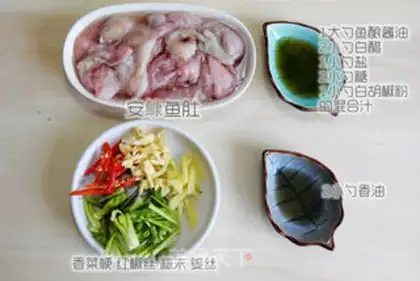
Main: Anconian larvae 500 g formulations: cassava encircles, peppers, garlic paste, ginger ration: 1 spoon of fish sauce, 5 spoons of white vinegar, 5 spoons of salt, 2 spoons of sugar, 1 spoon of white pepper powder, 2 spoons of perfume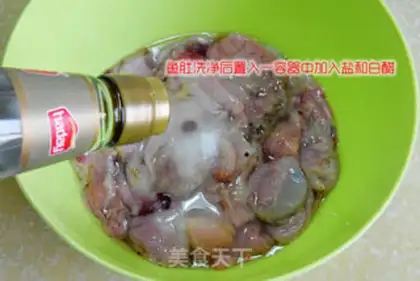
2
The fish are washed and placed in a container with salt and white vinegar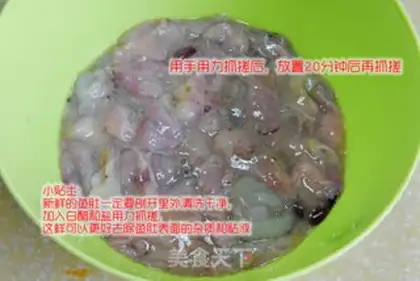
3
You scratch it with your hand and you put it in 20 minutes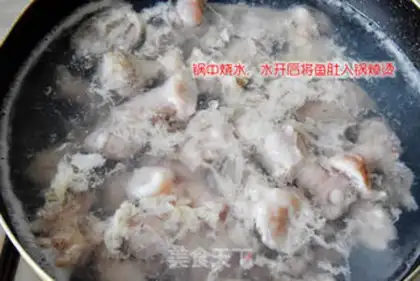
4
The water's burning in the pot. The water's burning the fish in the pot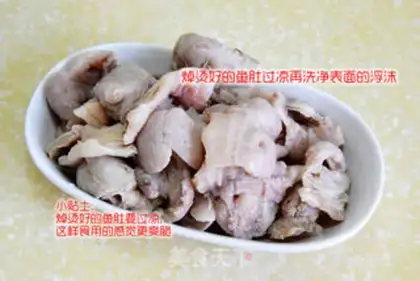
5
The hot fish get cold and wash their surfaces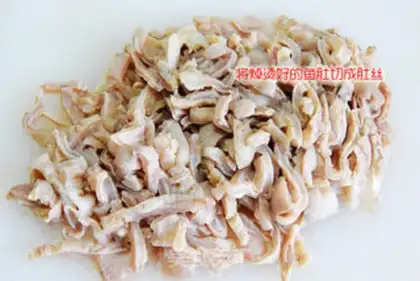
6
I'm going to cut it down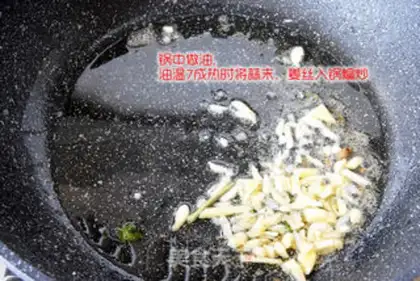
7
It's oil in the pot, and when it's 7 in the heat, it's garlic and ginger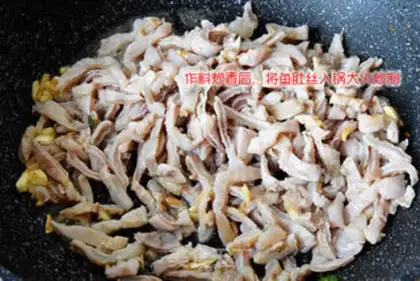
8
When you're cooking, you're going to burn the fish' belly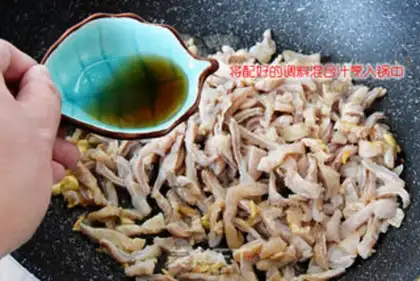
9
I'll cook the mix with the sauce
10
Scrambles and peppers and fire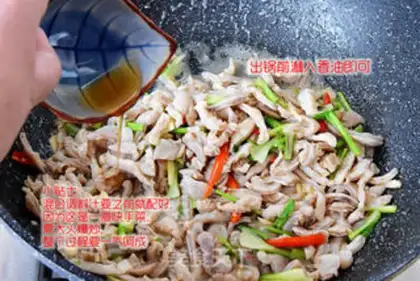
11
Just get some perfume before you go out