Steam fish
By VicentaLakin
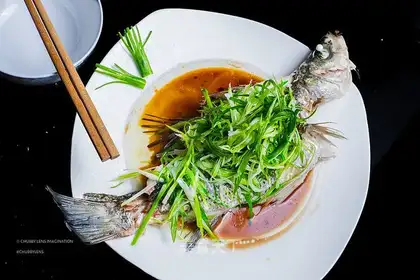
Since I had control of the steamed fish, I had been able to eat without counting it. Reason: Other complex processes (e.g., fried or fried) are difficult to complete at home; and outside restaurants (especially in Chinese and Chinese restaurants abroad) tend to be as much as 1 and 2 minutes longer than required to ensure fish maturity, so fish meat is in many cases already overcooked. And this is what I've learned from the experience of the great chefs to make sure you can evaporate a perfect fish by mistake。
Recipe Recommendations
- Osmanthus swimming in water
- qingchong 3 pieces
- peanut oil 3 tablespoons
- soy 2 tablespoons
- salty and fresh
- steamed
- ten minutes
- ordinary
Steps for Steam fish
1
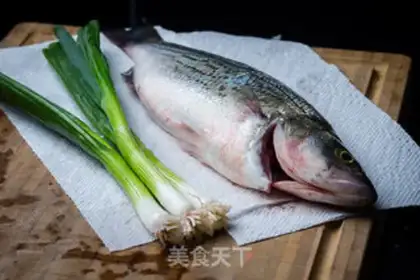
Owing to the limitations of the domestic kitchen, the size of the steaming pan is the most appropriate is the live fish between 0.9 and 1.2 pounds, which can be cinnamon, catfish, and cyanide. Buy it back, clean it up inside and outside, and dry the fish body with kitchen paper/cloth。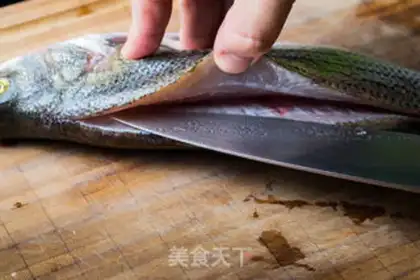
2
With a sharp knife, crushing the fin, slashing the back of the fish. This step is crucial for the balanced heating of the steamed fish (the rest is described in detail)。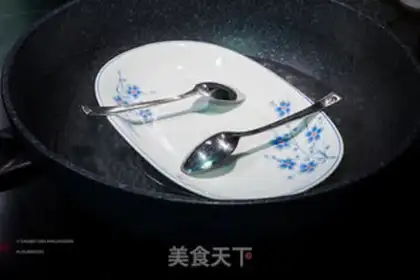
3
The process of steaming fish, in order to keep the fish evenly warmed, has led to the flow of steam at the bottom of the fish by putting two to three little spoons on the steamed plate. There are also a number of friends/cookies who would recommend onions, but through high-temperature onions, they quickly become soft and lose their trust, resulting in a loss of purpose。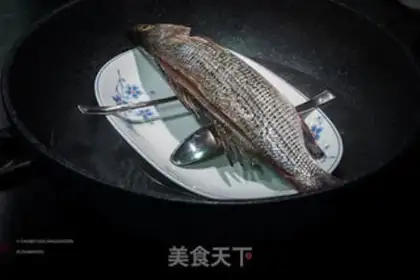
4
The temperature of the steamed fish is that the hottest of the water steams the fish in the shortest possible time, so I'll put the steamed fish and the supporting spoon in the pot early, so when the water burns, just put the fish on the spoon and put the lid on it. Thus, the heat of water vapour will not be absorbed by the equipment of the steam fish, which will maximize its efficiency。5
For a fish, it takes six minutes to steam. For every 0.1 kilo, 10 seconds, for reference only。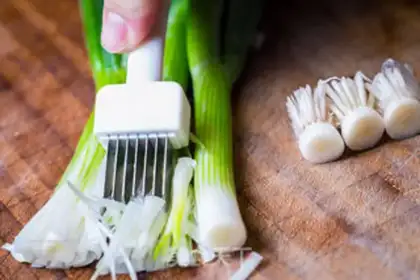
6
We can handle onions while waiting for fish to come out. If there was a silk knife, it would be a lot of work, and if there was not, it could be scraped out of a fiber with a fork。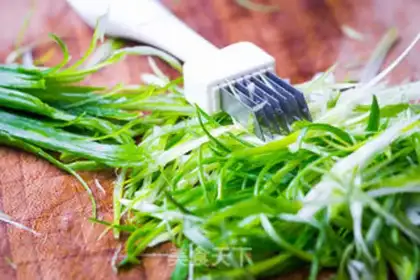
7
It's better to roll onions than to cut。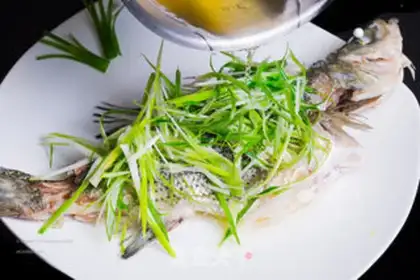
8
When the fish comes out of the pot, it is replaced by a large plate, covered with onions and then poured hot oil。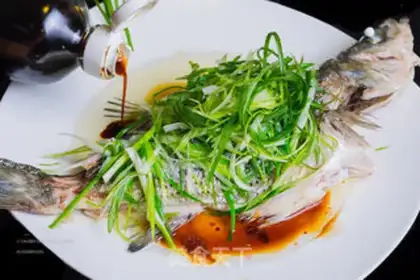
9
Eventually, the fish fell on both sides of the body of the fish into the appropriate oil. There's one thing about steaming fish: the sauce doesn't fit the body. That is, it's only twice in the body of fish, and when the eaters, depending on their taste, pull the fish into the bottom of the soy sauce and then pull it out. The same applies to intestinal powder. So don't pour soy sauce on the fish next time you eat outside。Steam fish Make Tips
It is believed that many readers' friends would ask, “Why not ginger?” The first fish in the steam must be fresh. There's no problem. Second, the other effect of ginger is to remove the smell of mud, but if a fish with the smell of mud does not really recommend evaporation, it would be more appropriate to burn red or to squeeze the raisins. For high-quality fish, the ginger tastes more like the fresh fish, so I do not recommend the use of ginger on the steamed fish. 2. It is believed that many of the friends who consider the issue of equal heating will draw two or three knives in each of the opposite sides of the body. That's what many recipes and even TV shows teach. Let's start with the distribution of fish. The most densely distributed part of the fish is the back ridge, where the abdomen of the fish are only a thin layer of meat due to the removal of their internal organs. Imagine a knife that goes from a fish to a fish's abdomen, which would have made it easier to do so. On the contrary, the problem of the hard-earned fish did not wait for a good improvement. This method, as described in the text, allows the fish to open their backs to the greatest extent possible, whether it be evaporated or funky or mineral bubbles. 3. It is not a matter of fear that fish skins may burst after evaporation. This is a new sign of fish, and onion is mentioned at this point in the context of a large degree of ugliness. If you want a little more onion, you can put onion on ice. There is a very straightforward description of the master's control over the steaming fire, the "red bone" — i.e., the main spine of the fish that excreted the most skeletal bone is red. It is hoped that you will become familiar with your own stove and find the best time for it。