Dyed black rice appeared on the market. I searched the Internet and now I teach you a few tricks on how to identify true and false black rice:
The first move is to look at the shine. Normal black rice has luster on the epidermis, but inferior black rice has no luster.
The second trick is to look at the skin. For normal black rice, what is picked up with your hands is a flake, but if it is powdery, it is inferior black rice.
The third move is to look at the heart of the rice. The core of normal black rice is white, while the core of ordinary rice is transparent and has no color. Although black rice dyed with rice has a relatively uniform appearance, the color of the dye will penetrate into the heart of the rice.
The fourth trick is to soak rice water. The rice soaking water in normal black rice is purple-red, and after dilution it is also purple-red or close to red. If the water soaked is like ink and remains black after dilution, this is fake black rice.
The fifth move is to watch white vinegar. Black rice water turns green when it encounters alkaline substances, and turns deep red when it encounters acidity. If ordinary citizens have questions about the black rice they bought, they can test it with vinegar. Because vinegar is acidic, if black rice water does not react chemically or discolor when encountering acetic acid, it must be caused by the dye.
Han Longzhi, Institute of Crop Science, China Academy of Agricultural Sciences: "If it is dyed, the color will look very uniform. If it is not dyed, the color will not be too uniform. It will be dark and light."
Experts say that we should also look at the "second whites" of black rice. The first "white" among the "two whites" is the germ part of black rice. It should be a white point. Although the rice is black, this part should be white.; the second "white" refers to the section of broken rice, which must also be white.
Black rice steamed buns
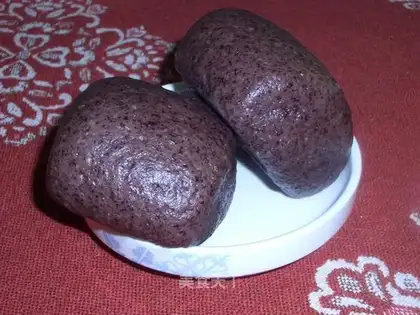
Recipe Recommendations
- black rice flour appropriate amount
- steamed bread flour appropriate amount
- warm water appropriate amount
- yeast appropriate amount
Steps for Black rice steamed buns
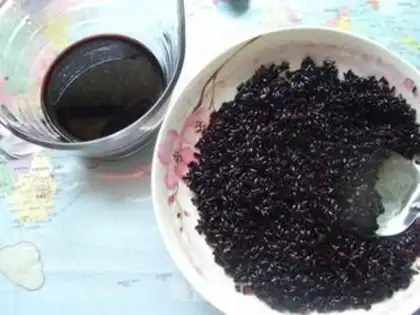
1
After soaking 100 grams of black rice in tap water 1 cm higher than black rice for one night, drain the rice soaking water.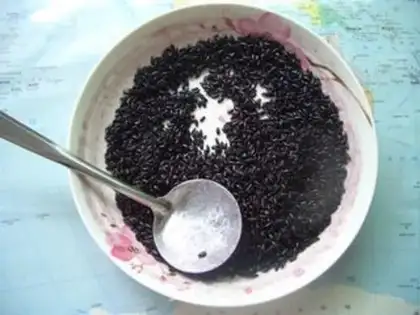
2
Dry the drained rice grains in the shade until the rice grains do not stick together, but it is still a little cloudy, cool and moist when you grab it with your hands (I blow it with the cold wind from the hair dryer).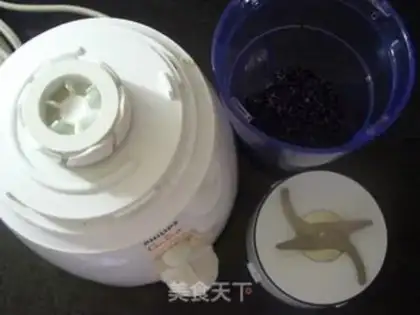
3
Grind the dried rice grains into fine powder with a food processor (shake the food processor until the sound of the particles hitting the container of the processor can be heard and it is determined that there are no coarse particles).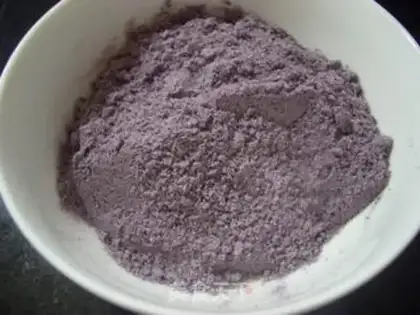
4
If you feel uneasy, you can use a sieve to sieve it and polish the remaining coarse particles again.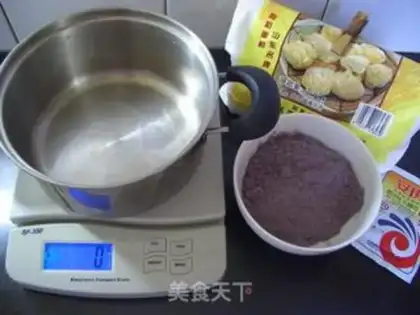
5
Mix the steamed bun flour with the black rice flour, melt the yeast with warm water at 35℃ (close to body temperature), and then pour the warm water into the mixed flour.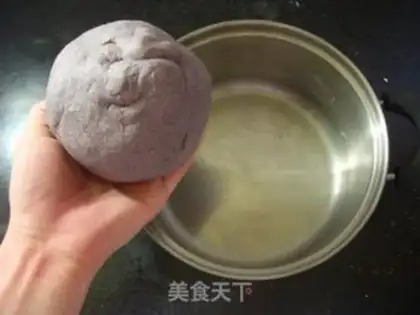
6
Knead the dough until the dough is smooth and the hands are smooth, close and ferment.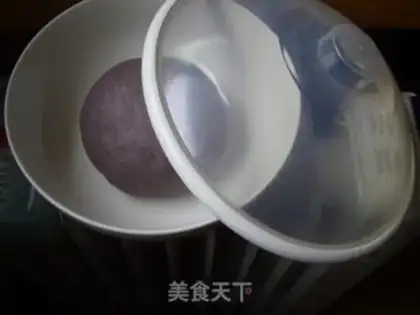
7
Cover the dough and place it at 35 ° C to ferment for 2 hours.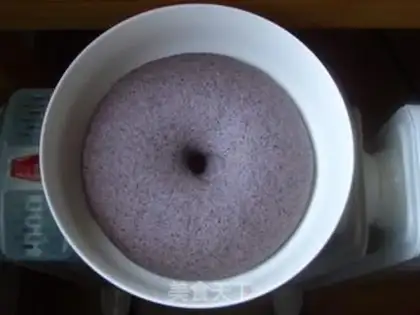
8
When the dough becomes twice its original size and exudes a fragrant and slightly alcoholic taste, it is ready to ferment.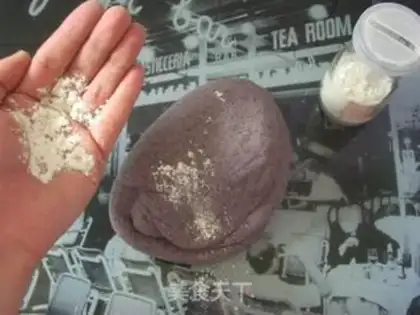
9
Sprinkle some dry flour on the chopping board and hands and start kneading the dough to expel the pores produced by fermentation.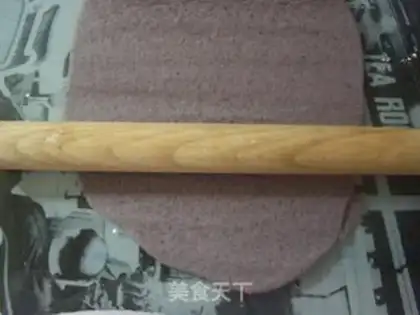
10
You can also use a rolling pin or a home dough press to expel air bubbles.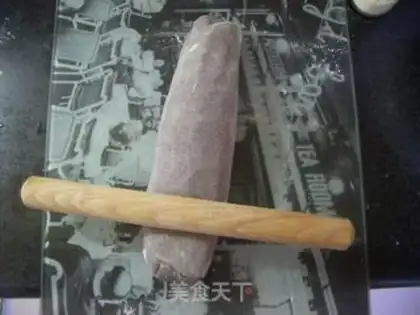
11
Roll the dough into long strips.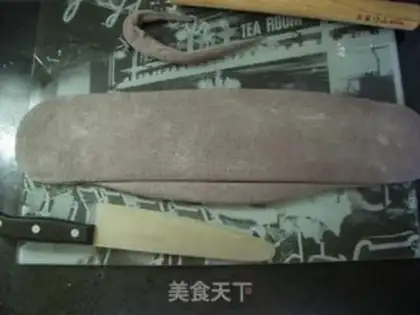
12
Roll into a dough sheet 1cm thick, 10cm wide, and 15cm long, and cut off the uneven parts.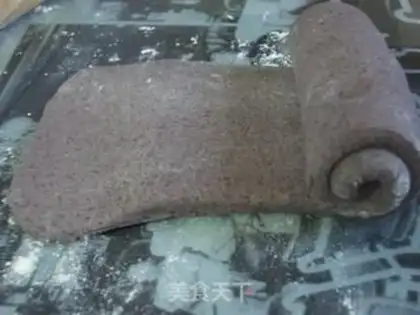
13
Slowly roll up the dough sheet and roll out the joint so that the steamed buns can stand up.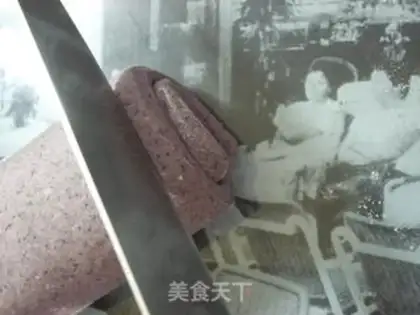
14
Apply some oil to the knife and cut off the irregular ends.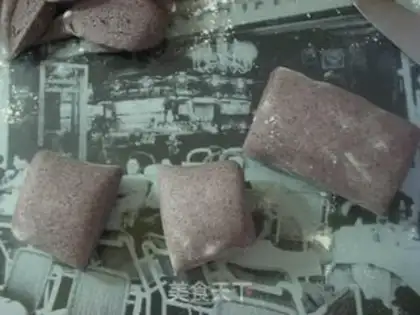
15
I will repeat this volume again.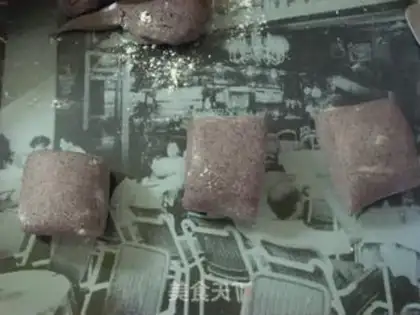
16
Trim the cut steamed buns inwards and make them taller (the trimmed ones are on the far left side of the picture), and use the blade to round the corners and corners of the buns.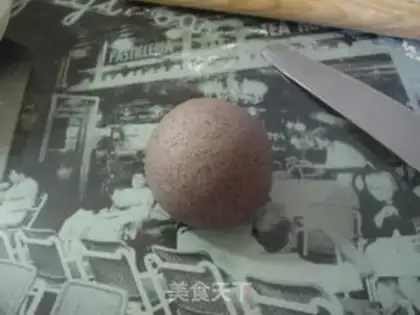
17
The last bit of leftover material can be kneaded into a round steamed bun embryo.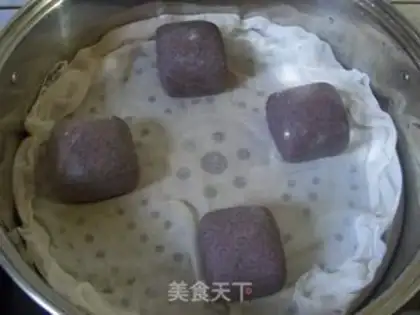
18
Put 1 liter of cold water in the steamer, spread wet gauze, put steamed buns on it, and wake up for another 20-30 minutes. This way, the steamed buns will taste very good.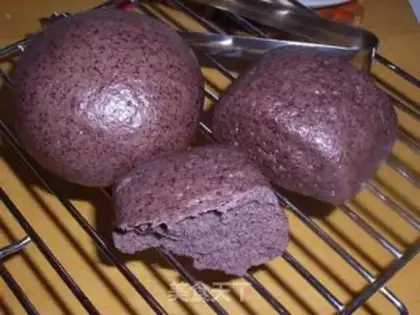
19
a. After 20 -30 minutes, turn on high heat and steam for 15 minutes to turn off the heat, and then open the lid after 2-3 minutes (to prevent the steamed buns from collapsing);b. Take out the steamed buns while they are hot to prevent gauze from sticking to the bottom of the steamed buns;c. Place the steamed buns on a shelf that can dissipate heat to prevent the bottom of the steamed buns from being soaked by hot water vapor.Black rice steamed buns Make Tips
1. The black rice already has moisture after a night of soaking, so when kneading the dough, it should be added to the usual amount of water. My usual flour: the water is at 100:50, this time it is around 100:45;2. The size of the steamed buns is your own master, but the dough sheet is still 1cm thick;3. The tempered glass plate for cutting fruits is very good for kneading the dough and is not easy to stick.