Black Sesame Sagima
By VicentaLakin
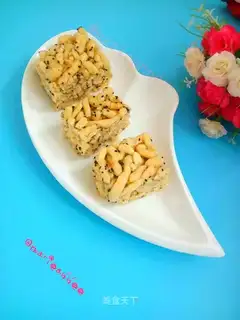
Carameltreats, also known as Sachima, are a special Chinese pastry, a food for all. One of the offerings of the Qing Dynasty sacrifice was meant to be "dog titty sugar." When the noodles are cooked, they are mixed with sugar. Sakima is one of Beijing's famous four-season cakes. It is also a traditional multi-ethnic snack and is now marketed throughout the country. The Sacima is intended to mean a food made of sesame and honey, and because of its characteristics, the clean-up magazines are mostly documented. “Salchi Ma is a man of sugar, cream and white face, made of rice in the form of rice, baked in a lime dryer, made of squares and sweetly edible.” The modern Sacima has maintained its traditional style of production and has become a popular national fragrance, coloured by gold and yellow, soothing, sweet and sweet, unoiled and accessible。
Recipe Recommendations
- flour 300 grams
- eggs of 4
- maltose 150 grams
- white sugar 150 grams
- yeast powder 3 grams
- baking powder 3 grams
- water 30 grams
- black sesame 20 grams
- oil 1500ml
- corn starch appropriate amount
- sweetening
- fried
- several hours
- ordinary
Steps for Black Sesame Sagima
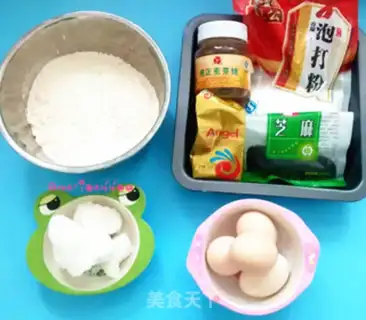
1
Preparation materials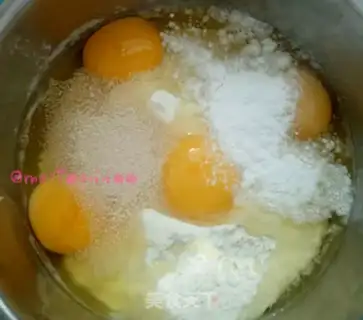
2
Eggs go in the flour bowl, and the yeast and the powder are called the corresponding grams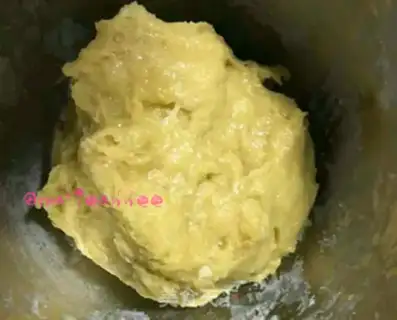
3
Scratched in groups, like pictures. Then you put the lid on, and you'll be quiet for half an hour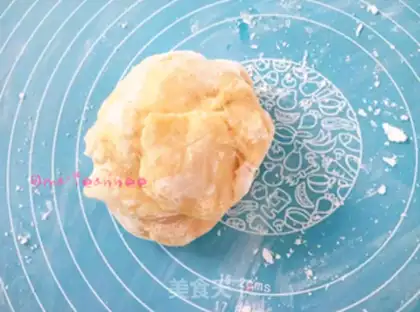
4
In half an hour, some corn starch was put on his hands to remove the flour. We also put some corn starch on the board, and then we split the face into two pieces, and first we take one of them to make it sticky. Hands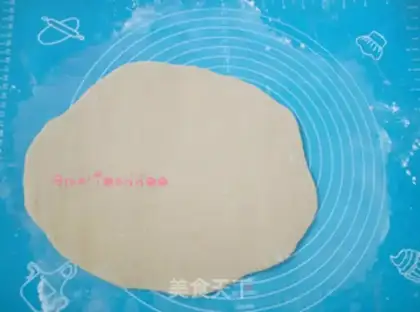
5
And then it'll be 0.2 centimetres thick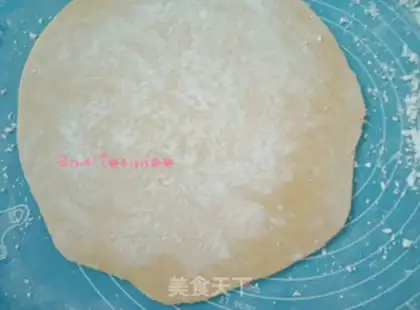
6
Smash a piece of corn starch evenly on a good face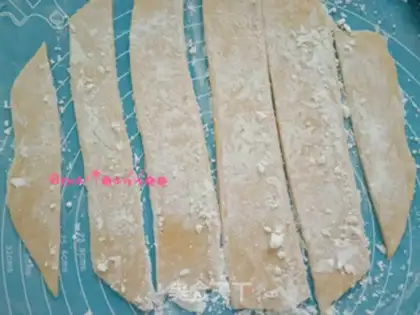
7
Scratch it into a little slice of about 3 cm wide, and then put some corn starch on it, and cut it in the mouth. Move
8
Then we cut the pieces together in three groups and cut them into two millimeters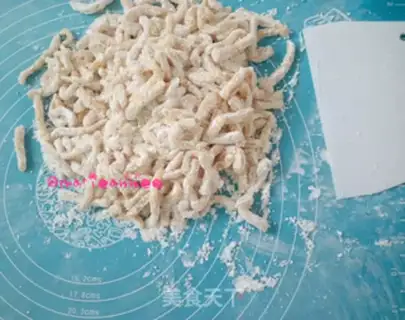
9
Put corn starch on the little noodles and grab it with your hands and wrap it on every noodle so it doesn't stick together
10
The extra maize starch is shaken off and loaded into the basin, and the same is true of another pasta。
11
It's pouring into the pot, burning it to 70% heat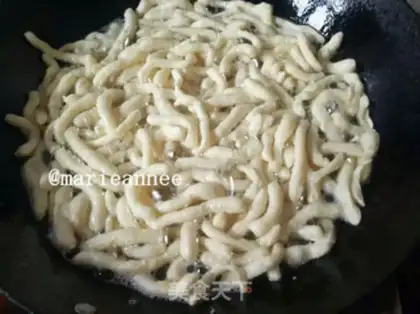
12
Put the noodles in the pot and blow them to light gold
13
We'll take the tar and cool it off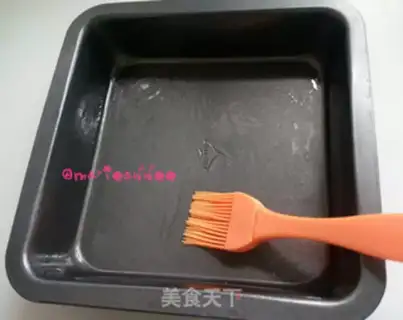
14
Sakimar's container will be oilproof
15
And then I started making syrup: pouring all the malt sugar and sugar and water into the pot, making a small fire. Cook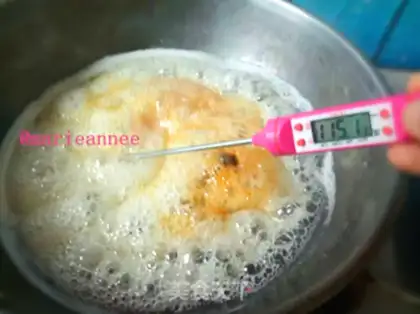
16
Until the white sugar is fully dissolved, there is a thick foam, and it's able to pull out the thinness of the fuse. It's better to measure the temperature at about 115 degrees. The level of the syrup boils directly affects Sakimar's taste, so this step must be understood. Okay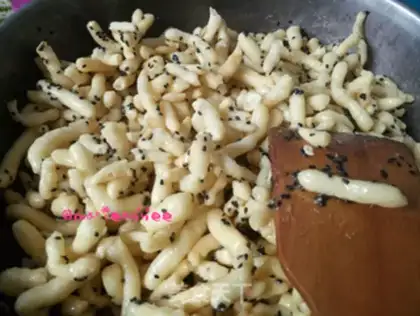
17
When the fire closes, pour the cooled noodles in and mix them evenly, then pour the black sesame into it, and then flip them with shovels, so that every one of them is evenly wrapped in syrup and sesame, and it must be fast, and it can be condensed if the syrup doesn't cool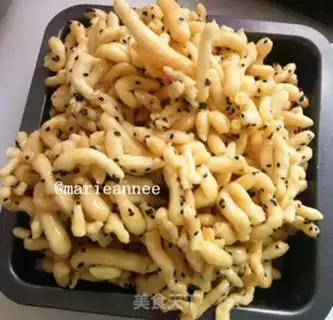
18
When you're done, pour the noodles into the oiled container while it's hot. Medium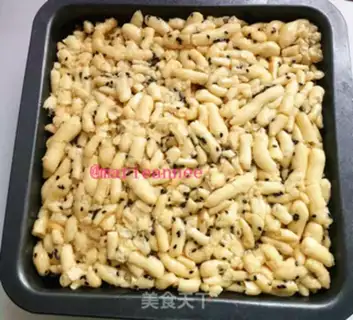
19
Put your hands on the water and hold it down while it's hot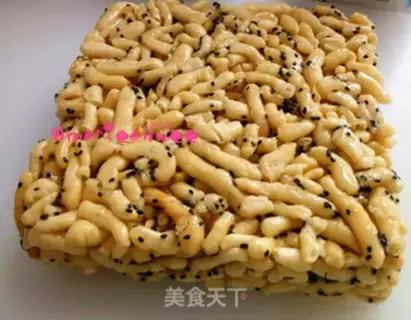
20
When it cools, it starts with a scratch or a spoon's tail from the edge of the inner wall of the mold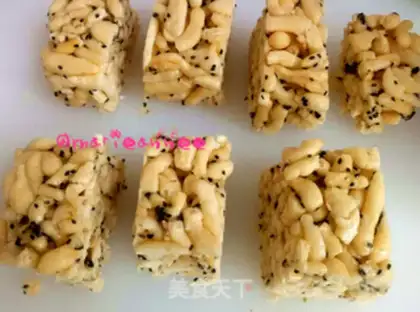
21
Cuts can eatBlack Sesame Sagima Make Tips
1. The ideal temperature for the prepared syrup is 115 degrees. If the temperature is too high, it will be too hard after solidifying; conversely, if too low, it will be too soft. If there is no thermometer, you can pick up some syrup with chopsticks, let it cool slightly, and see if you can pull out thin threads. Alternatively, prepare a bowl of cold water, dip a chopstick in the syrup and drop it into the water; if the syrup solidifies immediately upon entering the water, it is also ready. Do not overcook it into caramel, otherwise the texture and color will be poor; 2. The dough for Sachima must be sticky; only with high moisture content will the finished product have a soft and fluffy texture. Of course, if you prefer a harder texture, you can make the dough stiffer: 3. If there is no maltose, honey or all white sugar can be used as substitutes; 4. The noodles cannot be cut too thick, as they will expand significantly after deep-frying; 5. Adding maltose makes the syrup clearer and ensures that the finished product does not fall apart easily after setting. Because maltose has viscosity, it can make the pastry moist, fluffy, and delicious, and also reduce the sweetness; 6. Yeast powder and baking powder can be omitted, but the finished product will be hard