Red velvet buns
By VicentaLakin
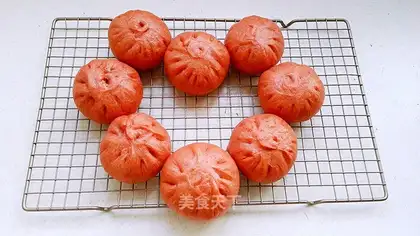
"Red Pack" drops from the sky, and then you won't be disappointed! We're used to the usual white bread. Let's put some colored beauty on it and make it a popular red bag. Not only does it look beautiful, but it's rich. Do you like it? The approach is simple, except for the inclusion of a small amount of red chromosomal powder in the noodles, which is crushed with red chromium, which has a strong chromosomal effect on proteins and is therefore often used as a food dye, which has the advantages of being non-toxic and safe compared to synthetic chromosomals, as well as the effect of spleen digestion and active haematosis. Let's study together
Recipe Recommendations
- flour 500G
- yeast 3g
- red rice flour 2g
- white sugar filling appropriate amount
- water 275g
- white sugar 5g
- Meat residue, wolfberry sprouts, vermicelli stuffing appropriate amount
Steps for Red velvet buns
1
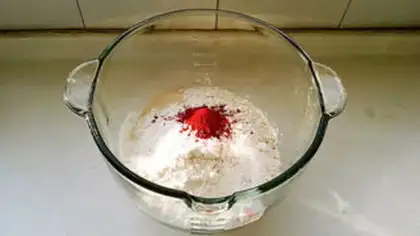
Flour, yeast, red flour, white sugar are in the chef's face bowl, first pour water on the yeast, soluble the yeast, put the noodle on the cook's machine, start the machine, and make smooth noodles, and ferment the fermentation sheet (or protection film). (The option is also to use a bakery or hand and face)。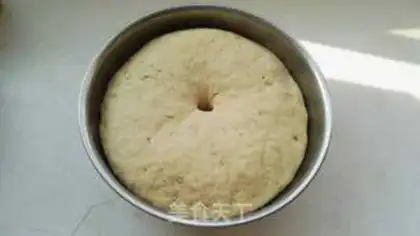
2
When you're twice as big, your fingers stick in a hole and you don't fall apart。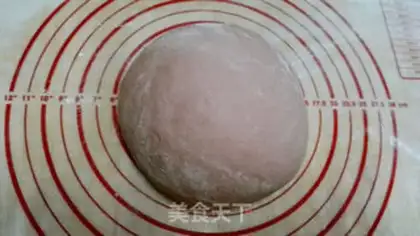
3
(b) Airing of the face on the mat or on the panel (a little dry powder in sub-splatter)。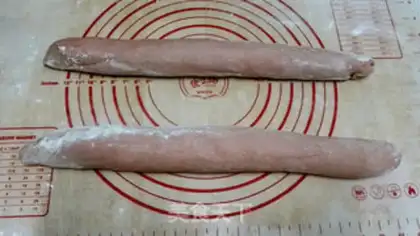
4
Cut it in half and swish the noodles。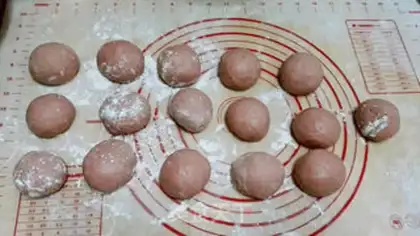
5
Discretion smooth. (g) Wet-covered dry skin (direct steam is a rounded bun)。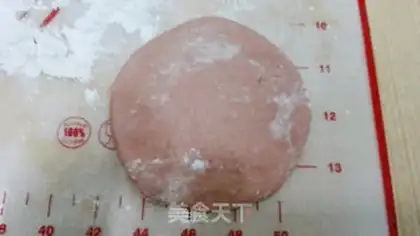
6
Pre-positioned materials (pork, powder, frozen sprouts, ginger, onions, etc.)。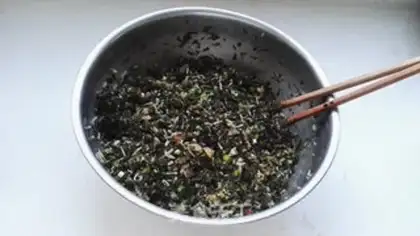
7
Take a noodle, twirl it in a thin middle。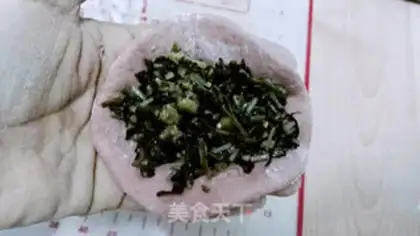
8
Put the material in。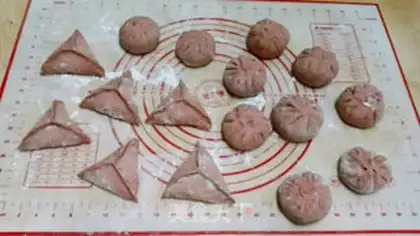
9
Co-ordinated and successively sealed。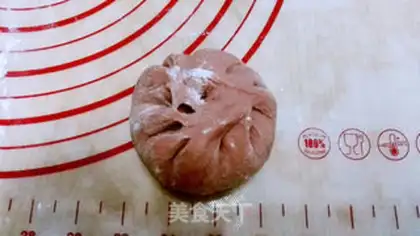
10
Pack all the bags in turn. There's not enough, and some flour and sugar blended into a sugar triangle。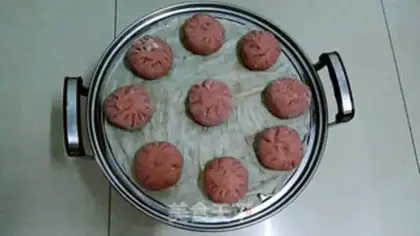
11
The steam pan is watered and the bag is placed on a steam shelf with a cotton cloth (or a viscous base, such as oilpaper), with a cap around 15 minutes ' awakening。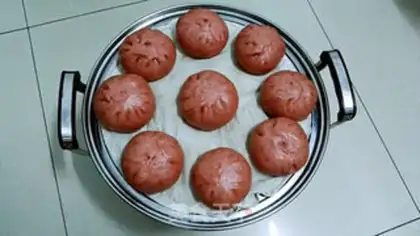
12
It was clearly large, light, fire, burning and steaming the fire for 15 minutes, and five minutes to lift the cap。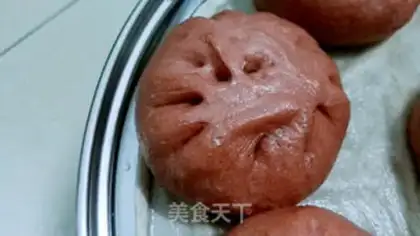
13
The finished product. Color difference: Under the nightlight。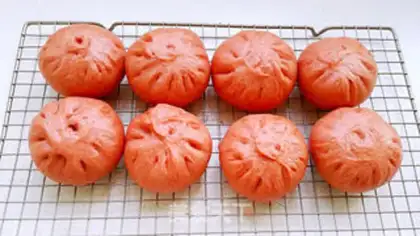
14
The finished product. There's natural light under the window in the morning, everywhere。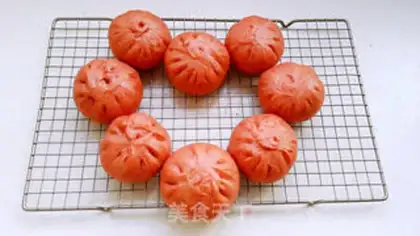
15
The finished product。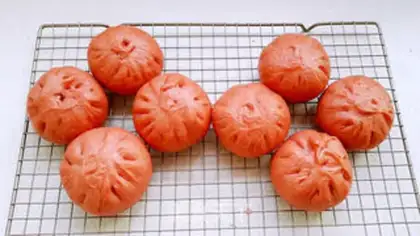
16
The finished product。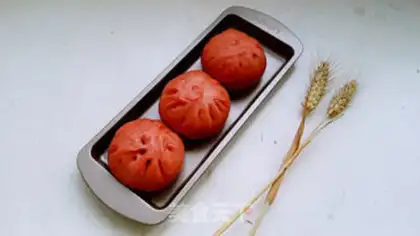
17
The finished product。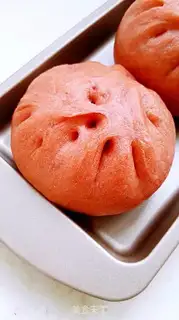
18
The finished product。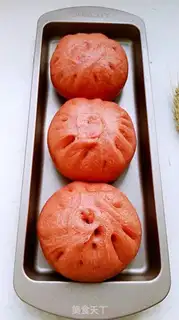
19
The finished product。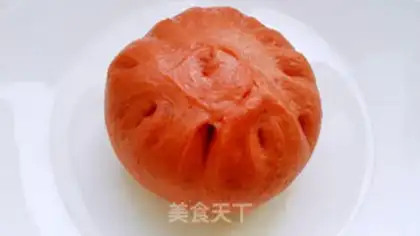
20
The finished product。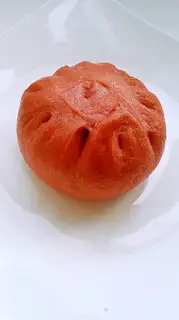
21
The finished product。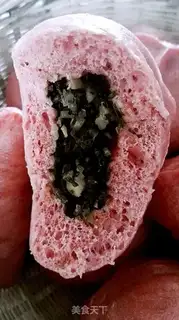
22
The package's internal organizational chart, the rest of the day is missing, and it's not there。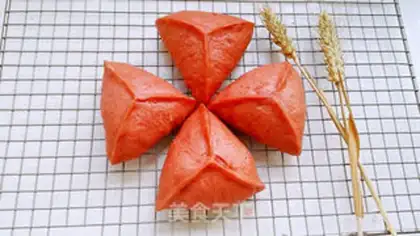
23
Red sugar triangle。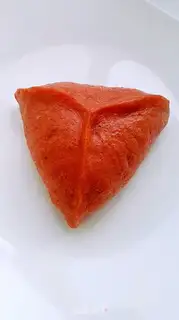
24
Red sugar triangle。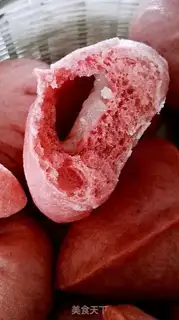
25
Internal organization chart of the sugar triangle。Red velvet buns Make Tips
1. Baozi dough is generally slightly softer than mantou dough, roughly at a ratio of flour 100: water 52: yeast 1.
2. In summer, the dough becomes soft after resting, so you can reduce the water. In winter, it becomes hard, so you can add a bit of water; it's fine if it's slightly softer or harder (adjust flexibly based on flour absorption rates, and you can reserve some water).
3. In summer, yeast is active, so you can reduce the amount of yeast; in winter, you can appropriately increase the amount of yeast. Adjust flexibly.
4. If you don't have a kitchen scale, you can use a bowl to measure the flour and water, using a ratio of one bowl of water to two bowls of flour.
5. Factors such as the amount of yeast, yeast activity, and room temperature determine the fermentation time, so be sure to learn to judge whether fermentation is successful by observing the state of the dough.
6. Fillings can be freely combined according to personal taste and available ingredients.