Pork rosary
By VicentaLakin
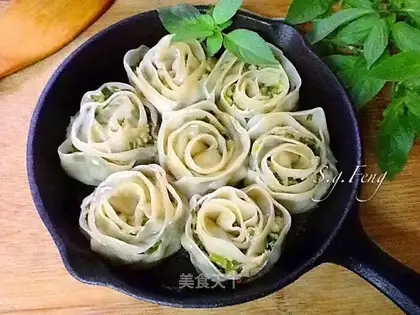
Internet-hot roses, either on the West Point or on the Chinese noodles, are very simple, they're beautiful, they're delicious and they're generous
Recipe Recommendations
- the minced pork 300g
- leek 300g
- egg 1
- soy sauce 1 tablespoon
- rice wine 1 tablespoon
- cornstarch 1 tablespoon
- sesame oil 1 teaspoon
- salt a little
- chicken essence a little
- pepper a little
Steps for Pork rosary
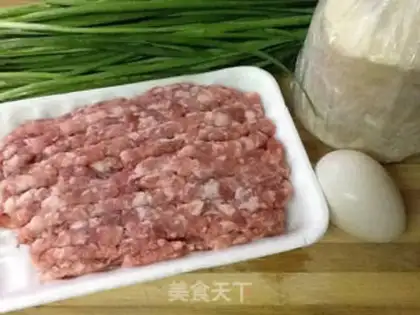
1
Prepare the food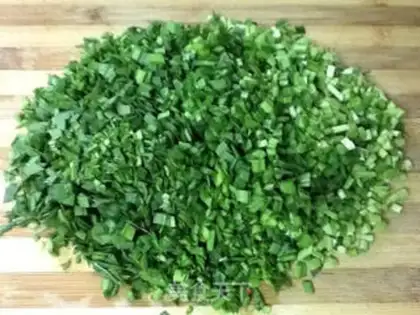
2
The pickles go to the end and the leaves are clean and cut to the end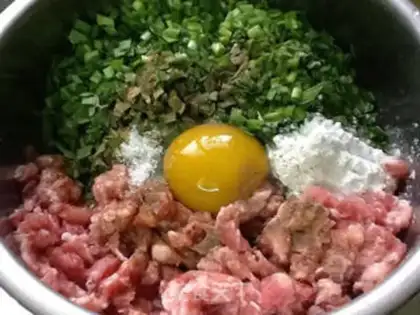
3
The pig's meat is then cut to stick with a knife and added to all the insides。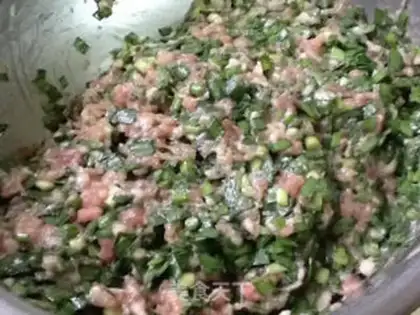
4
It's a little bit of a sticky。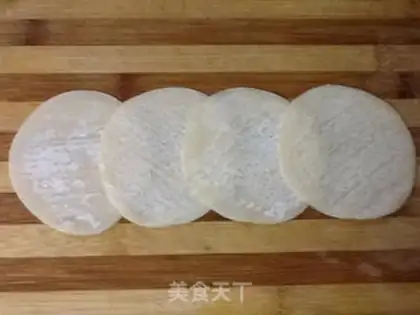
5
rose-forming packaging: 5a. taking four dumplings, which overlap by one third, in one font。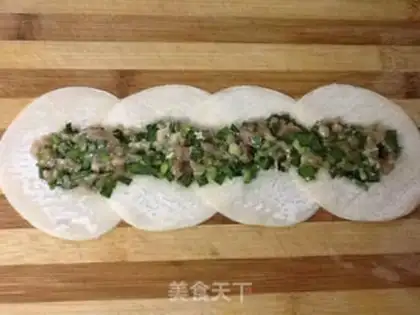
6
rose-forming packaging: 5b. take a suitable amount of internal food in the middle of a single type of dumpling skin。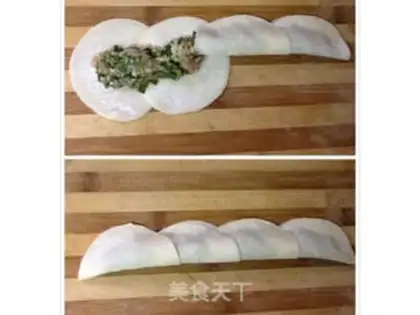
7
a rose-forming package: 5c. 1 more piece of dumpling skin, wrapped in half a month。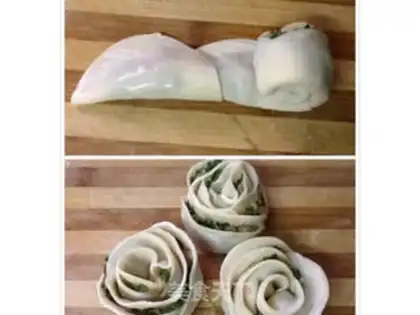
8
a rose-forming package: 5d. is then rolled from one end to the other, glued to the end, a flower-shaped turn-on, and a little valet can be added. (if necessary, a little water can be coated at the interface for adhesion)。
9
rose-forming packaging: 5e. packing over and over (this should contain 15 roses)。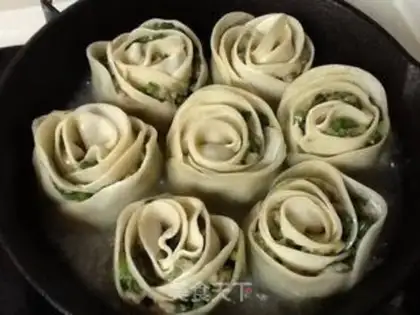
10
The boiler (the pan) is put in a small amount of oil, into rose dumplings, and it is hot in the middle of the fire, and it's yellow in the bottom. Water is added to about one-third of the volume of rose dumplings, evaporated (about 2-3 minutes), dryed with water (three times repeated) and, after the last drying, boiled to the base of gold and yellow。Pork rosary Make Tips
1. Algae may be replaced by onions, celery, aroma... They may also be used in the form of croquettes, smelts, etc., which have a high water content and which can be made with an appropriate amount of salt before being used。