Sichuan
By VicentaLakin
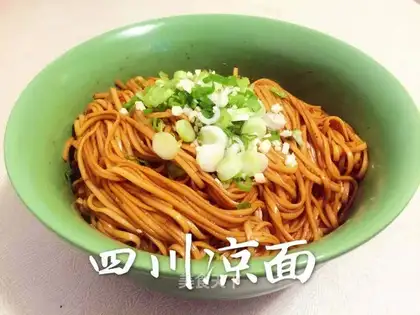
The cold noodles are the classic food of Sichuan. But I didn't like to eat cold noodles when I was a kid, and I didn't like to do it when I came to the United States. But then it turned out that my friends loved my cool noodles, so they often did it for friends, for the church, and it became a classic dish for our church. Many friends asked me for a recipe, but for various reasons I never wrote it. Now I'm writing my secret recipe and sharing it with you! Let's hope this is a classic dish that will give you more pleasure! There are a lot of recipes on the Internet. However, this recipe is characterized by: 1) easy to find. We're in a foreign country, and many home-grown women who can't eat without rice. The recipe is based on material that can be found in the United States, to the maximum extent possible. 2) Streamlining. The recipe is designed to maximize the taste of Harakawa with the most core material. Some of the supplements (e.g. soybean sprouts, cucumbers, etc.) are not included, and they can be added to the population. 3) Repetitivity. Traditional Chinese recipes rely more on experience (“measurable”, “slightly”. All material in this menu follows the principle of quantification, which is simple to repeat. 4) Scalability. I've done it all the time. The content of this recipe can therefore be easily scaled in a linear manner, making the right amount as required。
Recipe Recommendations
- pepper noodles 1 teaspoon
- cooked pepper 4 tablespoons
- Taiwan oil noodles 1 pound
- pepper 1 teaspoon
- soy sauce 3 tablespoons
- minced garlic 1/2 tablespoon
- chicken essence 1/2 teaspoon
- soy sauce 2 tablespoons
- vinegar 2 tablespoons
- salt 1 teaspoon
- sesame oil 1/2 tablespoon
- honey 1 tablespoon
- green onion 1 tablespoon
Steps for Sichuan
1
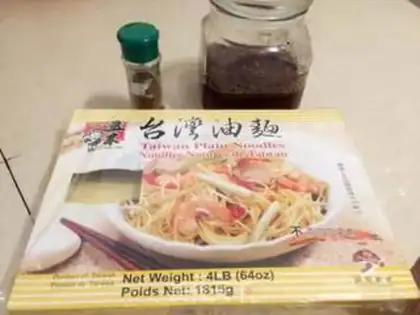
key food items: taiwan oil pasta [a], peppers, hot peppers [b]. all three can be found in various asian and chinese supermarkets and are the most irreplaceable. everything else is missing or replaced, and it doesn't matter; but the three things are changed, and the flavor is broken。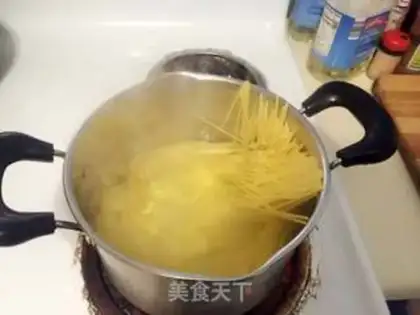
2
the boiler boiled water [c] and a pound of taiwan's oil face to maturity of eight (with a hard bite)。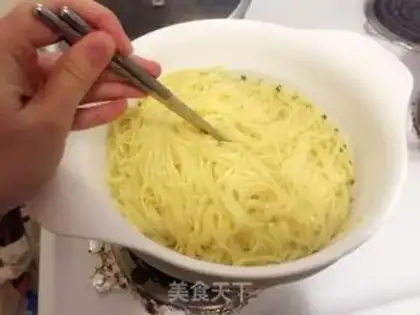
3
Cold water (face to cool) is quickly extracted and dry water is filtered with leaks。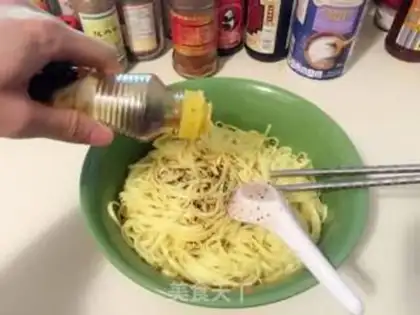
4
Add 4 spoons of hot pepper, 1/2 spoons of perfume, to mix first. These two steps are meant to separate the noodles from the cake。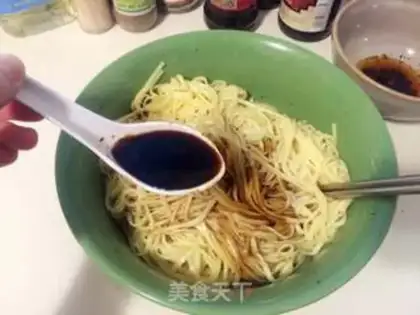
5
1 spoon salt, 1/2 spoon chickens, 1 spoon of honey [d], 3 spoons of raw, 2 spoons of old, 2 spoons of vinegar, 1 spoon of pepper noodles [e], 1 spoon of pepper paste, modulated again. it should be evenly coloured。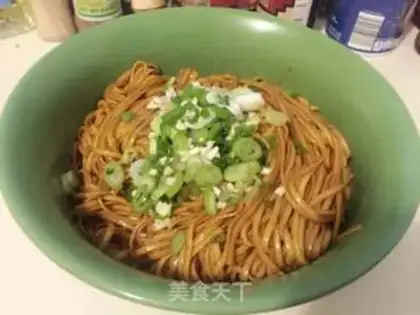
6
With flowers and garlic。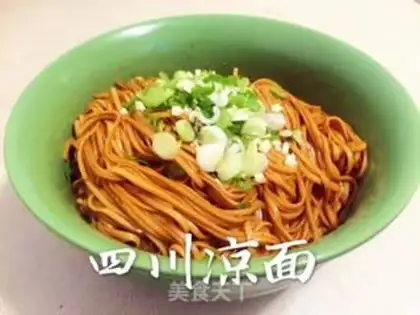
7
It's done. It's done when you eat it。Sichuan Make Tips
[a] [Taiwan oil paste] should have the best alkaline surface and the most powerful. Unfortunately, in the vast plains of the centre of the United States, it is difficult to buy alkaline surfaces, except for large Chinese supermarkets, which do not consider themselves to be manual. So after trying all the available noodles, it was found that Taiwan's oil flour was the best alternative and was easily available. [b] [Creaking chili] Script must be cooked. The approach is simple: vegetable oil is hot, half chili noodles (sweet), and the other half when the temperature drops to 50%. I usually make vegetable oil (2 cups, USCup): chili noodles (3 spoons) plus some ripe sesame. If you like hot, you can add pepper noodles. If you don't like too hot, you can reduce a spoonful of pepper noodles. [c] [water] Here's a little recipe: it's better to cook with a steak soup or high soup. [d] A lot of spicy is sweet. If you have a special focus on sweetness, you can add a spoonful of honey per pound of noodles. [e] The amount of pepper paste depends on personal preferences and pepper quality. I used Sichuan to bring the finest Hangin peppers (the peppers must be brought every time I return home), so a tea spoon is rather numb, depending on the taste of a friend, and sometimes it decreases; but if it's the usual peppers and peppers that are bought at the US supermarket, the taste is not puffy, perhaps more. [f] [Auxiliary material] This recipe is mentioned earlier as an attempt to maximize the taste of the food from the core material. If so, we could add some more. It's common to have bean sprouts and cucumbers。