Two-coloured pig buns
By VicentaLakin
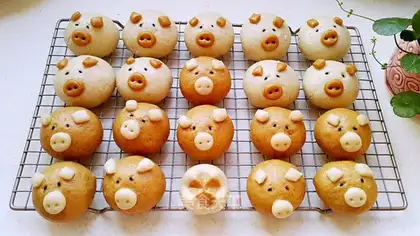
the cute little pig has always been a big fan of grown-ups, and today we have two-coloured noodles, and we've made a couple of little piglets. it's just a little slow, and it's just a little long for the pig's nose and ears, so this one's a little too much. now the room is hot, it's not suitable for a long time, it's dry skin, it's fermentable, but it doesn't matter what you eat。
Recipe Recommendations
- flour 200g
- water 100g
- yeast 1.5G
- white sugar 5g
- beet flour 5g
- black sesame appropriate amount
Steps for Two-coloured pig buns
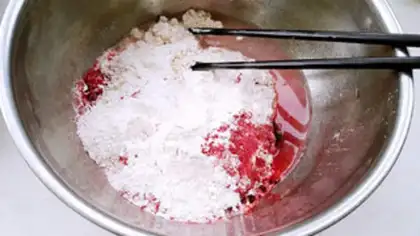
1
Water, yeast, white sugar in the basin, mixed with chopsticks, beet flour, flour。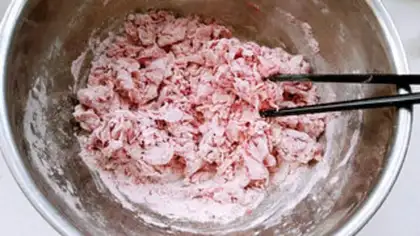
2
It's made out of chopsticks。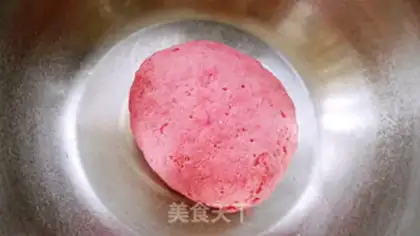
3
With hands and smooth noodles, fermented。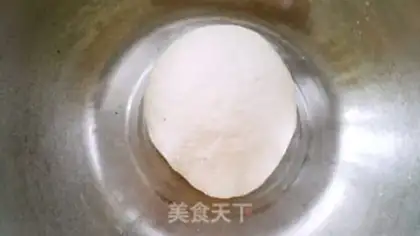
4
The same steps and a white noodle fermentation。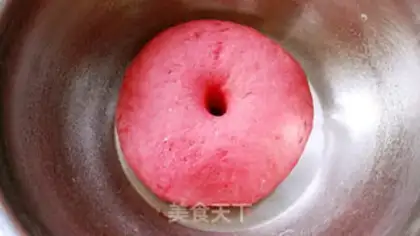
5
When you're twice as big, you can ferment with your hands covered in dust。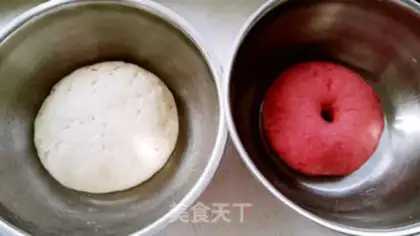
6
fermented noodles。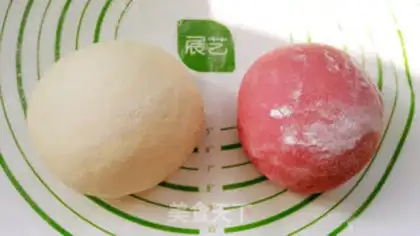
7
On the mat or on the board, the fists were drawn, the palms were rubbed and folded, and the action was repeated to exhaust the face of the face until the face was smooth (with a small amount of dry powder)。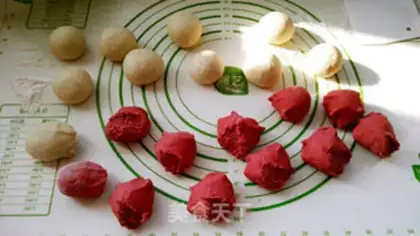
8
Growing strips, splits, smooth。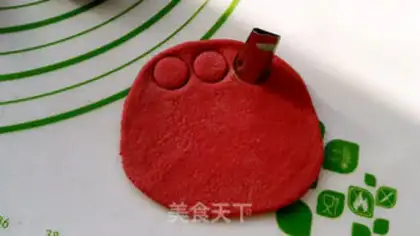
9
Take a noodle to open and crush the circle out of the pig's nose。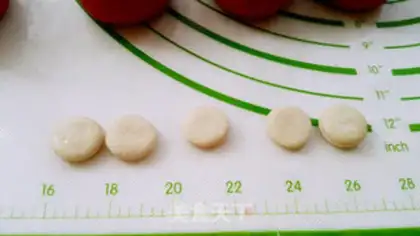
10
Same way to take off the white face。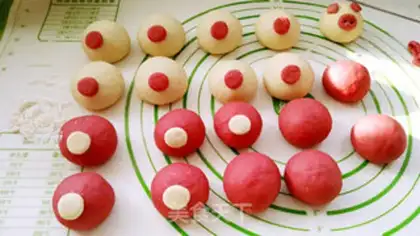
11
The back of the dome is watered with chopsticks, and the right spot on the head of a sticky pig is the nose。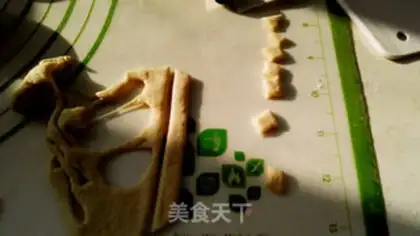
12
The rest of the face is sliced out of the pig's ear (do whatever you want, the finished product is not ugly), and the back of the face is watered with chopsticks and a sticky pig's head。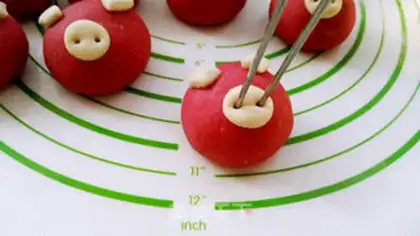
13
Stoke your nostrils with a pin or toothpick.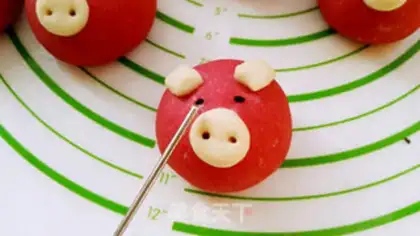
14
With a needle or a toothpick, you can put a black sesame dot on your eye (a little water sticky)。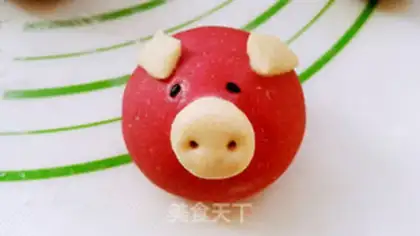
15
Sweet two piglets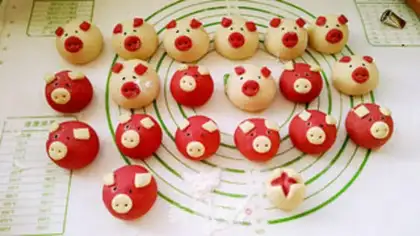
16
Then do all the little pigs, big pigs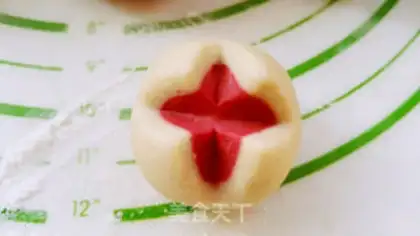
17
The rest of the pasta, red round, white twilight, white face wraps in, smooths up, crosses with a knife and turns into a double-coloured wedge。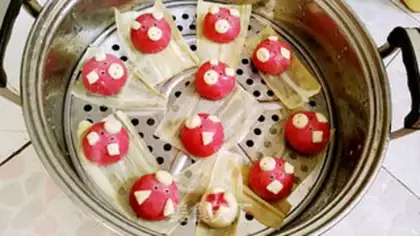
18
The steaming pots are warmed, and the finished piglets are laid on the tarp (which can also be glued to the base of a sheet of cotton, oil paper, etc.) and water is dumped with their hands。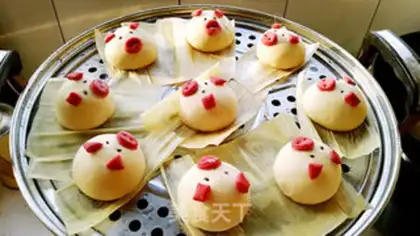
19
Let's put the pig in the top floor, throw the rind, cover. The fire turned into a fire for 13 minutes and shut down the fire (because of the length of time that Angle's eyes and ears were awakened, the face was fired directly)。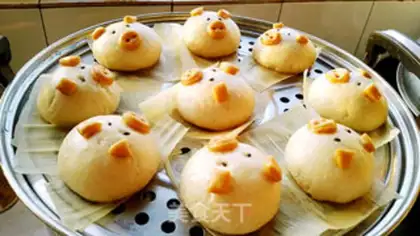
20
Five minutes, open caps, faded. Natural pigments fade at high temperatures. It's normal。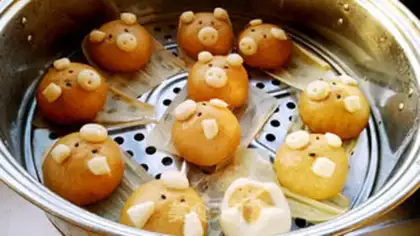
21
Lower floor。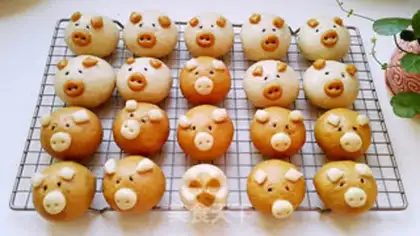
22
Family。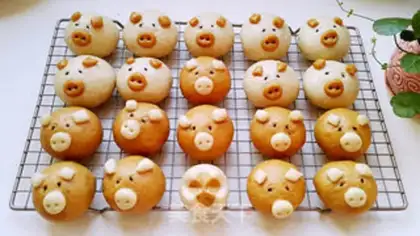
23
Sweet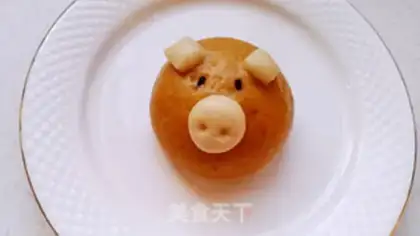
24
The finished product。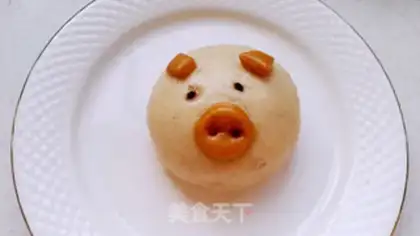
25
The finished product。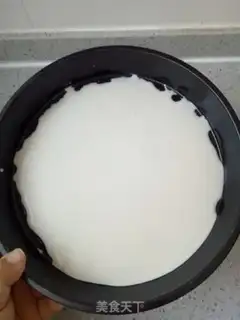
26
The finished product。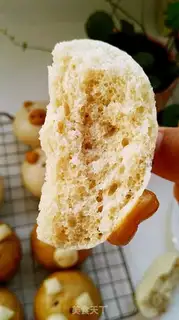
27
Internal organization chart。Two-coloured pig buns Make Tips
1. The proportion of flour is generally 100: Water 50: Around yeast 1, with a soft spot, and the amount of yeast and room temperature determine the length of fermentation. 2. When you set the spring in the pot, the upper layer is prepared, followed by the lower layer, so that it does not differ significantly. 3. No beet powder can be replaced with or without other natural pigments. The pasta is soft in the summer and can reduce water. The winter is hard, with some water added, and the soft is almost as good (the flour absorbs some of the water with varying flexibility). Summer yeast activity reduces yeast usage, and in winter it increases the amount of yeast and allows flexibility. 6. Regardless of the season, whether one or two, it is important to remember that the face-to-face status is applied flexibly, rather than time, and that other people ' s time can be referenced but not replicated. The length of the fermentation is determined by factors such as the amount of fermentation and yeast, yeast activity, water temperature, room temperature, sugar, etc., so it is important to learn whether the fermentation has been successful and awakened。