The Polipisa
By VicentaLakin
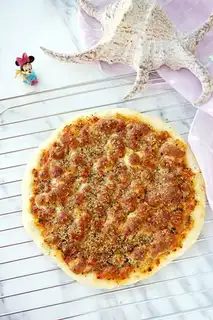
In Apprenticeship bakers, Pizza is highly praised. "I often hear people say that pizza is perfect food. Naples is the birthplace of what we call pizza today. Genoa has Focasha, Tuscany intentionally flat bread, and Sicily has Sicily Hosa, but the real Naples is the perfect expression of perfect food. Although all pizzas have pasta and pies, I wish only this super-version of pizzas could be called pizzas.” I used to make my own pizzas, I always filled them to death, afraid they weren't enough. However, here, “I have always thought that it is often pasta, rather than pie, that makes people remember a pizza. I've seen some expensive, delicious pies destroyed by bad pastries, and more often, a nice one is destroyed in the oven because the oven's not hot enough." The greatest flaw in most pizza formulations is the failure of the baker to place the noodles in the freezer for one night (or at least for a few hours). Refrigeration can provide enough time for enzymes to function and release the fine smell of the starch. Long-term placement can also make the beryllium lax, reduce the elasticity of the noodles and make the plastics easier, thereby keeping them as low as possible.” Indeed, the noodles extracted from the refrigerator, after two hours of static, have been flattened, and have not yet been pulled, much less thrown to the desired size. Noodles are so soft, they're so cold, they're so clumsy, they try to move into the oven without any damage. “This formula can be made of any flour, and if it's used, I suggest that some olive oil be softened. The real Naples don't add oil when it's made. This is strictly required -- but it's because it's inherently loose and soft, and it's stretchy and it's good, and it's easy to shape.) I found that high-banded flour, though flexible, would be easy to operate if it was given enough time to put it. Oil is not required if the flour is used in the middle. "Whispering, or using high-strength powder. There's only very little pie for the pizza. For the book says, “Remember that the principle of placing the material is “unsatisfactory” and adding too much material is often counterproductive because it makes the pasta difficult to bake. We usually put less than three or four kinds of material (including sauce and cheese), which is enough." So, with sauce and cheese, it's enough. With regard to the use of the material, one third of each of Masurira, Cedar and Palma cheese were used, together with all the spices available at hand. Finally, a seemingly thin pizza is baked, which is undoubtedly extremely subversive in the form of a layer of collage of fruits and vegetables and pizza with sea, land and air meat. No wonder people later saw this flat pizza and said, "If pasta's the point, what do you want the pie for?" Baking pizzas with cold temperatures destroys pasta because it takes longer to change color, during which all water will evaporate and the pasta will dry. Therefore, keeping ovens and baking tablets at a high temperature is the trick of making good pizza. Noodles are one of the most dramatic aspects of baking, and if they happen at the same time, the taste of the finished product will keep you alive. The thinner, the more evenly the pastry, the greater the likelihood that both events will occur simultaneously without tearing it apart.” The temperature set for the oven is not mentioned in the steps, which is probably the only place in the book that does not explicitly mention the temperature of the oven. Only bake time — 5-8 minutes. Turning to the foregoing, to find out, "For many years, the cooking books give a majority of baking temperatures of 177-218°C, and you rarely see instructions to shift the oven temperature to the limit. But if you want to bake good pizza at home, you have to do it.” The maximum temperature of the oven has never been used, it is impossible to imagine what that would be like, and there is some fear that the oven will burn? Fire? Bite your teeth. First time you know this oven can be up to 270 degrees. Noodle changes and cheese melting have not taken place simultaneously, cheese has melted and burned into a layer of gold brown shell, while the edge of the cake is white and without the desired yellow. “This noodle does not need to form “ears,” but sometimes the finished product naturally emerges. The edges of the pizza are usually thicker than the middle, so that the midgets do not come out. But you don't have to roll up the edges, you need to drum it up, make the edges lighter and full of air." It doesn't seem to see any "ears" of the pizza, although its fractures show that the edges are actually thicker than in the middle. Next time, we can add some Masurira. And what would happen if the temperature was lowered
Recipe Recommendations
- high-gluten flour 95 grams
- salt 2 grams
- dry yeast 0.5 grams
- olive oil 9 grams
- ice water 66 grams
- Italian ketchup 80 grams
- Parmesan cheese powder 30 grams
- cheddar cheese 30 grams
- shredded mozzarella cheese 30 grams
- basil 1 teaspoon
- oregano 1 teaspoon
- thyme 1 teaspoon
- black pepper 1/4 teaspoon
- garlic powder 1/2 teaspoon
- salty and fresh
- baking
- a day
- simple
Steps for The Polipisa
1
Pumps: 80 grams of ketchup, 30 grams of palm cheese, 30 grams of chedar cheese, 30 grams of masulilla cheese, 1 spoon for Roller, 1 spoon for cow to a spoon, 1 spoon for centipede, 1/4 spoon for black pepper and 1/2 spoon for garlic。2
Mix flour, salt, dry yeast。3
Add oil, water4
Five to seven minutes in smooth noodles。5
Oil in the plate, flour in the hand, spherical composition of the face, rinsing of the surface, covering of the skin, night in the freezer。6
Pumps: 80 grams of ketchup, 30 grams of palm cheese, 30 grams of chedar cheese, 30 grams of masulilla cheese, 1 spoon for Roller, 1 spoon for cow to a spoon, 1 spoon for centipede, 1/4 spoon for black pepper and 1/2 spoon for garlic。7
and mixed the spices8
Cheda cheese cut into Tin9
With other cheese。10
Add mixed spices11
Combination。12
Noodles are removed two hours in advance and placed on the powdered oil-spray table, pressing to 1.3 centimetres thick and directly to 13 centimetres of cake。13
Surface oil sprayed, powdered, filmed and placed for two hours。14
Be careful to pull pasta in circles with your hands, bringing the diameter to 23-31 cm。15
Put it in the oven。16
The surface is evenly covered with ketchup。17
Spill the mix of cheese。18
The oven, which is preheated at 270 degrees, is in the middle layer and is baked for approximately 5-8 minutes。19
The surface is yellow, out of the oven。The Polipisa Make Tips
If the noodles are sticky, they can be operated with flour. The type and ratio of the material can be adjusted in accordance with their preferences. Baking times and firepower need to be adapted to the actual situation。