Coco Bread
By VicentaLakin
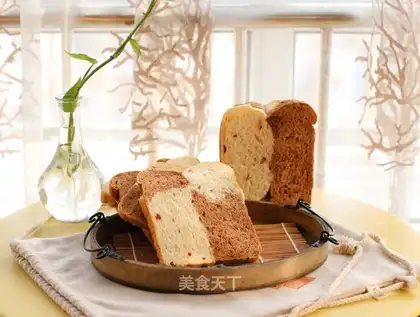
Another plastic bread made out of bread, although simple in colour and plastic, has carefully added different fruits to the different noodles, giving it more colour and taste。
Recipe Recommendations
- milk 165 grams
- whole egg liquid 50 grams
- fine sugar 50 grams
- salt 3 grams
- bread flour 315 grams
- cocoa powder 5 grams
- yeast 4 grams
- butter 30 grams
- the cranberry 20 grams
- walnut 20 grams
- sweetening
- baking
- several hours
- ordinary
Steps for Coco Bread
1
Prepare the fruit, cranberry and walnut cut into small particles。2
All but butter and cocoa powder were added to the East Timor 1352 bakery, starting and face for 10 minutes。3
10 minutes and face over, put in butter, re-start and face for 20 minutes。4
With 10 minutes left to go, the bread machine was suspended and the group was separated into two pieces weighing approximately 313 and 308 grams, respectively。5
Put 313 grams of noodles in the toaster and add the ready cranberry, cancel the pause, restore the face。6
Six minutes after the end of the day, the bread machine presses the pause, removes the sweet cranberry pasta, places it in another 308 gram and inserts cocoa powder and walnuts, at which point three to five grams of milk can be added, and then lifts the suspension and continues to make peace。7
The fermentation of the fermentation base in the bakery is rounded and the fermentation time is 30 minutes for the fermentation of the fermented tissues。8
The fermentation is over and the noodles are twice as big。9
The noodles are removed, air vents are split into an average of three pieces each, and the membranes are loose for 10 minutes after the roll。10
The cycle is rolled again and the phase is placed in a bread-crumb for a second fermentation of approximately 50 minutes。11
At the end of the eight minutes, the option is to bake for 30 minutes。12
It's over13
Take out the bread now, pour it out cold。Coco Bread Make Tips
1. The different water intakes of flour and the different efficiency of the bread machine and face affect the dry humidity of the dough, allowing for the retention of 5-10 grams of liquids first and increasing the amount of water at an early stage, depending on the actual condition of the flour. The fermentation times in this recipe are for reference purposes only and are adjusted to the circumstances。