Must-eat Fujian cuisine list-[Tai Chi Taro Mashed]
Taro has always been a delicacy on the plate. [Tai Chi Taro Mashed] is one of the traditional sweets of Fujian cuisine. It is often found at banquets during auspicious times in Fuzhou. There is an interesting anecdote to its fame: in the 19th year of the Daoguang reign of the Qing Dynasty (1839 AD), when Lin Zexu went to Guangzhou to ban smoking as an imperial envoy, consuls from Britain, Germany, the United States, Russia and other countries specially prepared Western-style sleeping mats to "entertain" Lin Zexu in an attempt to embarrass Lin Zexu while eating ice cream. Afterwards, Lin Zexu also held a sumptuous banquet to "repay" these consuls. After a few cold dishes, a plate was served with a dark gray and shiny color, dark brown and smooth, like two fish lying in it without steaming, just like a cold dish. A foreign consul picked up a spoon and scooped it into his mouth. His eyes were so hot that he couldn't even spit out. After hearing another "squeaking", he saw another consul's lips also burned out. A red "lace" was also formed, and the other guests were stunned. At this time, Lin Zexu stood up casually and introduced: "This is a famous dish in Fujian, China. It is called Taiji taro paste." From then on, this dish became famous far and wide.
This dish is shaped like Tai Chi. The white taro paste and brown bean paste are curved and coiled to form an interesting contrast. The red and green cherries seem to make the pattern full of dynamic and festive colors, making it lovely. [Tai Chi Taro Mashed] is a festive beet with auspicious patterns and is very suitable for festive family banquets or wedding banquets. There are also practices to sprinkle dried fruits such as red dates, melon seeds, and winter melon strips on them to increase the festive effect.
Taro is sweet and flat in nature, and has the effect of eliminating mala and resolving masses, replenishing qi and kidney, and replenishing deficiency and injury. It has a certain nourishing effect for people with weak constitutions. Lard is used more in vegetables, and it is not advisable for the elderly to eat more.
Tai Chi taro paste
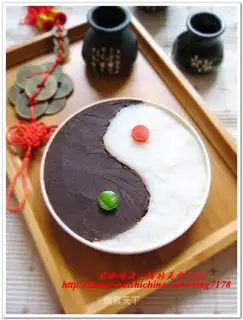
Recipe Recommendations
- qingshui a little
- white sugar 100 grams
- sweetening
- steamed
- ten minutes
- simple
Steps for Tai Chi taro paste
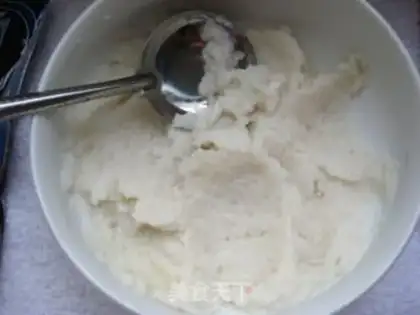
1
Wash the taro, steam it, peel it, and grind it into mud.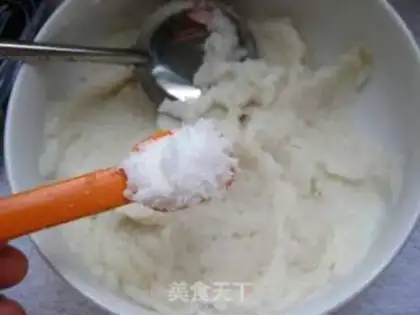
2
Add sugar.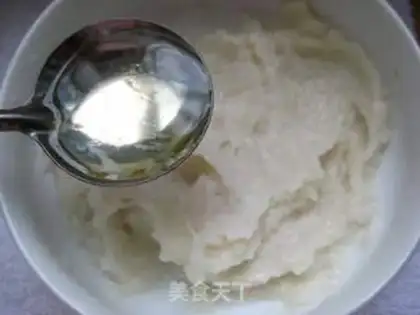
3
Then add cooked lard and a little water to make a paste with moderate hardness.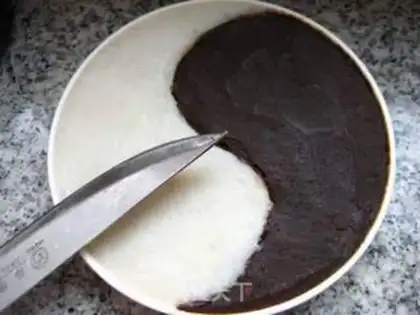
4
Put the mixed taro paste and red bean paste into a plate, form a Tai Chi pattern, and smooth with a knife.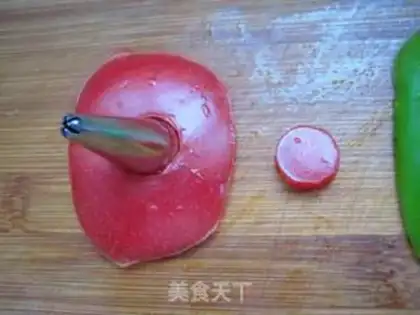
5
Use a small decoration nozzle to carve small circles on the tomato skins and green peppers.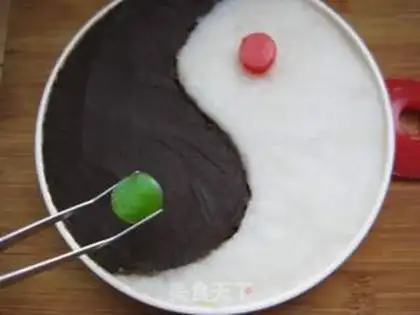
6
Place them on the taro paste and bean paste respectively for decoration.