Cow horn bag
By VicentaLakin
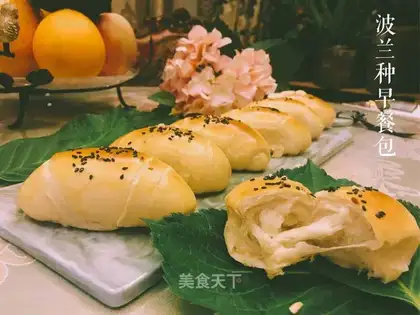
Polish bread is torn up as a layer of tampons that recently tried a polish-based toast, which originated in Poland, where “poolish” means “Poland”. Initially, it was only for pastry production, but with the spread of Poolish yeast in Europe, more and more people began to use it to make bread. Now, the Poolish yeast is all over the globe, from Cape Town to London, from Tokyo to New York, and you can see the Poolish yeast. Poolish yeasts are made of an equal amount of flour and water, with a small number of yeasts, i.e. 100 per cent hydrolytic and without salt. Pollish yeast is produced in two stages. It starts with a semi-liquid Poolish yeast, containing the same amount of water and flour and fermenting for several hours. And then we'll make the whole noodles, and then we'll bake. The purpose of the semi-liquid yeast is to allow the yeast to reproduce quickly, thus increasing the strength and expansion of the total noodle。
Recipe Recommendations
- high-gluten flour 55 grams
- warm water 55 grams
- yeast 1 gram
- milk 75 grams
- milk powder 18 grams
- butter 20
- white granulated sugar 40 grams
- whole egg liquid 50 grams
- salt 3 grams
- milk fragrance
- roast
- ten minutes
- ordinary
Steps for Cow horn bag
1
The yeast in the Polish seed are torn apart by warm water (about 35 degrees) and mixed evenly with high-weather flour, placed in a sealed container or covered with a warm fermentation for 8 to 10 hours. You can also freeze the fermentation in the fridge. You'll see a lot of hives。2
The fermented Polish species are mixed with all materials other than butter and salt in the main lasagna, which is mixed in the first stage of the chef ' s machine, and replaced by the second stage into the thick film。3
Add butter and salt, continue the first stage of integration and move to the second stage of full expansion。4
It's about pulling out a lot of thicker film, the commonly known glove film。5
The mask is kept at around 26 degrees and does not exceed 28 degrees of room temperature and is fermented once。6
The dough is twice as big, and a small amount of flour is poked with a finger and a hole is poked on the flour。7
The fermented pasta is removed, light pressure is pressed with a cane, the air bubble of the face group is discharged, and it is divided into 10 flat kitchen scales. Scroll the circle back。8
Take a nice, hairy noodle and make it look like a circle9
From bottom up。10
The curled face was grafted with its hands into a thick, hairy carrot and covered with a shampoo for 15 minutes。11
Take a dose of the tip of the head down and use the face stick to go from the tip to the thick end12
Try to keep it as long as you can13
From the thick end of the face, the right hand continues to pull the top of the face, and the small tip of the face ends up hidden at the bottom。14
Put the rolled noodles on the grill and cover them up. There are enough gaps between each of the dough to hold it at a temperature of 35 degrees, with 80 per cent humidity, for final fermentation. It's the oven fermentation function, 35 degrees, the lasagna in the middle, and a grill in the bottom, pouring into hot water and starting to ferment。15
The fermented pasta is softly brushed with full egg fluid and the black sesame or almond tablets。16
Put it in a preheated 180-degree oven, mid-level, baked for 15 minutes. Until the surface is yellow, it'll come out17
The amount of bread powder used in each household also varies, so do not pour into all the liquids at once, leaving 10 grams to be added slowly. Two rounds of bouquets can be a little shorter, and the bouquets will be finer。