Rose bouquet
By VicentaLakin
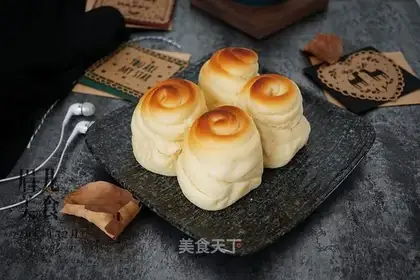
The Polish-cultivated rosary snacks, which are very soft, soft, silky, still have the same taste on the third day, and the practice is very simple, so let's try it with the preferred friends. For the first time in Poland, the squares came from red leaf 99, slightly modified (10 grams less whole egg fluid and 11 grams more milk). The original recipe was a 24-by-24 dish, and I didn't have a dish of this size, so I used the cake. The Polish yeast originates in Poland, and “Poolish” means “Poland” in French. Initially, it was only for pastry production, but with the spread of Poolish yeast in Europe, more and more people began to use it to make bread. Now, the Poolish yeast is all over the globe, from Cape Town to London, from Tokyo to New York, and you can see the Poolish yeast. Poolish yeast is made of an equal amount of flour and water, with a small number of yeasts, i.e. 100 per cent hydrolytic and without salt. Pollish yeast is produced in two stages. It starts with a semi-liquid Poolish yeast, containing the same amount of water and flour and fermenting for several hours. And then we'll make the whole noodles, and then we'll bake. The purpose of the semi-liquid yeast is to allow the yeast to reproduce quickly, thus increasing the strength and expansion of the total noodle。
Recipe Recommendations
- high-gluten flour 70 grams
- water 70 grams
- yeast 1 gram
- unsalted butter
- milk 116 grams
- whole egg liquid 65 grams
- milk powder 20 grams
- white sugar 60 grams
- salt 3 grams
- milk fragrance
- roast
- several hours
- ordinary
Steps for Rose bouquet
1
Powder, water, yeasts of Polish materials are evenly mixed, covering the film, and room temperature is fermented. (Request room temperature 15-18 degrees, fermentation for 10 hours, can be done the night before). If room temperature is higher, it can be shorter, or four or five hours will be ready. In short, the fermentation does not depend on the state of time, as long as there are many little bubbles on the surface。2
With the exception of butter, the fermented Polish species, together with all the pasta materials, were then placed in the cook ' s machine and the motor was rubbed。3
To be sprawled to the surface, smooth, with soft butter. To the full expansion phase, a thin film that cannot easily be broken can be removed。4
It is then rounded a little bit, and the fermentation is carried out in the membrane chamber。5
The fermentation is twice as big, the fingers are covered with flour, the noodles do not shrink, and the fermentation is over6
The fermented pasta takes out the squeezed exhaust, which is divided into 16 equals, and then rolls round and covers the dysentery for 20 minutes。7
Take a small noodle in a cow tongue of 20 cm long and 8 cm wide。8
Vertical trade-offs。9
Then, starting with a roll, a bit of water is stuck on the tail, so that the fermentation does not spread, so that a model is completed。10
When all is done, put it in the mould and put it in the oven with hot water for two rounds。11
Fermentation up to twice the size of the extraction。12
The pre-heat oven is 170 degrees and made for 20 minutes. Observe midway, and the top colour is satisfactory and filled with tin paper in a timely manner to prevent the upper colour from going too deep。13
Drink honey, honey and water at 1:1 ratio when it's out。14
Completed Chart15
Completed ChartRose bouquet Make Tips
1. The amount of water used for flour varies from season to season, and the amount of milk is self-governed and can be set aside at the beginning with a small amount to be added until appropriate. 2. The temperature of the oven is adjusted to the home oven. 3. It is recommended that the machine and face may be slightly sticky if hand rubbing starts with a little dry powder operation. But naturally it's not sticky。