White buns
By VicentaLakin
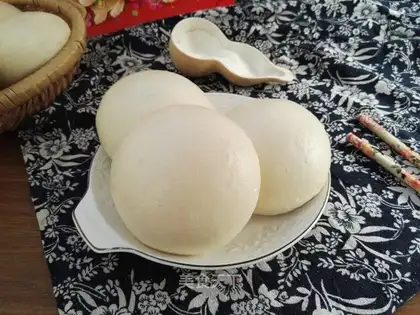
More than a decade ago, the fermentation was done with the old noodles, and then with the alkaline ones, the amount of alkaline flour added determines the taste, colour and taste of the finished buns. I did it with the old face, but the hardest part is the alkaline addition, which I don't know well, so I don't have the quality of the finished buns. Then there was yeast powder, and I changed the way I made the buns, and the use of yeast powder stopped me from worrying about the yellow, sour, and the number of steamed buns increased, and slowly my pasta skills improved. I'm learning in my long-term operation, and I'm learning a few little tricks, little tricks, really helping me in making buns, and I hope that my experience will also inspire friends who like to make pasta。
Recipe Recommendations
- flour 500 grams
- warm water 240 grams
- yeast powder 3 grams
- white sugar 5 grams
Steps for White buns
1
Flour, yeast and sugar are ready, sugar is enough and sugar is designed to make the noodles start faster。2
Sugar mixed with flour, evenly mixed。3
The yeast powder is mixed with the hot water and is set still for a few minutes, and can be added to the warm water by adding the previous sugar to the yeast powder。4
It pours yeast into flour in two or three times。5
The flour and the water are evenly mixed with chopsticks, then the face and grouping with hands。6
At this point, it is possible to determine whether the flour is soft or hard and to decide whether to add water based on it. I think the noodles are a little hard, so I put a little more water in them, and I'm going to make peace。7
Because it's gonna be a bun, it's gonna have to be a little hard and smooth。8
It's winter, where the noodles are warm for 30 minutes, they can ferment, wake up and swell, and use your hand to untangle the noodles, and you can see the radish within the noodles。9
The noodles are placed on the panel, they are soared that when they feel sticky, they can spread a little thin, and the air inside them is drained out。10
Cut the noodles open, and you can see that there is no big air bag in the interior and it's particularly smooth, and there's a layer of texture, which, when it's evaporated, will allow you to see a layer of chords that you can eat with your hands。11
The noodles grow into strips and cut into the form of a large noodle。12
The pasta is rounded with hands, covered with wet cloths and continued to awaken for 15 to 20 minutes。13
The raw buns are growing, pressurized by hand, capable of quick echoes, and can be evaporated in the pot for 20 minutes. Some people struggle with whether cold water or hot water steam, and I think cold water or warm water is better, cold water boilers don't suddenly heat up to make noodles, and cold water heats them up and gives them a wake-up call. If the house's temperature is low, it can boil water inside and put it in to help wake-up。14
The soft, delicious, fragrance bunt table。White buns Make Tips
1. White sugar, which reduces the waking time of the noodles. The temperature of warm water is around 30 degrees and cannot be high, otherwise the yeast will be burned to death. 3. Do not add too much flour when rubbing noodles, but only a little thin paste when they stick their hands. It is important that the air in the noodles be drained out of the air, otherwise there will be a cork dent. 5. After the condensation, there must be a process of re-fermentation。