Basic Qi Feng Cake
By ShannonKuhic
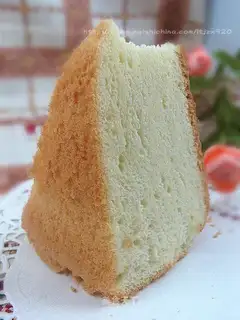
Qi Feng cake is a transliteration of the English Chiffon Cake. The word "Qi Feng, Chiffon" refers to an extremely thin and soft silk fabric, so Qi Feng cake, as its name suggests, has a dense and meticulous taste. It belongs to the sponge cake type, using vegetable oil, eggs, sugar, flour, and baking powder as the basic ingredients. Since vegetable oil is not as easy to foam as butter (which is used in traditional cakes), it is necessary to beat the egg white into a foam to provide enough air to support the volume of the cake. Qi Feng cake contains enough vegetable oil and eggs, so the texture is very moist and does not harden as easily as traditional butter cakes. Qi Feng cake also contains less saturated fat. However, due to the lack of the strong aroma of butter cakes, Qifeng cakes usually require strong juice, or add ingredients such as chocolate and fruit.
Recipe Recommendations
- low-gluten flour 95 grams
- egg yolk 60 grams
- protein 150 grams
- whole egg one
- corn starch 8 grams
- vegetable oil 60 ml
- lemon juice 40 ml
- salt a little
- fine sugar 20 grams+95 grams
- white vinegar 5 ml
Steps for Basic Qi Feng Cake
1
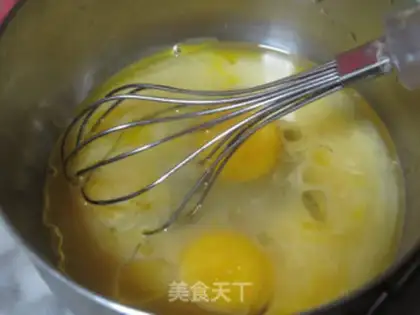
Add a whole egg, 20 grams of vegetable oil, salt, lemon juice, and fine granulated sugar to the egg yolk, and beat well to create a thick and fine foam.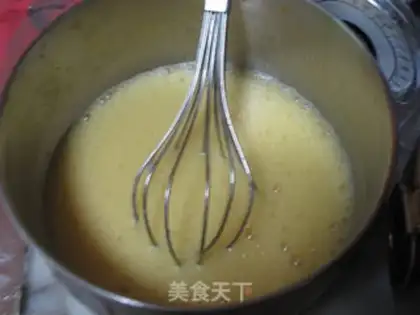
2
Sieve in low-gluten flour and corn starch, and slowly stir evenly with a spatula. When stirring, turn it like cooking, and be careful to lift the bottom part up without leaving dead corners. After stirring, set aside the egg yolk paste.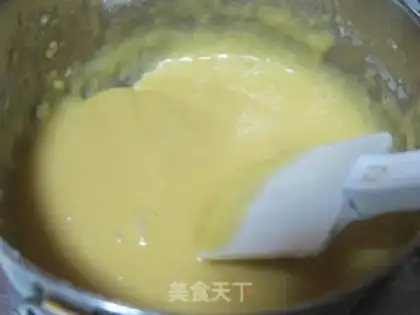
3
Sieve in low-gluten flour and corn starch, and slowly stir evenly with a spatula. When stirring, turn it like cooking, and be careful to lift the bottom part up without leaving dead corners. After stirring, set aside the egg yolk paste.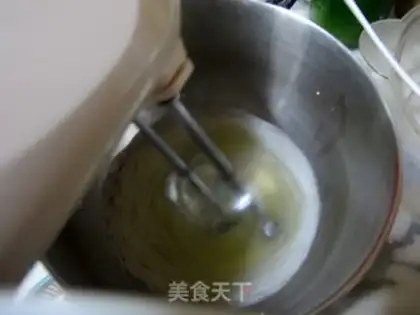
4
Start stirring the egg whites, add lemon juice to the egg whites, and select an egg beater and beat on low speed.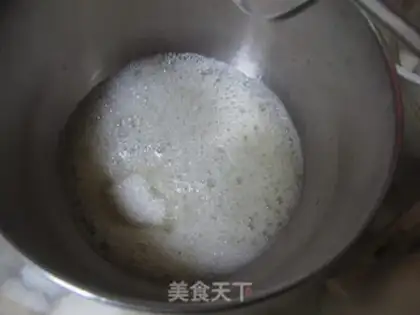
5
When stirring to make this rough foam, add one-third of the remaining 95 grams of fine sugar. Continue beating for 20 seconds.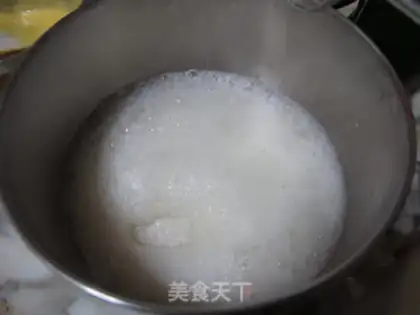
6
When you make such fine bubbles, add another third. Continue beating for 20 seconds.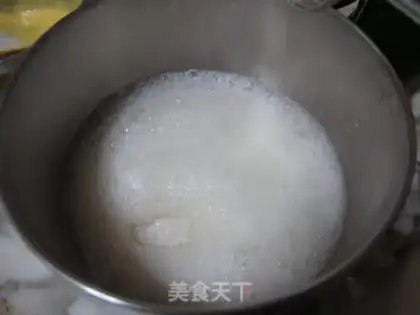
7
The egg white becomes more delicate and the volume begins to expand. Add the last third of the fine sugar.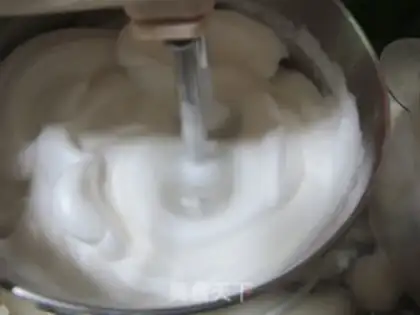
8
Turn to high speed whisking.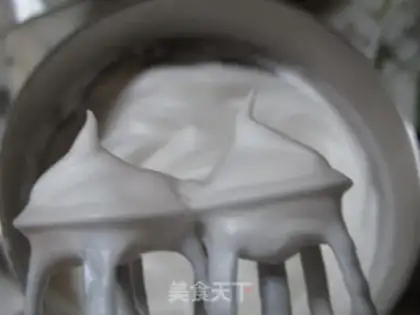
9
After beating for about four to five minutes, the eggbeater was lifted, and the egg white on the stirring stick looked like this: a short, firm little tip, indicating that the egg white was ready.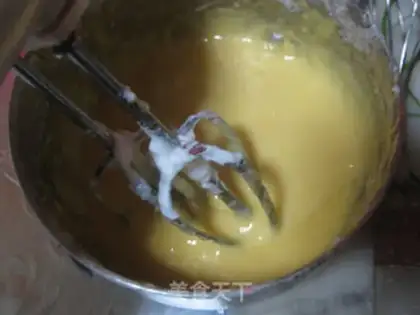
10
In order to make the egg yolk paste more delicate, use an egg beater to stir slightly in the egg yolk paste. Stir well, but not for too long. At this time, you can preheat the oven at 150 degrees for ten minutes. 11. Whisk the egg yolk paste and egg white and start mixing. First take one-third of the egg white and mix it with the egg yolk paste.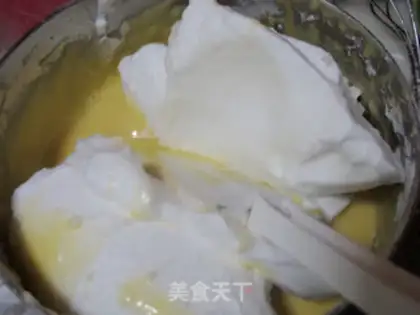
11
The egg yolk paste and egg white are beaten and they are starting to mix. First take one-third of the egg white and mix it with the egg yolk paste.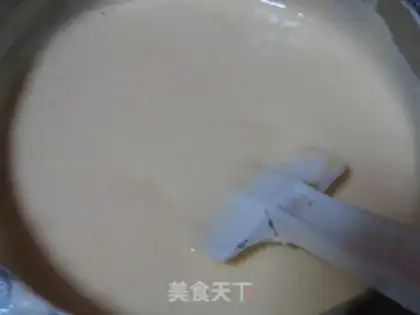
12
Still stir evenly by turning up and down and cutting.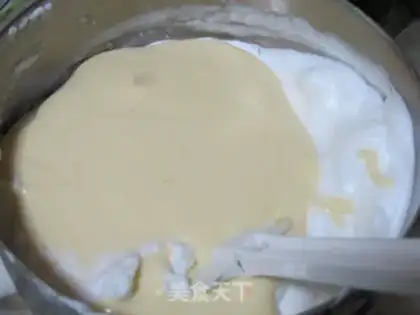
13
After stirring the batter well, pour into the remaining egg whites and continue to stir using the previous method.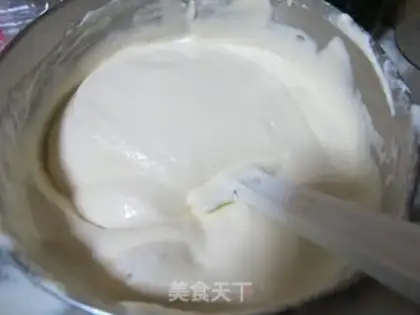
14
Stir in every corner until the batter is smooth and thoroughly mixed.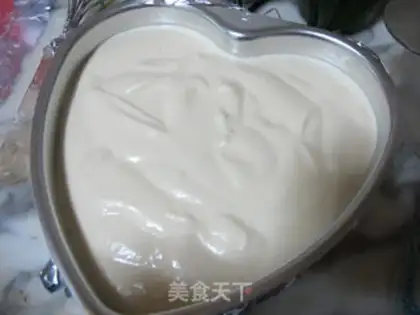
15
Pour the stirred batter into a clean, oil-free and water-free mold, hold the baking mold with both hands and shake it vigorously twice, then send it to the oven and bake at 150 degrees for 30 minutes, cover the surface of the cake with tinfoil, turn to 170 degrees for another 30 minutes.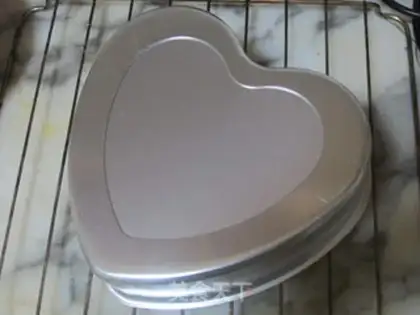
16
The baked cake is immediately baked and inverted, placed on a baking wire, cooled for 30 minutes, and then removed.Basic Qi Feng Cake Make Tips
Super verbose: 1. Those who make egg whites by hand should pay attention to the point where chopsticks are inserted into the egg whites without falling. Don't "just forget it"! 2. Whether you use an oven or an electric rice cooker to make cakes, remember to stir every corner when stirring the batter until the batter is delicate and thoroughly stirred. Don't be afraid of defoaming and stirring in a hurry, so that the finished product will not be fine and even retract and deform. 3. Why do you need to shake the batter vigorously twice before pouring it into the mold and putting it into the oven? This is to shake off large bubbles in the batter and make the tissue more delicate. 4. Why should you bake it at low temperature first and then bake it at high temperature? This is also to prevent the cake from shrinking and deforming. Baking at low temperature for 30 minutes, the cake will fully grow. At this time, turning to high temperature can keep the cake in such a "high momentum" state without shrinking, and it will also slow down the cracking phenomenon. 5. Because my oven is relatively small, with only two layers, the baking mold is very close to the heating tube, and the surface of the cake is easy to burn, so I usually wrap the mold with a layer of tin foil. If your oven is relatively large, you don't need to wrap the mold with tinfoil.