Baidu:
Dendrobium is suitable for the crowd:
In the early stage of fever, patients with yin disease that has not been injured, patients with dampness and warm disease that has not turned into dryness, and patients with spleen and stomach deficiency and cold are prohibited.
Dietary effects of Dendrobium:
The taste is sweet, light, slightly bitter, and slightly cold in nature. It belongs to the stomach, lung, heart and kidney meridians. The body is firm and moist.
Nourishing yin and clearing heat, nourishing stomach and promoting fluid, moistening lungs and relieving cough, nourishing kidney and improving eyesight. Indications for febrile diseases that damage fluid, deficiency of heat that does not recede, deficiency of stomach yin, dry mouth and throat, abdominal pain and retching, dry lungs and coughing, soreness of waist and knees, yin damage and dark eyes. This product is sweet, cool and moist. It mainly enters the stomach and kidney. Its role is mainly in the middle and lower energizer. It not only clears stomach heat, promotes saliva and quenches thirst, but also nourishes kidney yin, reduces fever and improves eyesight. It is a good medicine for body heat and thirst, and yin deficiency and dark eyes.
Dendrobium food:
This product is compatible with condensation stone and croton; it should not be used with silkworm and Lei Wan.
Dendrobium practice guidance:
Fresh dendrobium should be used to treat febrile diseases, clearing heat and promoting salivation, and dried dendrobium should be used to treat stomach deficiency and heat damage yin.
Anyone with fever, body heat, stomach heat and mild thirst can be used alone in place of tea; if the yin injury is severe, the tongue is deeply red, the tongue coating is charred and dry, and the thirst is ready to drink, it can be used as the same as Trichosanthis, Radix rehmanniae, and Radix Ophiopeia; Anyone with kidney deficiency and essence deficiency, symptoms of waist and knees soreness or weakness can be combined with products that nourish the liver and strengthen the waist and knees.
therapeutic value
The stems of various dendrobium species such as Dendrobium loanicum and Dendrobium verbenicum. Produced in southwest China and Guangdong, Guangxi, Anhui and other places. Most of them are harvested in autumn, dried and cut into sections, or used fresh.
[Performance] Sweet taste and slightly cold in nature. It can nourish yin and clear heat, enrich the stomach and promote fluid production.
Reference] Contains alkaloids such as dendrobium, mucus, starch, etc.
It has certain antipyretic and analgesic effects; can promote gastric juice secretion and aid digestion; has the effects of enhancing metabolism and resisting aging.
Dendrobium pork bone soup
By GarnetJast
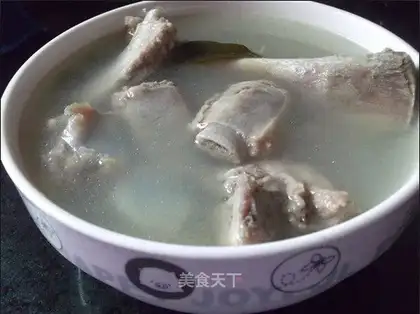
Recipe Recommendations
- pig bones 500 grams
- qingshui 10 bowls
Steps for Dendrobium pork bone soup

1
30g of fresh dendrobium, 500g of pig bones
2
Remove the roots of dendrobium.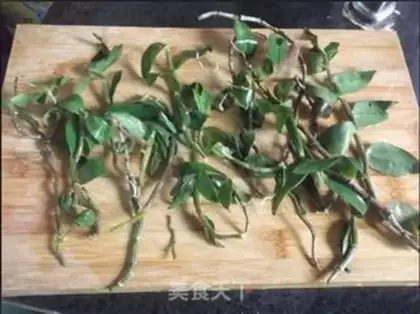
3
Remove residual branches and yellow leaves and clean them.
4
Put the pork bones into a cold water pot and boil to remove the blood.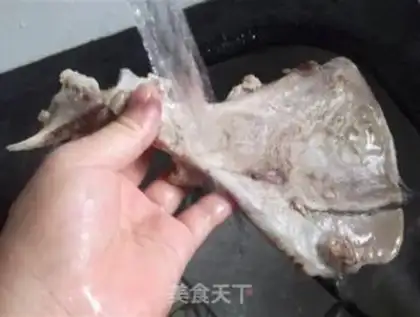
5
Rinse the burned pig bones to remove bone fragments and impurities.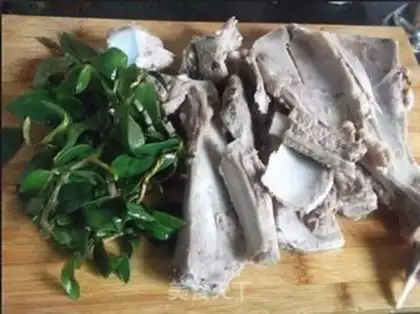
6
Cut dendrobium into sections and wash the pig bones.
7
Dendrobium and pig bones, add water to 10 bowls and boil over high heat.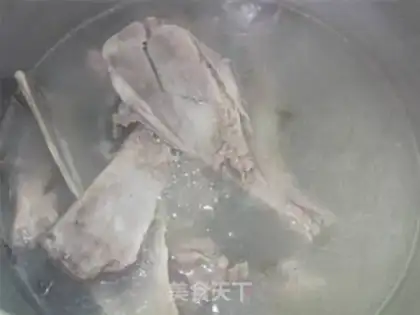
8
Change to low heat and cook for 2 hours. Season with salt.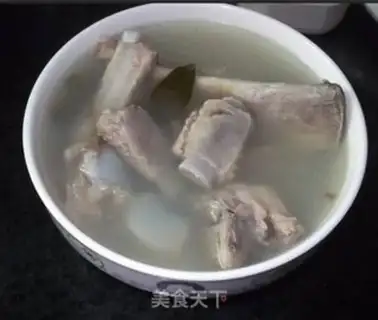
9
Light dendrobium pork bone soup.