The Nordic countries near the Arctic Circle have cold climates and long winters. In order to withstand the prolonged severe cold, people's daily diet there is also slightly higher calories.
Bread or cakes wrapped in oil are a specialty of Nordic countries such as Denmark. They taste very delicious, but they also have high oil content. For example, Danish toast, croissant, butter cake, etc. are absolutely delicious, but they should not be eaten too much.
Today, use a piece of dough to make two "Danish breads". "Danish bread" is divided into several types, such as Danish toast, cheese croissant, hot dog croissant, ham croissant, grape Danish, chocolate croissant, original croissant and various fruit oil-wrapped breads, etc. Many varieties are sweet and salty, and they all taste very good! One of the breads made today is made without any ingredients, so it is called Original Danish Bread, also known as "Kosun". The specific procedures are as follows;
Danish

Recipe Recommendations
- high-gluten flour 450 grams
- butter 20 grams
- whole milk powder 12 grams
- egg yolk 1 piece
- qingshui 160ml
- salt 8 grams
- maltose 10 grams
- fine sugar 40 grams
- salty and sweet
- baking
- a day
- simple
Steps for Danish
1
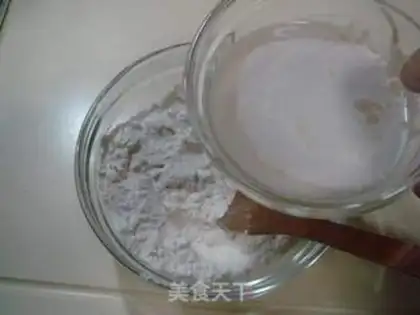
Add salt to the flour and mix well, mix the flour with yeast water to form a dough.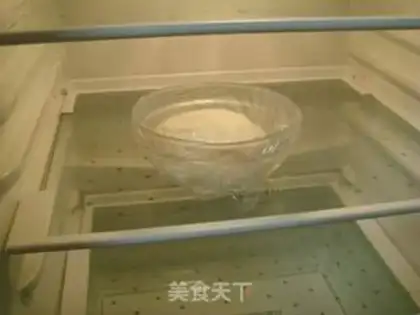
2
Cover with plastic wrap and let stand at room temperature for 30 minutes. Remove the fermentation after it expands slightly. Put the preliminarily prepared noodle seeds in the refrigerator and refrigerate for 10-15 hours.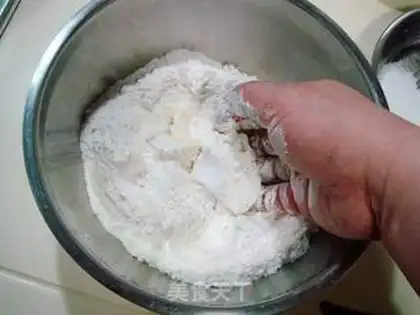
3
Put the milk powder and butter into the flour, then grasp it with your hands and knead it evenly until it becomes fine grains.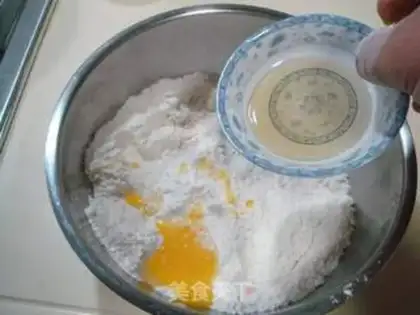
4
Add salt, fine sugar, egg yolk and maltose and mix well. Use water to mix the mixed flour into dough.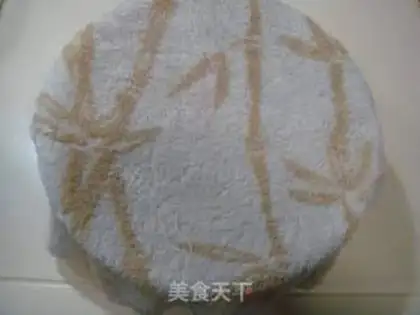
5
After the dough is mixed, cover it with a wet towel and relax for 30 minutes.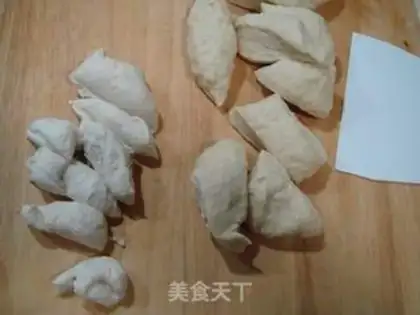
6
Relax the dough for 30 minutes and remove it. Cut the dough and the dough made the day before into pieces.
7
Mix the cut dough pieces with forks, and knead them repeatedly with your hands until smooth dough. It takes about 15 minutes.
8
After kneading, place the dough in a steel basin, cover it with a wet towel and allow it to ferment naturally for 2 hours. After two hours, cover it with plastic wrap and place it in the refrigerator for 10 hours.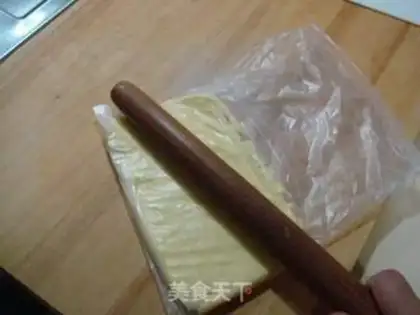
9
Place the butter in a thick fresh-keeping bag and press and beat it into slices with a rolling pin.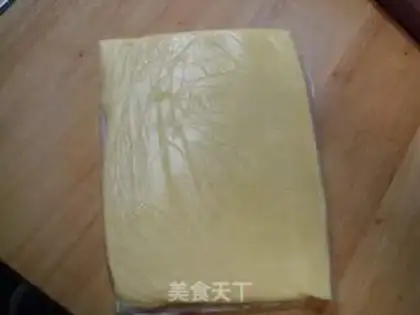
10
Then use a rolling pin to roll the butter into rectangular or square slices with a thickness of 0.8 cm.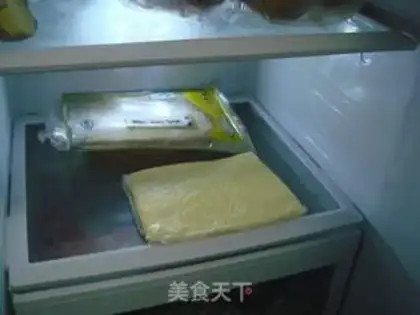
11
Stretch and roll out the butter and place it in the refrigerator to chill.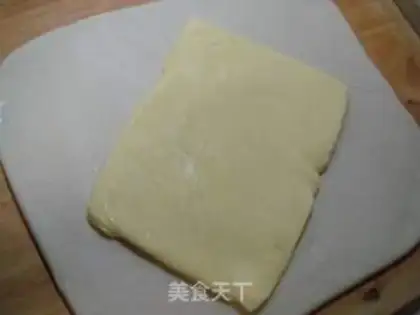
12
Take out the refrigerated dough and roll it out with a rolling pin to form a square dough sheet with a thickness of 0.8 cm. Place the pre-stretched butter slices diagonally in the middle of the dough sheet.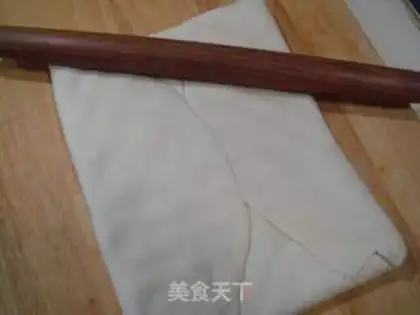
13
Then tightly wrap the butter up, down, left and right. Don't stack the dough sheets at the four corners of the dough sheet on each other during the oil coating process. After wrapping the dough sheet diagonally, use your hands to pinch the seams firmly, and then use a rolling pin to arrange and intersect evenly. Press it gradually spread out.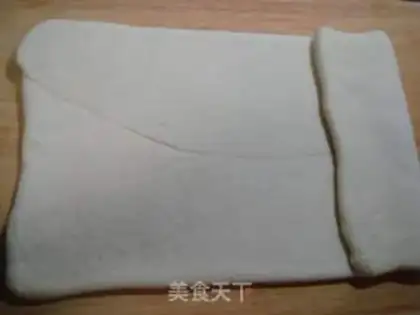
14
During operation, press and stretch while rolling out with a rolling pin. During this period, sprinkle a small amount of dry flour. When rolling the dough sheet to about 0.5 cm thick, fold it towards the middle on one quarter of one side of the dough sheet.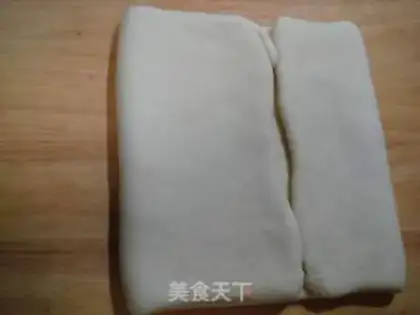
15
Then fold the other side of the dough toward the center, so that the seams align.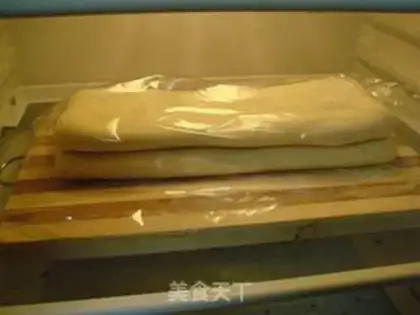
16
Then take the center line of the dough and fold it neatly to one end, and it will appear as a four-layered stack when viewed from the side. Then press it neatly and cover it with plastic wrap and place it in the refrigerator for 30 minutes. Repeat this method for a total of three or four times.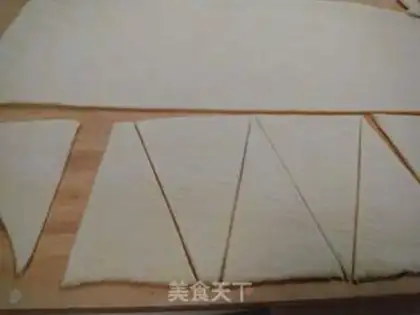
17
After the final operation is completed, roll out the dough sheet to a thickness of 0.5 cm. Use a ruler to roughly measure the dough sheet. The width of the dough sheet is 34-35 cm and the length is about 50-60 cm. Use a knife to take the middle line lengthwise and divide the dough sheet into two Long pieces, take one piece and evenly divide it into a triangle with a bottom width of 12 cm and a length of 17 cm.
18
Use a knife to cut a two-centimeter opening at the bottom of the triangular dough sheet.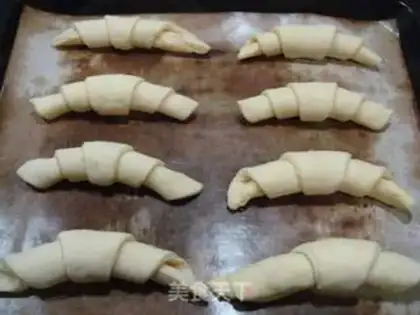
19
Then fold and roll at the incision, place it on a baking sheet and arrange it neatly for the final fermentation for 1 hour.
20
After fermentation, apply egg white liquid on the blank. It is recommended that the incision should not be touched as much as possible when applying.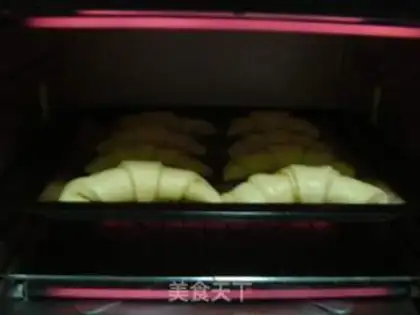
21
Apply the egg liquid, place the baking sheet into the preheated oven, and bake at 220 degrees for 15-18 minutes. If the oven volume is less than 34 liters, reduce the heat appropriately.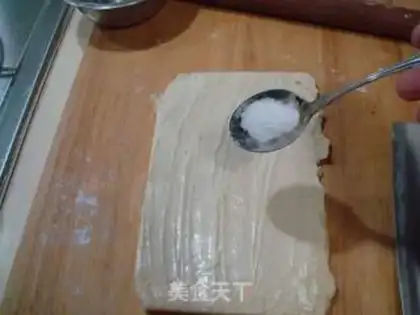
22
Spread a thin layer of sweet cheese on the rolled dough sheet, then sprinkle with proper amount of coarse sugar.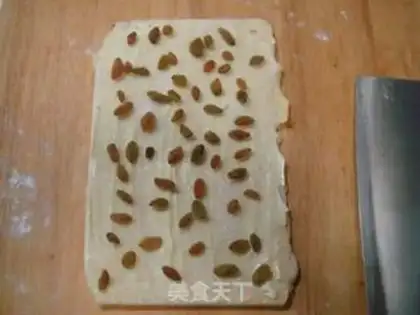
23
After sprinkled with sugar, sprinkle with raisins soaked in rum or water, and gently press hard with your hands.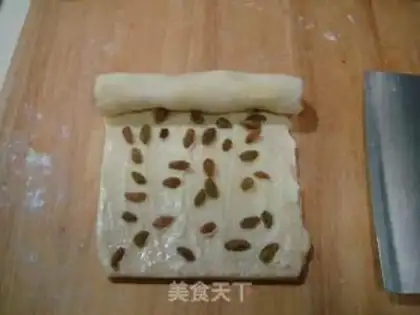
24
Roll up the dough from one end and make it tight.
25
After rolling, divide the dough rolls into small rolls 2.5 cm thick.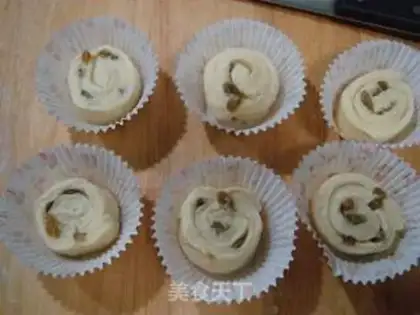
26
Put the divided dough rolls into paper cups, or directly into a baking sheet, and let stand and ferment for 1 hour.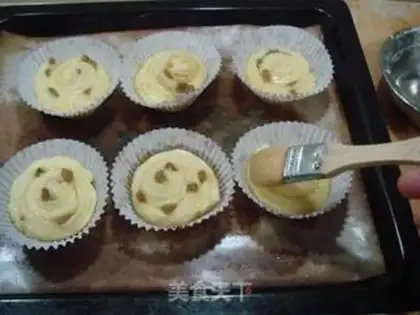
27
After fermentation, apply egg liquid, apply egg liquid, and then sprinkle with a layer of coarse white sugar to garnish.
28
Place into a preheated oven and bake over high heat at 220 degrees for 15 minutes.
29
Kosong after being baked.
30
Grape Danish bread freshly baked.Danish Make Tips
Characteristics of Danish bread: dark red color, rich aroma, soft taste, well-layered, salty and sweet, and strong taste. Warm tips: 1. For noodle production, fresh yeast can be fed from the remaining ordinary dough and a suitable amount of white sugar. The temperature is controlled between 28-32 degrees. Once the yeast is formed, it must be refrigerated and stored to keep it in a semi-sleeping state. During use, take it out and let it stand at room temperature to wake up naturally and cannot be heated. If you don't use it for a long time, you can still freeze it, but it is best not to exceed three months. The frozen seed noodles should be placed in the refrigerator for 24 hours in advance, and then taken out and placed at room temperature to allow them to naturally ferment and awaken. 2. You can also use raw yeast and sugar water to feed fresh yeast, but you must frequently promote and store new yeast. 3. When making Nordic bread with oil, you can use the three-layer triple lamination method, the four-layer triple lamination method, or the four-layer double lamination method, depending on the strength of the flour and the quality of the flour used. 4. Use the folded bread blanks to make any variety of bread or toast. This type of bread is only slightly more complicated in dough making, but it is very convenient to make bread. Fold the dough neatly after making. If it is not used in the short to medium term, it can be refrigerated or frozen. The freezing temperature should not exceed minus 5 degrees, and the storage time should be within ten days. These two relatively rough "Danish breads" with stir-fried spoons are ready. It's good to eat less as afternoon tea in autumn. It tastes delicious, but this kind of bread should not be eaten too much! For friends 'reference!