Chinese cabbage and meat buns
By WaltonLesch
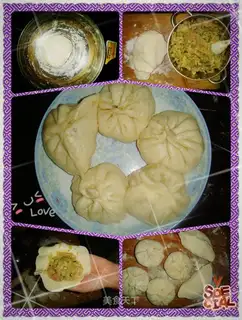
As the saying goes, practice leads to true knowledge, and only through investigation can one have the right to speak. Today, I successfully made delicious cabbage and meat buns (pictured below). Let me explain them one by one:
Recipe Recommendations
- yeast 5 grams
- flour 1 kg
- cabbage appropriate amount
- pork appropriate amount
- onion appropriate amount
- Jiang appropriate amount
- salt small amount
- soy sauce appropriate amount
- sesame oil appropriate amount
- chicken essence appropriate amount
- cooking wine appropriate amount
- peanut oil appropriate amount
- white sugar appropriate amount
- salty and fresh
- steamed
- several hours
- senior
Steps for Chinese cabbage and meat buns
1
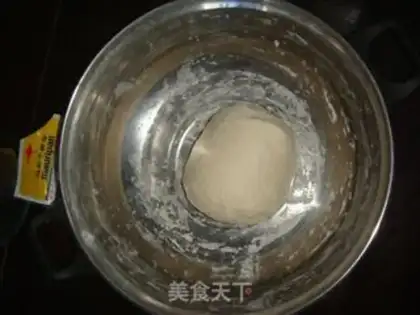
1. Yeast dough Take about 5 grams of yeast, soak it in warm water at 30 degrees, and leave for 5 minutes. Pour about 1 pound of flour, white sugar, baking powder and alkali (optional) into the basin. Slowly pour in the yeast water and stir with chopsticks. Use your hands to knead the dough evenly into dough. Cover with a damp cloth and allow to ferment for 1 hour. Note: Wait until the dough is twice as large and the surface is honeycomb and has the feeling of bubbles. When you tear it apart to see that there are many holes, you knead the dough for the second time to squeeze out the air inside. Cover and ferment for about half an hour until it becomes twice the size.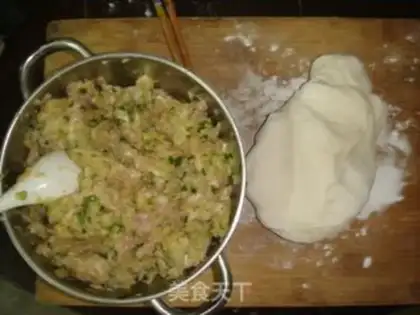
2
2. Each person likes the so-called radish and green vegetables. What I mix is cabbage and pork filling. Chop the soft vegetables while serving the dough. Pour the two into a bowl and stir. Add salt, white sugar, soy sauce, peanut oil, sesame oil, chicken essence, seasoning for steamed stuffed bun filling, chopped green onion, shredded ginger, and shrimp skin to taste. Note: Vegetable leaves can be blanched in hot water for a few seconds to maintain their color. Then add some salt to soak out the water. Add cooking wine and shredded ginger to marinate the meat to eliminate the fishy smell. Seasonings can be put later to prevent the nutrients from leaking out of the vegetables.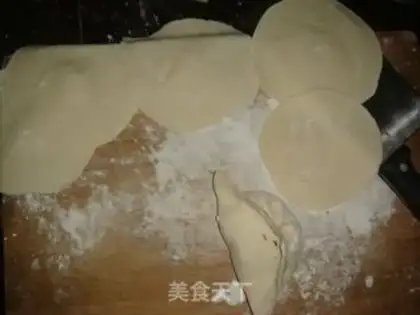
3
3. Take the fermented noodles to the panel, sprinkle them with flour and knead them for a while to make it less soft (the noodles will be fragile if they are too soft and hard, and it will be difficult to see if the vegetables are stuck). Knead into thick strips, cut them into small pieces with a knife, and roll them into a round with a rolling pin, paying attention to the thickness of the middle and the thin edges. Use a small spoon to scoop the vegetables and place them into the skin, and then wrap them into a ball or ingot shape according to your favorite style. (Same as making dumplings) Note: The steamed buns should be put in the pot to wake up for about 10 minutes before steaming.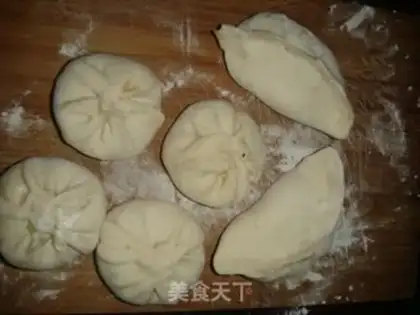
4
4. Add steamed cold water, cover the steaming drawer, and arrange the steamed buns (no need to sprinkle flour on the bottom). Steam for about 25 to 30 minutes. Turn off the heat and simmer for 5 to 10 minutes until you wake up. Note: Different from cooking dumplings, you must steam them in cold water, so that the heat is enough and the time is enough. If you want to steam the perfect steamed buns, you must leave a distance between them, because they will swell when steamed.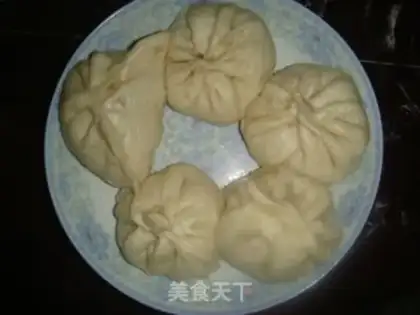
5
5. Taste and enjoy it with your dearest ones! Note: If you can't finish it, you can put it in the refrigerator and keep it for tomorrow. Don't rush to wash the pots and bowls first, because people who taste the delicious steamed buns you make will take the initiative to wash the dishes and clean everything ~~Chinese cabbage and meat buns Make Tips
1 Seasonings can be put later to prevent the nutrients from flowing out of the vegetables. 2 Put the freshly wrapped buns into the pan for about 10 minutes before steaming. 3 Different from cooking dumplings, you must steam them in cold water, so that the heat is enough and the time is enough.