stir-fried field snail with pumpkin
By LexiePurdy
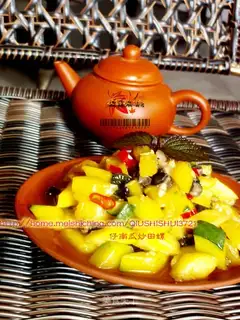
Is there too many pumpkins? Or is there too little snail meat? The leeks are not ready, so this dish should have some leeks. Remember to put leeks in!!!
Recipe Recommendations
- slightly spicy
- fried
- ten minutes
- ordinary
Steps for stir-fried field snail with pumpkin
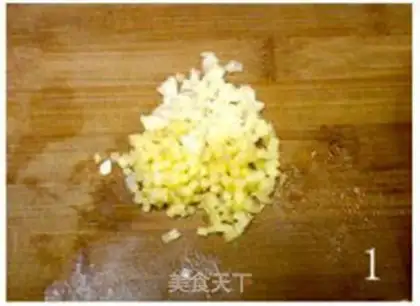
1
Cut ginger and garlic into rice respectively.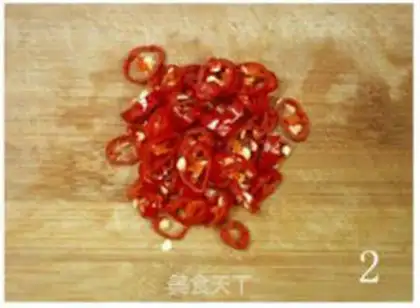
2
Cut the red pepper into circles with a top knife.
3
Chop the perilla leaves.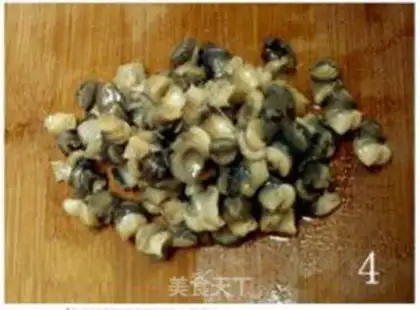
4
Clean and drain the field snail meat for later use (large ones need to be reduced).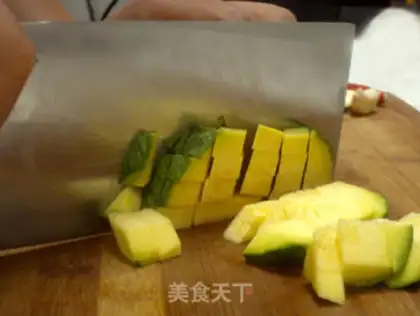
5
Wash the pumpkin, remove the head and tail, and cut into diamond-shaped dices for later use.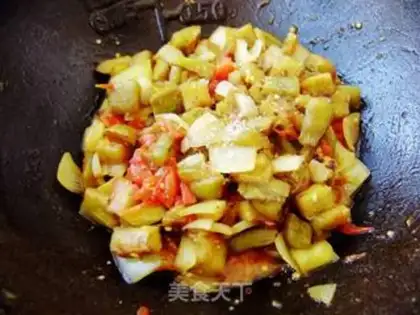
6
Heat the oil in the pan, pour in the field snail meat and stir fry until cooked over high heat. Cook the cooking wine, add ginger, garlic, salt, soy sauce, and oyster sauce, stir well and set aside.
7
Wash the pan and reheat the oil, add the diced pumpkin with salt and stir-fry until 80% done.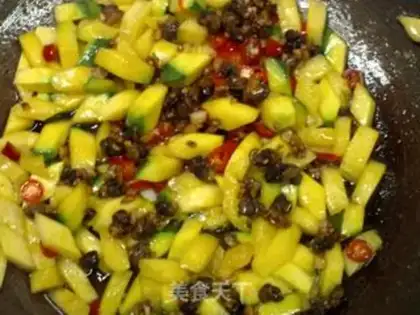
8
Add red pepper and stir-fried snail meat and stir well.
9
Pour in the bone soup and collect the juice over high heat.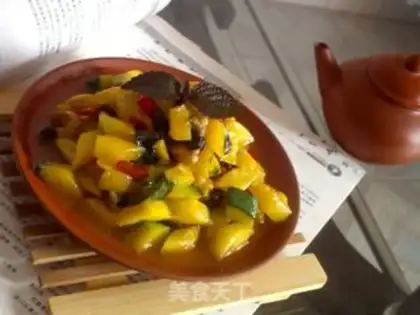
10
Sprinkle in chopped perilla leaves and mix well and remove from the pan.stir-fried field snail with pumpkin Make Tips
Nutritional analysis of perilla leaves: Perilla is commonly used in traditional Chinese medicine in China, while the Japanese are mostly used for cooking, especially when eating sashimi. It is also used as a vegetable or tea in a few areas of our country. Perilla leaves, also called perilla leaves, have the functions of relieving the exterior, dispelling cold, circulating qi and regulating the stomach. They are mainly used for diseases such as wind, cold, cough, chest distension, nausea and vomiting. Seeds, also called Suzi, have the functions of relieving cough, asthma, and relieving phlegm. Perilla oil can be distilled from the whole plant, and the oil produced by the seeds is also called perilla oil. Long-term consumption of perilla oil has obvious curative effects on treating coronary heart disease and hyperlipidemia. Dietary effects of perilla leaves: perilla leaves are pungent and warm in nature; return to the lung and spleen meridians; aromatic and rising powder; BR has the ability to dispel cold and relieve the exterior, relax the lung and relieve cough, regulate the qi and regulate the middle, stabilize the fetus, and detoxify; BR is mainly used for exogenous wind cold, aversion to cold and fever, headache without sweating, cough and asthma, abdominal distension, vomiting diarrhea, obstruction in the throat, severe pregnancy obstruction, uneasy fetal movement, fish-eating and crab poisoning, carbuncle sores and snake poison. Perilla leaves are mutually beneficial: Perilla leaves cannot be eaten with carp, which will cause toxic sores. Guidelines for the practice of perilla leaves: 1. Anyone who suffers from exogenous wind cold, symptoms such as aversion to cold, draws the knife and water, has headaches without sweating, and has a cold nose and clear nose, can be combined with Notopterygium Root, Radix Sativae, Radix Angelicae Sinensis, etc. to relieve the exterior and dispel the cold. 2. Anyone with qi stagnation and dampness obstruction, disharmony of stomach qi, abdominal distension and tightness, and vomiting diarrhea can be combined with agastole, tangerine peel, pinellia koji, tuckahoe, etc. to achieve qi qi and dampness and middle qi.