I bought some black-skinned green bean (commonly known as "big black bean") a few days ago. It's so expensive! It costs 10.00 yuan/500 grams! This dealer is black, much darker than black beans. It's all caused by TV stations, boasting that "big black beans" are "medicinal beans" every day; hum, I have been eating black beans for decades, and they all say that small black beans are "medicinal beans", and people call them "material beans". Now these broken TV stations are turning around and making a mess. We don't know whether the ancestors were right or they were right.
This time, Lao Benben went to "search" some knowledge about black beans. In fact, it seemed that we should eat "black kidney beans".
Flower bean porridge
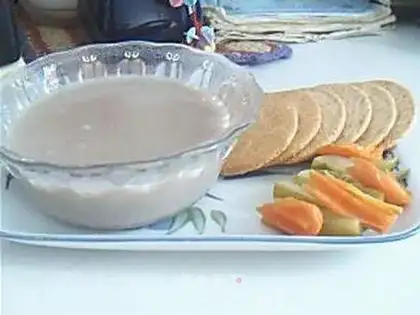
Steps for Flower bean porridge
1
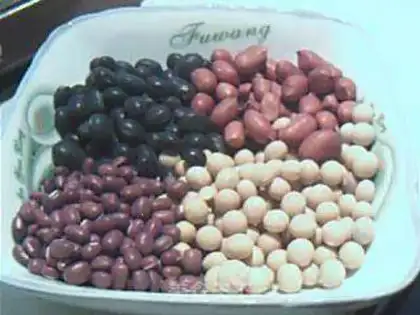
Prepare various beans. Soak them in small bowls respectively, soak them the night before and cook them the next morning.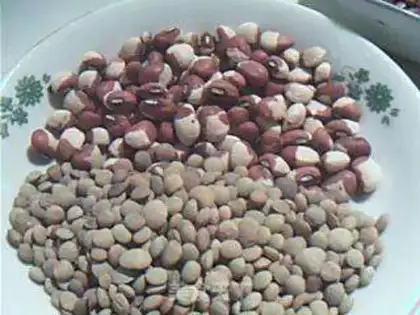
2
You don't need to soak beans and lentils in advance. Just wash them and soak them for a while in the morning.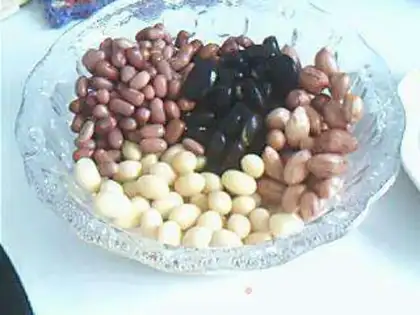
3
Wash the soaked beans.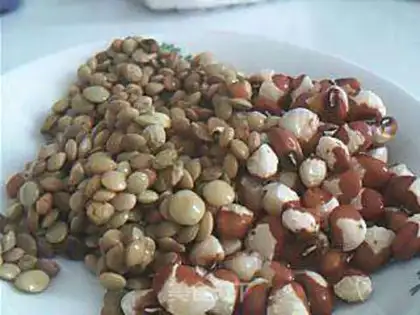
4
Morning washed beans. There are six kinds of beans.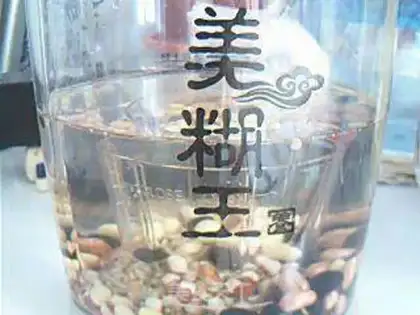
5
Put the beans into the "Meishi King" and add water to the water line.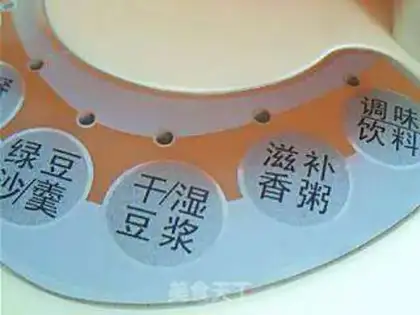
6
Power on Meiji King and select the "Dry and Dry Soymilk" button. The rice is over! Just do whatever you want. In 20 minutes, the King of Beauty will "call" you. However, try to take out the porridge as early as possible. If it cools, it will be difficult to wash the beautiful paste king.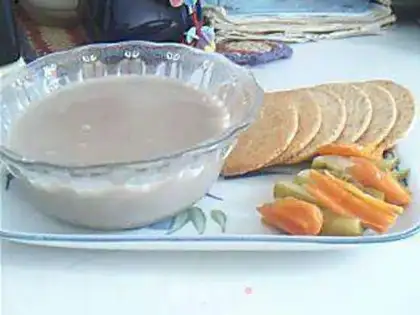
7
The porridge is ready. It's morning, let's have a few graham crackers, a few pickles and cucumbers, and have a delicious "breakfast" meal.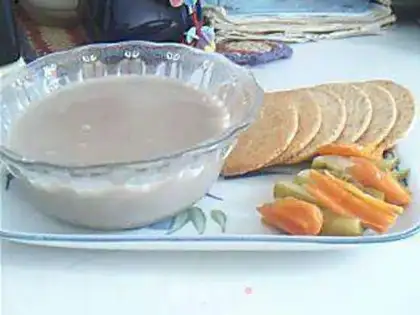
8
There are no salted duck eggs at home today, otherwise I could have a salted duck egg, which would be even more comfortable.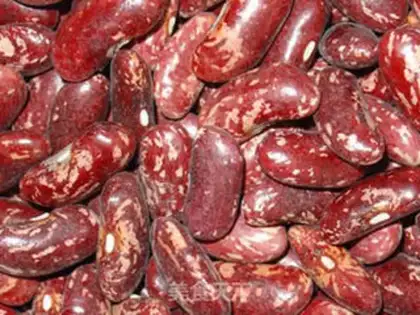
9
This kind is "red flower kidney bean", we sell it here.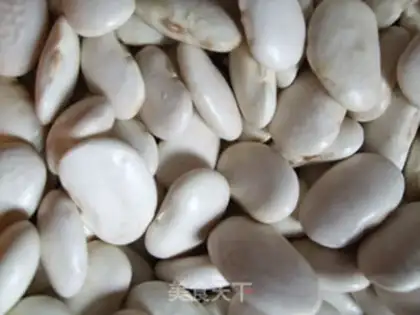
10
This is a "big white kidney bean" and we also sell it here.
11
There is no such "black kidney beans" for sale anymore. Only the "big black bean" and "small black bean" I sell are sold.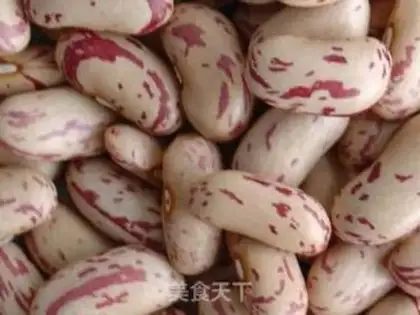
12
We also sell this kind of "milk flower kidney bean" here.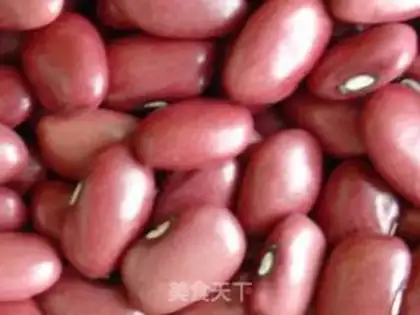
13
I don't remember this kind of "red kidney bean" glutton, but it seems to be on sale.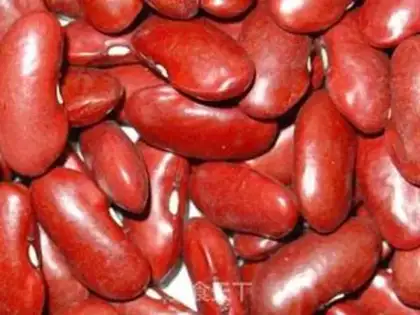
14
This kind of dark red kidney bean (British red) may have never been seen by the old gourmets.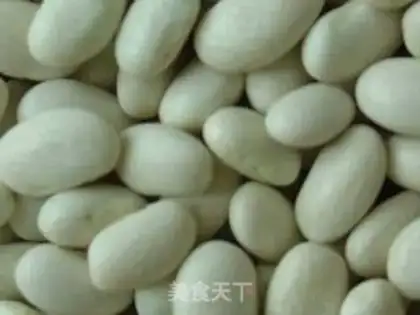
15
This small white kidney bean (Japanese white), no matter how I look at it, it looks like our white cowpea, or it's just a glutton who is simply called by the wrong name. Well, Old Benben needs to study it carefully before talking about it.Flower bean porridge Make Tips
The scientific name of black kidney bean is Phaseolus, which is a genus of Phaseolus. Kidney beans originated in Mexico and Argentina in the Americas, and were introduced and cultivated in our country only at the end of the 16th century. Kidney beans are rich in nutrients. According to measurements, every 100 grams of kidney beans contain 23.1 grams of protein, 1.3 grams of fat, 56.9 grams of carbohydrates, 76 mg of calcium and rich B vitamins. Fresh beans also contain rich vitamin C. Judging from the nutritional content, the protein content is higher than that of chicken, the calcium content is more than 7 times that of chicken, and the iron content is 4 times that of chicken. The vitamin content in B words is also higher than that of chicken. Kidney beans can be used as raw materials for the development of new nutritious staple foods with grains and beans. The kidney bean grains are plump and plump and can be boiled or stewed. Kidney beans are also of high medicinal value. According to ancient Chinese medical records, kidney beans are sweet and mild in taste and warm in nature. They have the functions of warming the middle and lower qi, nourishing the stomach, stopping hiccups, nourishing the kidney and replenishing vitality. They are a kind of nourishing and dietary therapy. Kidney beans are also a rare high-potassium, high-magnesium, and low-sodium food. They contain 1520 mg of potassium, 193.5 mg of magnesium, and only 0.8-0.9 mg of sodium per 100 grams. This feature is very useful in nutritional treatment. Kidney beans are especially suitable for patients with heart disease, arteriosclerosis, hyperlipidemia, hypokalemia and salt avoidance.