house wine
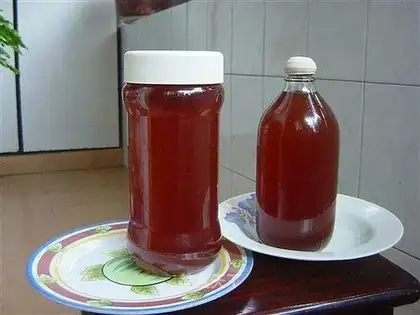
Home-brewed red wine tastes pure, is cheap, does not add any additives or preservatives, is clean and non-toxic, and is particularly safe to drink. In the past few years, I have brewed red wine every time a large number of grapes are on the market. Under my leadership, almost every family in our yard brewed red wine, and my classmates and friends also joined the wine-making team. Today, I bought another twelve kilograms of grapes to make wine.
Recipe Recommendations
- grape 12 pounds
- sugar 2 pounds
- sweetening
- skills
- several days
- simple
Steps for house wine
1
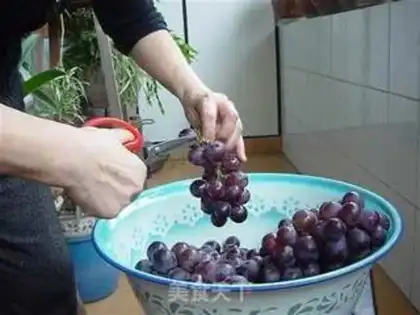
Use scissors to cut the grapes one by one to leave some fruit stalks to avoid damaging the peel; don't pull the grapes with your hands, as the grapes may hurt the peel; put any grapes that have damaged the peel. Go aside, keep it to eat, and don't use it to make wine. shy;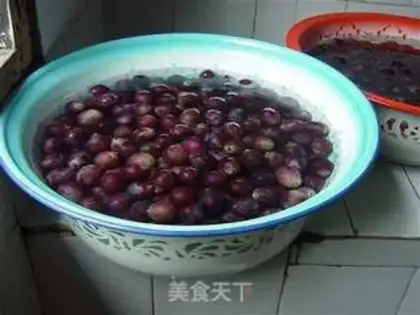
2
Rinse the cut grapes and soak them in water for about ten minutes. This is to remove pesticides and other harmful substances on the grape skins (as mentioned above, the grapes with damaged skins should not be used to brew wine, because they are afraid that salt water will soak into the flesh during soaking. Go inside, affecting the quality of the wine). Then rinse it again with clean water and drain it.& shy;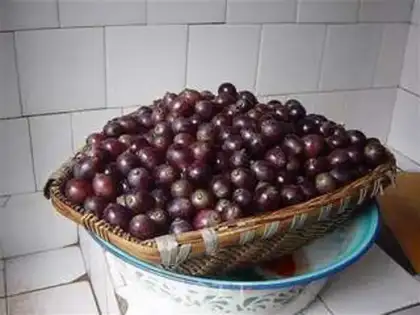
3
Don't wash it too cleanly, leave the white frost on the grapes and drain it with water!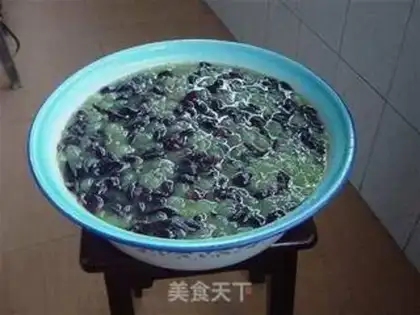
4
Pour the grapes into a basin and crush them one by one with your hands. The grape skins, grape seeds and pulp are all left in the basin. Then, according to the ratio of six kilograms of grapes to one kilogram of white sugar (if you like sweeter, you can put more appropriately), stir well, and wait until the sugar completely melts, place it in a clean bottle. Be careful not to fill the bottle too full, leaving one-third of the space, because the grapes will expand during the fermentation process and produce a large amount of gas. If the bottle is too full, the wine will overflow. In addition, in order to prevent the outside air from entering, it is best to wrap the bottle cap tightly with a plastic bag. shy;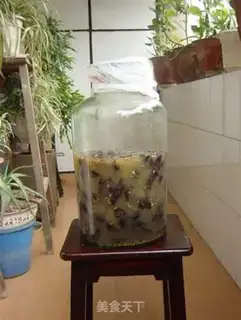
5
When the temperature is high in summer, the wine will be ready in twenty-one days; if the temperature is low (below 30 degrees), it can be brewed for a few more days. It should be noted that the longer the wine is brewed, the stronger the taste; after the wine is brewed, the longer it is left, the stronger the taste.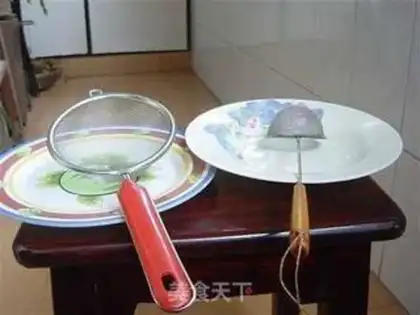
6
After the wine is brewed, the grape seeds, grape skins, and fermented pulp must be filtered out. This requires the filtering residue. I bought a leaky ladle for filtering the dregs (see photo); some people can filter it with gauze; anyway, they are simple and simple. If there is anything at home that can be used to remove the dregs, they can use it locally and make the best use of it, and just leave the wine behind.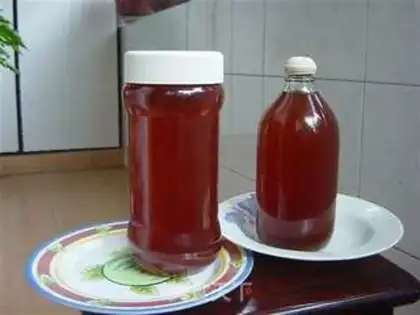
7
Then after another half month, remove the precipitated part, otherwise the color will be turbid. That's enough! Drink it anytime! The longer you leave it, the redder the color and the stronger the wine will be!