Fancy buns
By VicentaLakin
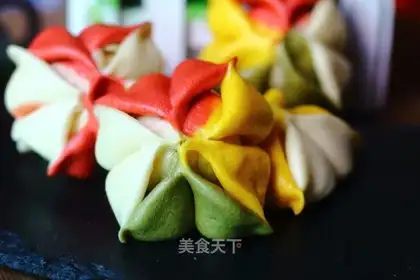
The buns are one of China ' s traditional pasta. They are based on wheat flour, which is the main source of fermented food. The fermented pasta is nutritious, digestive and highly nourished and is one of the main food items on the daily table, especially for the North. Families with children are better suited for regular consumption and can be the primary food option for three meals a day. In addition to conventionally constructed ordinary buns, they are often made of different forms and tastes, which, although a little bit problematic, attract the interest of the children first, giving them an appetite to eat. The second is to make the buns more diverse in terms of taste, and the children eat deliciously and safely. The colours are used to pumpkins, potatoes, carrots, spinachs, tea powders, red chords, and so on, and this is done with red chords, tea powders and pumpkin mud。
Recipe Recommendations
- flour 400g
- white sugar 20g
- qingshui 200g
- yeast 4g
- red rice flour 2g
- matcha powder 2g
- pumpkin puree 2 tablespoons
- sweetening
- steamed
- an hour
- ordinary
Steps for Fancy buns
1
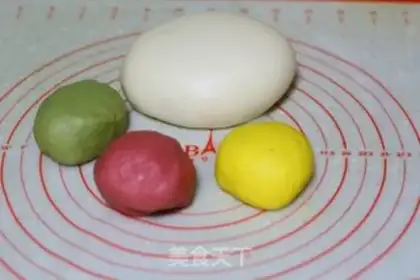
ready to mix flour, sugar and yeast in the white noodles and slowly add fresh water into smooth noodles. after the white noodles had been covered, three small groups of approximately 80 g each were separated, each of which was filled with red flour, tea powder and pumpkin mud, flour in red, green and yellow. it is recommended that a few drops of clean water be melted and then evenly mixed with the white pasta before the red pasta and tea powder are added to the white pasta. larger water in pumpkin mud, with a small amount of flour needed to be added when mixed with white noodles, otherwise the yellow ones would be too soft to allow for groceries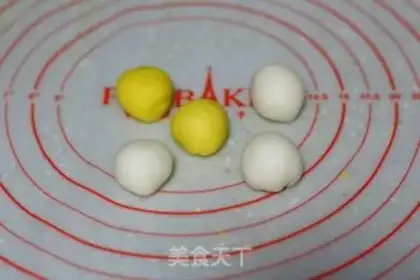
2
four different colours of the pasta are fined and divided into small groups of approximately 5g each. (a) split the pieces into five groups, with colours aligned to their preferences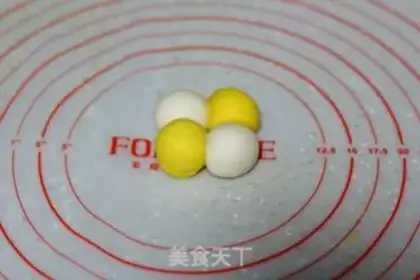
3
Four of them were removed from a group of noodles, each in about four positions above and below, and were immediately connected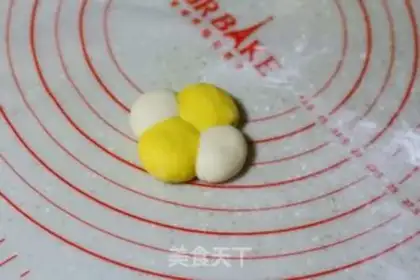
4
(b) Lightly flattening the four noodles with the palms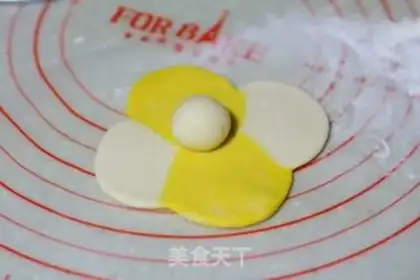
5
(a) A rounded skin with a cane, which looks like a dumpling skin, which is thicker than a dumpling leather, and after which the remaining small noodle is placed at the centre of the skin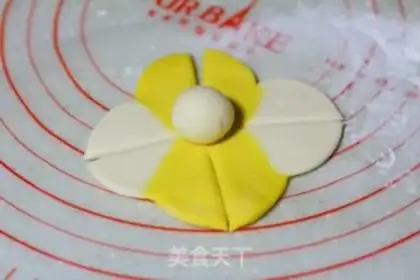
6
Draw four equals from the middle position with a razor or a fruit knife, and do not go too close to the centre, leaving the centre for the small noodles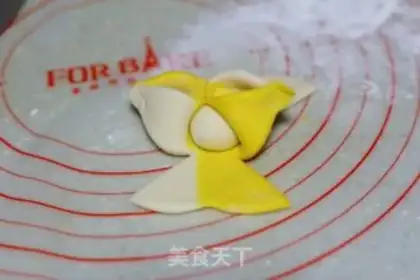
7
With one hand, the upper left and lower right sides are squeezed in the middle. Together (middle point glued, two angles suspended) and then, with the other hand, glued the same two angles on each side. Together (the final effects are shown in the figure below)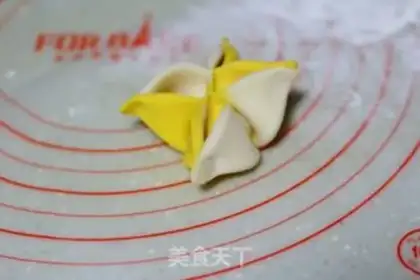
8
Using the same method as above, the other two sides were squeezed together, and the small group of faces were tightly wrapped in them once all the sides were together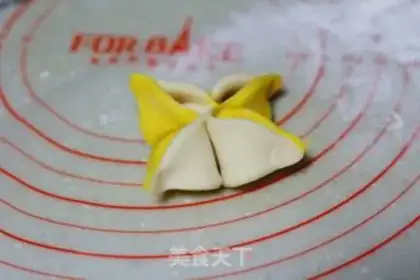
9
A little plastic surgery and a little choreography to complete the masonry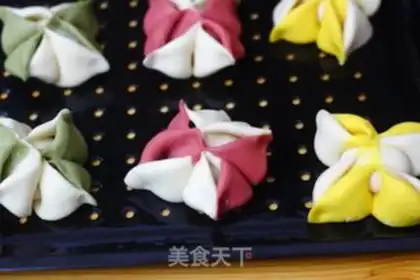
10
Following the above approach, the remaining noodles were all fermented with a fermentation film on a steam dish with a small amount of edible oil. Steambrush oils can prevent buns from adhesing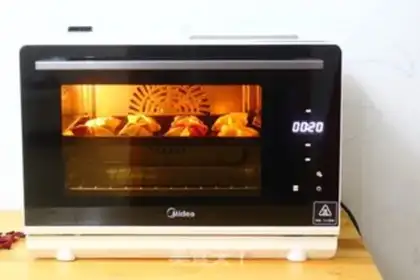
11
In about 1.5 hours, the fermentation of the bundling is 1.5 times ~2 times the size, and the fermented bundling is put into the steambox in the middle evaporated 20 minutes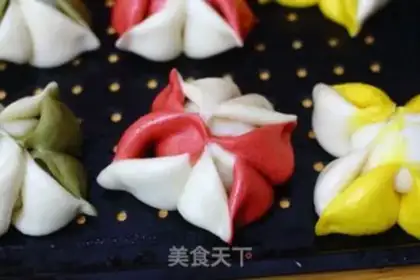
12
After 20 minutes, extract from the steamed oven the varnished husksFancy buns Make Tips
The amount of flour and water is to be adjusted to the water intake of flour, and the florist is to be made a little bit hard, so it is easier to fix, and the face is too soft to decomposed and easily deform; the face is to be operated in such a way as to cover the skin membrane or wet cloth with the hand, to prevent the loss of water on the surface of the face from affecting the moistness of the mosaic, with a small amount of dry flour being applied to the face; the fermentation is generally used at a time, depending on the actual temperature, during which the fermentation time is controlled, with the help of the fermentation tools available at home, and can be used to save fertilating; and, in the case of the noodles, the boilers generally use cold water to evaporate, and if there is no steaming in the home, they can be used in the form of steam ovens, steam or electric rice