Cowbread
By VicentaLakin

I'm tired of eating toast bread every day, and my favorite croissant hasn't eaten for a day, and it's just that I'm setting up a brand-size new dish, with 400 grams of flour at a time. It's hard to do it while it's hot, but when I think about the smell of bread in the house. The chef's machine has done a great job of matching the materials, throwing it into the chef's machine, rubbing the face in a smooth way, and then looking at his work. By the way, this croissant is just a bull's horn made of ordinary bread, not a cow's horn like that in Danish. The former uses very little butter, while the latter uses butter to straddle and to eat while it is hot; this therefore determines the different appearance and taste of the two. This croissant is for my own use, for the first time in public, with a reasonable ratio of formula and a high success rate. The baked croissants are thin, the layer folds can be torn by hands, taste and taste through the bakery outside, and family and friends like it, and you can watch it again, you can make it, you can't hold it, you can bite it twice every day。
Recipe Recommendations
- Xinliang bread flour 400 grams
- eggs 55 grams
- butter 40 grams
- dry yeast 4 grams
- salt 5 grams
- fine sugar 30 grams
- milk powder 25 grams
- condensed milk 20 grams
- cold water 180 grams
- surface brushing egg liquid a little
Steps for Cowbread
1
All materials ready: fresh bread powder, dry yeast, salt, sugar, milk powder, eggs, milking, cold water, butter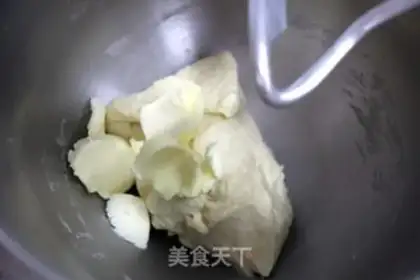
2
(b) To put all materials except butter into the pasta of the cook ' s machine, which I use, first mixes the material into groups in two, then rubs the dough in three, and then pulls out the thick film with my hands and adds butter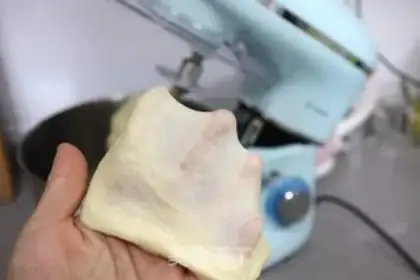
3
(a) First, the butter will be completely rolled into the noodles in the first set, then accelerated at three speeds, the noodles will be glued to the buckets and will not stick to the walls, the smooth, soft and glitter, and a piece of noodle will be able to easily lift out this transparent and flexible film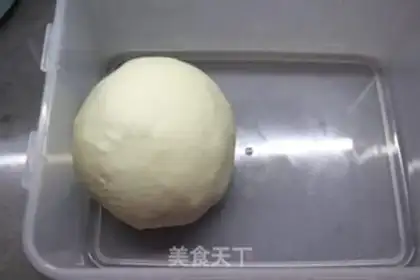
4
Flour is removed from the face bucket, rounded and placed in a big box, with a cap for basic fermentation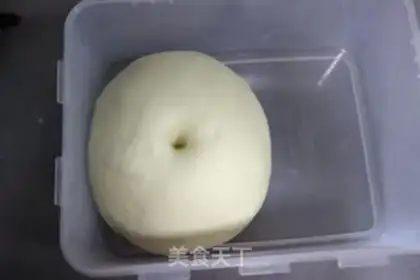
5
The pasta is 2-2.5 times the original hour, and the finger-tip flour is poking a hole in the top of the flour, and it does not collapse or shrink, and it fermentes successfully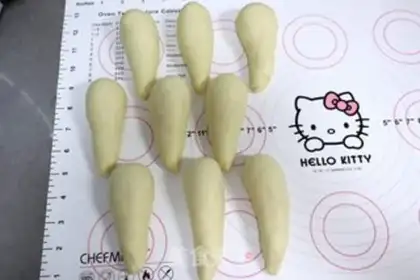
6
(a) Noodles are removed and placed on a rubbing mat, slashed a few down exhausts, weighing nine equals, rubbing them into a slightly round droplet, rubling them all, then re-stamping the fat droplet for 10-15 minutes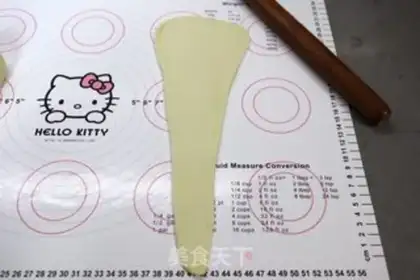
7
(b) Take a piece of noodles, first beat the side long with the hand, then use the scepter cane from the centre to the two ends of the centre to form a thin, long contour triangle; the longer the face, the more the rolls come out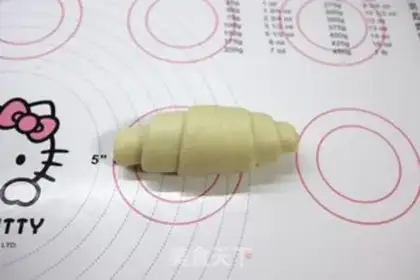
8
Rolling down from the wide edge to the tip of the corner, not too tight or too loose, just follow the roll, so that there is no gap between the skins, and the last little angle can be a little thinner with a little hand, with a seal on the bottom; the horns are made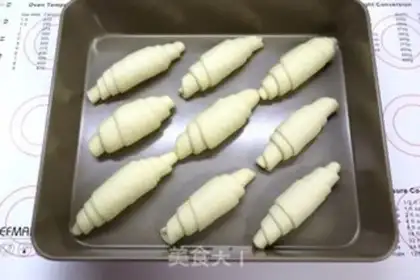
9
(a) For each oxen bag done, the code will be placed in a non-clattering dish, according to the size of the dish, and if the amount of it can be placed in the form of a “squeezing pack”, I will place the number in the form of a "squeezing pack" which, although adhesive after two strokes, is limited to the two ends of the line, and will not affect the whole bread
10
I fermented for 30 minutes directly in the oven, which was 1.5-2 times the original hour, with an egg fluid on the surface, and a 200-degree preheated oven
11
(b) Bringing the horns into the middle of the pre-heated oven, with 180 degrees of fire, 200 degrees of fire, 15 minutes (18 minutes on screen, I actually got out three minutes in advance); time and temperature will be adjusted depending on the actual situation in the oven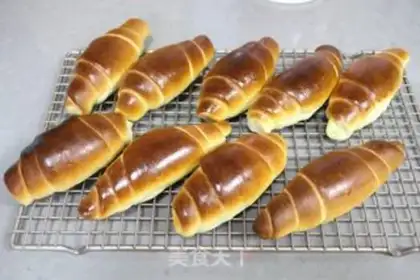
12
The bread after the oven is moved to the hanger and can be kept in a bag when the hand is warm, either directly or as a burger。
13
Cow croissants, small organization, family love itCowbread Make Tips
1. Scratch the small noodles into thin water droplets, and then twitch them into long hips. The triangle is easy; the longer the face, the more the circle of the roll; the wider the side of the triangle, the wider if the horn is long, the shorter if the horn is small, the smaller the side of the triangle; and 2. The time and temperature of the roast, the size of the face, the reality of the oven。