Milk lasagna
By VicentaLakin

When we make bread, we often refer to “one round” and “two rounds”, which are in fact fermentation and refermentation. Many bakers often have the same doubts, and once the bread is fermented, the yeast is alive, the noodles are swelling, why do they have to referment? It is a long-standing argument that because of a fermented product, no tissue or flavor can be compared to a fermented product. More detailed analysis, the purposes or benefits of the two fermentation rounds are as follows: 1. Excretion of CO2 from yeast to provide fresh oxygen to increase the activity of yeasts; 2. To bring the temperature of the face of the face of the face of the face closer to the temperature of the interior; 3. To strengthen the face by giving the face a shock (taping/ folding/rounding). But you can't get good toast without a double fermentation? Answer: No. Today I bring soft toast that only fermentes once. Although I have not taken any cooling measures because of the heat, nor is the pasta in perfect condition, the final product is not only soft, it's radish, it's sliced, it's perfectly hand-to-hand. For those who want to eat toast but do not work for long, or who do not want to spend too much time, this fermentation trick is mastered, and it is also “good luck”. So let's keep it short and keep an eye on what I'm doing in the process. It's easy to do it with a high success rate. It's not fermenting twice. It's a real thing to tear my hands off。
Recipe Recommendations
Steps for Milk lasagna
1
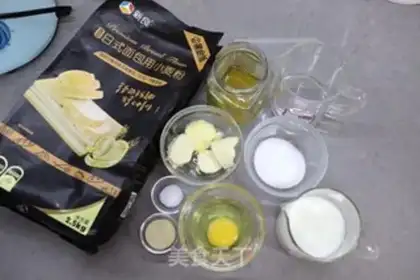
All materials are ready: fermented flour (bread flour), dry yeast, salt, fine sugar, milk, cool water, honey, butter; all can also be converted to milk or cold water (cold water)
2
(b) All materials except butter are placed in a scavenging drum, which is slowly conflated, which is added when the thick film can be pulled out and all butter mixed into the scavenger at a slow pace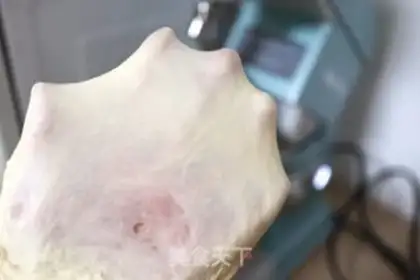
3
(b) High-speed spin-off stretching of the face, smoothing of the face so that it does not stick to the egg-basket wall, squeezing of a piece of the face with a transparent and flexible film on its hands; the shape of the face is not good because the edge of the little hole is not smooth and it has sawn teeth, but because the temperature of the face has risen to 30 degrees, it will not be better to rub it anywhere, so it ends and increases the size of the face through subsequent operations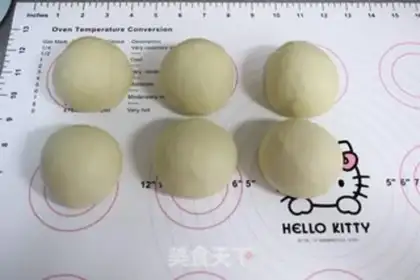
4
(b) A 6-square-separation of the abrasives, with rounding and 15-minute static covering of the film
5
(a) Taking a loosely stylish pasta that grows 30 centimeters and seven centimeters wide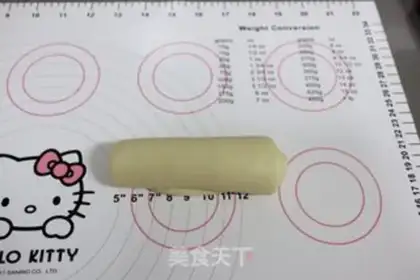
6
(a) Volume from top to bottom and seal down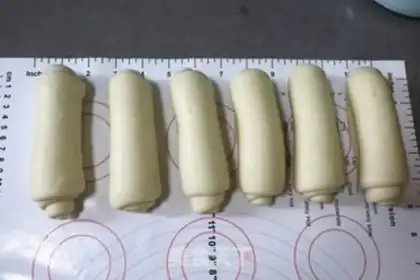
7
The other five were processed sequentially, with 15 minutes of membrane laxity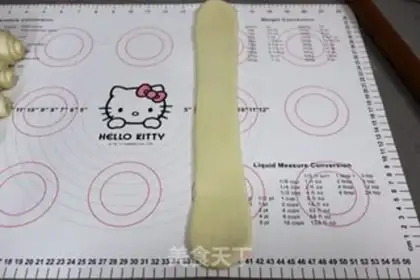
8
(a) Take a loose, smooth paste, growing about 40 centimetres, long face with a width less than 450 grams of toast, smooth face down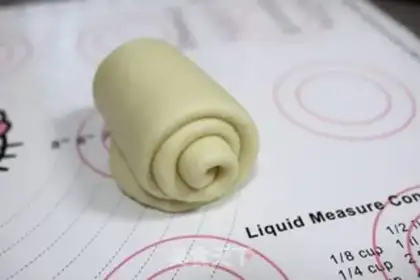
9
(b) A roll of 3.5 laps from top to bottom; this is a way for the fermented toast to pull and make up for the lack of dough, and the longer the face is, the better it works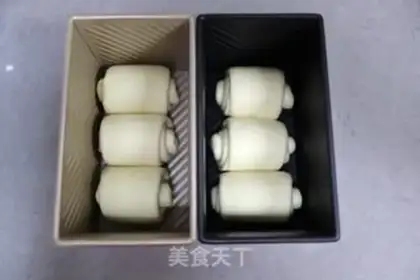
10
Each roll is coded into the toast mold; fermented in warm and wet; I put it directly in the oven, with a bowl of hot water, and fermented naturally。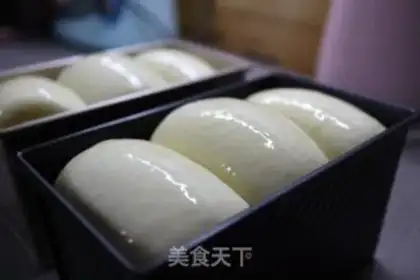
11
When the face rises to 10 minutes full, the surface is painted with an egg fluid; the oven begins to preheat 200 degrees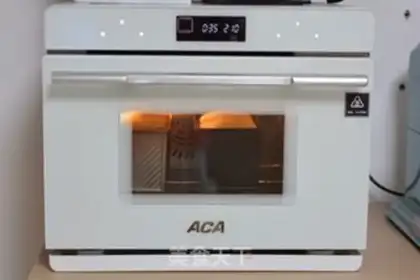
12
(b) Toast screeching into the middle and lower layers of the preheated oven, 170 degrees of fire, 200 degrees of fire, and quick opening of the oven door when colour is satisfactory on the surface, including a tin sheet to prevent overmasking; the timing and temperature of the roasting will be adjusted to the actual situation in the oven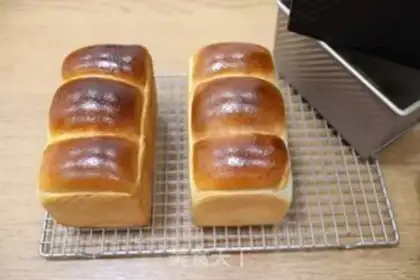
13
A few strokes of the emulator at the back end of the furnace, disemboweling the toast, drying it to the hand temperature or saving it in a bag。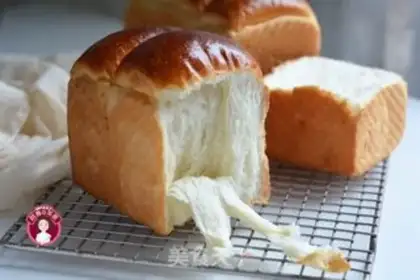
14
Milk lasagna, elastic lasagnaMilk lasagna Make Tips
1. The one-time fermentation method used by the toast, although not perfect, saves at least two hours, while the tissue of the toast is slightly less nuanced, and both the radish and the elasticity are good; the lack of the facial state is compensated by multiple rolls of the long face rolls; and 2. the time and temperature of the baking is adjusted by the quality of the oven and the mould used in the home。