baguette
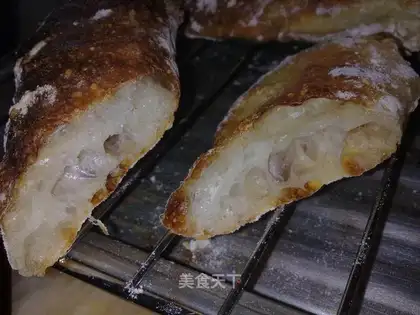
I have always been very interested in this kind of bread made of macroporous organization before. I used to sign up for a vocational school to study West Point because of my special love for bread, but after all, they were all about learning some very commercial things. Most of what I learned was soft bread like sweet bread. I prefer chewy things and don't like sweets. This bread is right to my taste. It is crispy on the outside and very chewy on the inside. Friends who are interested in French sticks can try it. There is almost no failure except that the fermentation time is very long. In fact, the longer the bread fermentation time, the better the taste. Of course, you can't overdo it.
Recipe Recommendations
- high powder high powder
- salt 15.9 grams
- ice water 680 grams
Steps for baguette
1
Note: The amount of water is a range. Less water will dry the dough and shaping will be easier. With more water, the organization will be better, but shaping will be difficult and the finished product will look irregular.
2
Put enough water in the refrigerator in advance. Before using, put a few ice cubes, leave for 2 minutes, and pour out just enough. Mix the flour, ice water, yeast, and salt with the slurry head of a blender for 2 minutes. Change the hook-shaped head used for kneading dough and stir on medium speed for 5 to 6 minutes. If the dough does not stick to the four sides of the container, but still sticks to the bottom of the container, it is fine. (Note that salt and yeast cannot come into direct contact, which will kill the activity of yeast.) Because I didn't expect it to succeed before, I didn't take a process diagram. I will borrow the original author's here.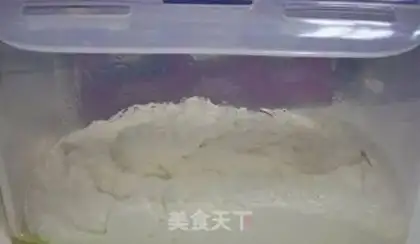
3
Pour the stirred dough into an oiled container to prevent sticking. Then cover and place in the refrigerator to ferment for more than 20 hours.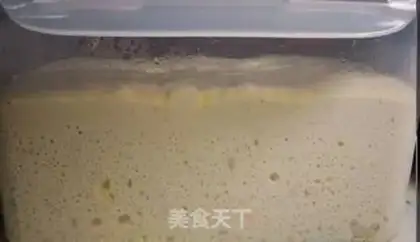
4
Remove the dough that has been refrigerated overnight and ferment at room temperature for 3 hours to double the size.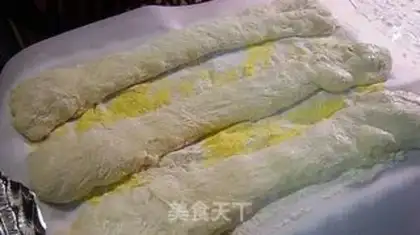
5
Turn on the oven and preheat it. The oven in my home has a maximum temperature of 250 degrees, and the author bakes it with stone slabs. Preheat at 287 degrees for half an hour. My oven was preheated at 250 for 10 minutes. The bread can be reshaped while it is preheated. Prepare a sheet of tin foil the size of a baking net. Why use a grilling net? Because my grilling pan is used for another purpose. Talk about this later... Sprinkle enough flour on the tinfoil wound. Then pour the dough on it. Put powder on your hands and shape the dough into a rectangle. Use a scraper with water to cut the rectangular dough into long strips.6
There is no need to carry out secondary fermentation after shaping is completed. Heat a pot of boiling water while preheating the oven. After preheating, directly place the tin foil and bread on the baking net and place them in the middle layer of the oven, and then place the baking sheet on the lowest layer. Pour freshly boiled water. The purpose is to make it produce steam. Then close the door. Wait 30 seconds, open the door, spray water into the oven, and close the door. Wait another 30 seconds before spraying water. If your oven has a light, never spray water on the light, it may explode! Bake at 250 degrees for 10 minutes. Then pull out the tinfoil and bake for about 10 minutes.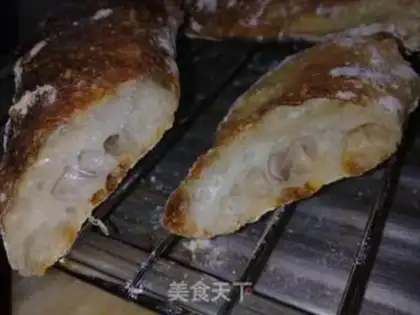
7
The temperature of the oven in my house is not very uniform, so it's a little dark. But it does not affect the taste. Repeat the above 5 steps for the remaining dough. Here is a picture of my own finished product